How to Choose a Sandbox Racing Equipment Manufacturer
Choose a Sandbox Racing equipment manufacturer by asking it to prove a commercial session, not merely show a miniature car moving around a track. The buyer needs a multiplayer attraction that staff can explain, maintain, and reset while customers are waiting. A polished cockpit and attractive scenery do not establish that capability.
For a mall or Family Entertainment Center, the value may be a visible social activity that draws spectators and encourages another group to join. That opportunity depends on the complete installation and its support model, not just the factory price of the cars.
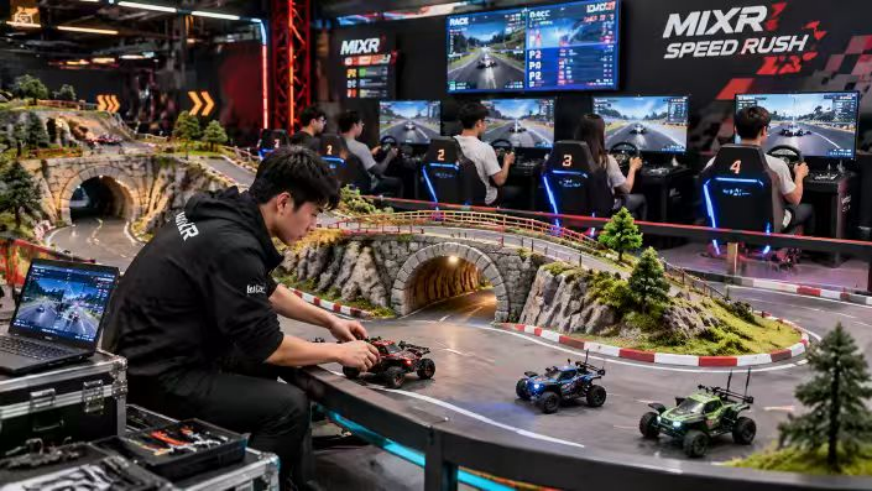
Start with the session the manufacturer is being asked to supply
Define the audience and business role. A short family race needs a different explanation and changeover from a booked group competition. A small visual attraction inside a larger venue has different obligations from a standalone racing business.
MIXR SPEED RUSH uses an FPV RC racing format, connecting real miniature cars on a physical circuit with driver-view presentation. The procurement discussion should therefore cover both the player positions and the circuit customers and spectators can see.
This format suits venues that can provide staff access to the miniature track and space for people to watch without blocking circulation. A hidden room with no spectator route may lose part of the visible social appeal the buyer expected to purchase.
Test the Sandbox Racing equipment manufacturer with all positions running
Request a simultaneous multiplayer demonstration using the proposed car and control arrangement. A one-car test cannot show how the complete attraction behaves during an actual group race.
Ask staff to explain the start, finish, and next-group preparation. If a car needs attention, observe the approved recovery or replacement process. The buyer should understand whether one problem stops every position or can be handled without ending the entire session.
For an overseas order, request a continuous demonstration of the proposed sequence rather than a promotional edit. Follow it with questions tied to the configuration being quoted. A video of another installation is useful context, not a substitute for confirming the purchased package.
The operating test should be understandable to the venue team. If only the supplier’s engineer can run the demonstration, allow time for training before calling the attraction ready.
Examine customization where it affects the business
A custom Sandbox Racing manufacturer may offer changes to the circuit, scenery, player positions, or branding. Separate cosmetic choices from changes that affect service access, visibility, and operating work.
A scenic tunnel can make the miniature environment look convincing but may also conceal a stopped car. Ask how staff reach every part of the route after installation. The service method should survive the final decorative work.
For branded projects, confirm what the price includes: design development, approval rounds, artwork preparation, physical production, and any software or result-display changes. Establish who owns or may reuse the approved assets.
Avoid requesting customization simply to make the order feel distinctive. A venue-specific feature should help sell the attraction, connect it to the wider project, or improve the operating arrangement. Otherwise, the buyer may pay for complexity that becomes difficult to replace later.
Treat factory-direct pricing as a scope question
Factory-direct Sandbox Racing equipment is only a meaningful comparison when the buyer knows the delivered scope. Ask who designs, assembles, programs, tests, installs, and supports the package. The important issue is whether those responsibilities are coordinated, not whether every component originates in the same building.
Separate the equipment price from freight, installation attendance, local construction, staff training, and after-sales services. Clarify which costs are included, optional, or to be arranged by the customer.
Payment and production discussions should refer to identifiable deliverables: an approved configuration, design sign-off, a demonstrated working system, and a documented handover. Avoid treating photographs of packed boxes as evidence that the multiplayer attraction has been tested.
Investigate the small parts before the large order
Miniature cars still require an operating support plan. Ask the supplier to identify wear items, replacement components, compatible spares, and the approved tools and procedures for routine service.
The parts list should make reordering practical. A photograph alone may not distinguish a revised component from an older version. Request clear identification tied to the delivered model and ask how future substitutions are checked.
For a venue far from the manufacturer, discuss an opening spare-parts stock and the basis for replenishing it. Quantities should follow the delivered equipment and planned use, not a generic accessory bundle added to every order.
For a MIXR installation, discuss ongoing parts and support alongside circuit planning, driving positions, system setup, and operator training. The venue needs to understand how it keeps the purchased player positions available, not just how the equipment arrives.
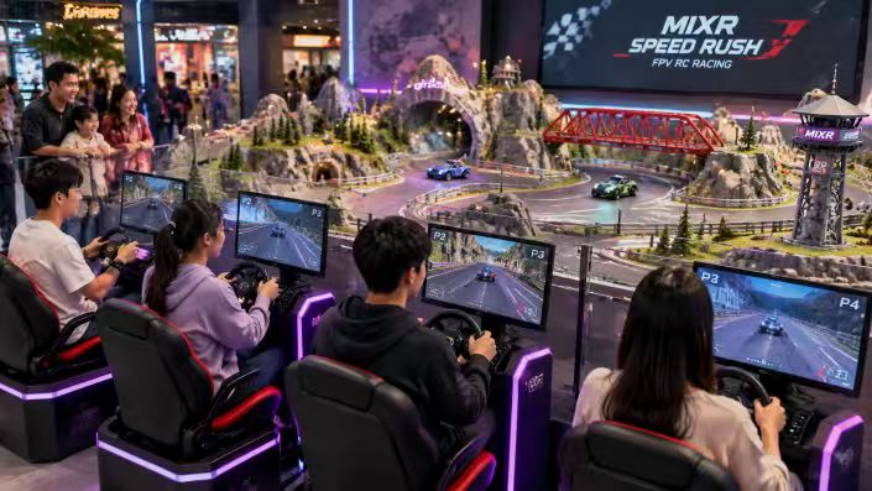
Use a short evidence list to make the selection
Before choosing the manufacturer, obtain:
- A defined opening configuration and included multiplayer functions.
- A circuit drawing showing spectator movement and service access.
- A full-session demonstration with interruption handling.
- A customization and approval schedule, if applicable.
- An identified spares list and a workable support route.
A supplier does not need to promise that nothing will fail. It needs to show how the venue keeps selling sessions when routine operating issues occur. That is a stronger basis for selection than a low car price or a dramatic miniature landscape.