What Should Be Included in a Hyper XR Theater Equipment Package?
A Hyper XR Theater equipment package should include the means to sell, deliver, and repeat a group experience. Seats and headsets are visible in a quotation; briefing, equipment handling, licensed content, installation, and staff readiness are easier to overlook. Yet those less visible items determine whether the venue can open on time and operate without constant supplier intervention.
For a shopping mall, cultural attraction, or Family Entertainment Center, the buying question is therefore not “How many units are included?” It is “What does the venue receive that allows those units to become a dependable visitor product?”
Match the Hyper XR Theater equipment to the business model
A mall may need short paid sessions that are easy to explain to passing families. A scenic venue may want a scheduled indoor experience connected to a destination story. A museum may include the theater in admission and use participation to reinforce its interpretation.
Specify that role before deciding the configuration. It affects the opening content, group size, queue arrangement, language requirements, and work expected of staff. A package designed around an impressive demonstration may not support the venue’s ordinary trading day.
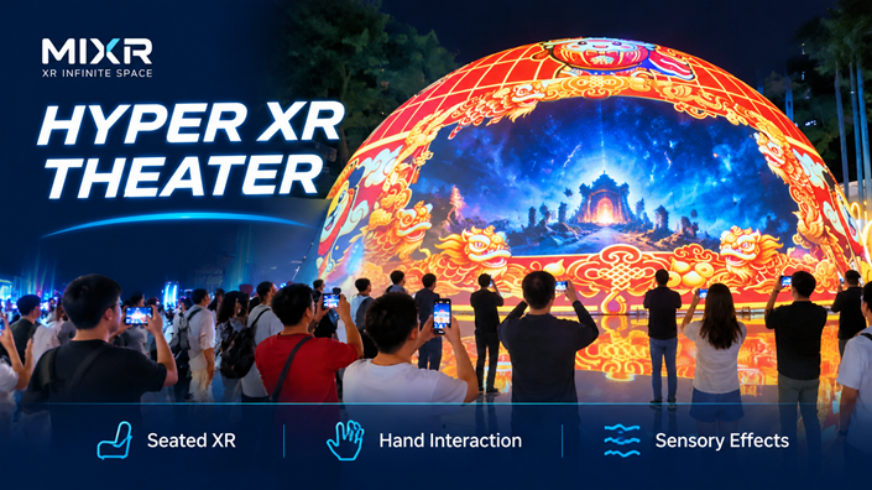
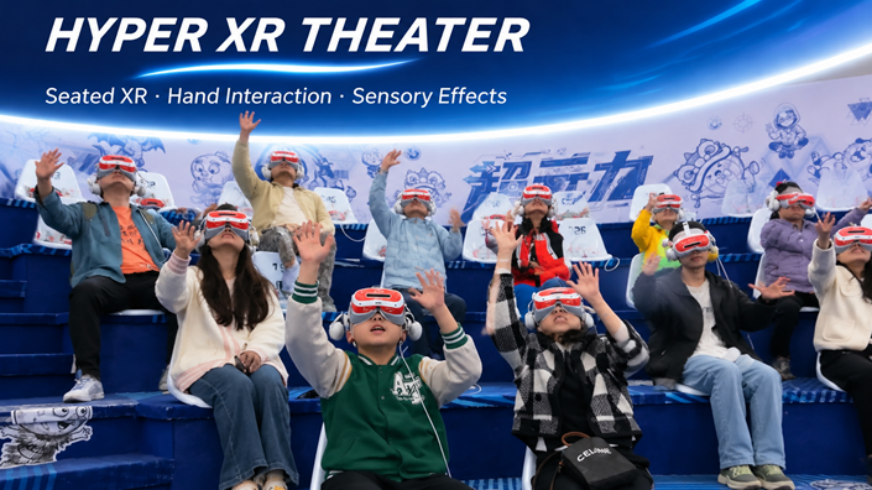
MIXR’s Hyper XR Theater uses seated XR participation, hand interaction, and coordinated sensory effects. It is relevant when a venue wants a shared, managed experience rather than a free-roaming arena. The proposal should show how that format serves the intended audience and fits the visitor route.
The format is less suitable where the room must remain an open passage or where the operator cannot separate incoming visitors from equipment returns and the departing group.
Define an earning position rather than a loose device count
For procurement purposes, a usable participant position includes everything needed for that guest to join the delivered show. The quotation should connect seating, headset, supported interaction, effects where included, content access, and operator control.
Ask whether every advertised position can run simultaneously under the quoted software arrangement. Clarify how spare units are assigned and what happens when one active unit needs attention. A spare headset that cannot be substituted under the delivered procedure does not automatically protect paid capacity.
The same logic applies to accessories and shared equipment. Charging arrangements, storage, network hardware where required, and staff tools should be listed rather than assumed.
An XR theater equipment configuration quote becomes easier to compare once each supplier describes a complete working group. Comparing only headset models leaves the buyer to discover the missing operating items later.
Include the changeover system in the room plan
A theater sells more than show time. Guests arrive, receive instructions, fit equipment, participate, return equipment, and leave. Each stage needs a place and a staff responsibility.
The package should include a layout that separates ready equipment, returned equipment, and units awaiting inspection. Staff should not have to carry returned headsets across the next group’s entrance simply because all storage was placed behind the seats.
Review the plan with the intended operating team. Can a staff member assist one guest without disrupting the others? Can a visitor leave early under the approved procedure? Is there somewhere to explain the experience without blocking boarding?
These questions belong in the investment comparison. A configuration with more seats may require extra labor or a longer reset. A smaller arrangement should not be called more efficient without considering whether it loses useful group bookings.
Specify the content and support needed after opening
Full-sensory XR theater equipment needs an agreed opening show, not just access to a demonstration library. State the included titles, languages, commercial rights, supported interactions, and any venue-specific adaptation.
For cultural content, identify approval responsibilities and the treatment of supplied images, scripts, or licensed material. For an entertainment-led venue, discuss how new shows can be introduced and whether updates require additional programming, training, or technical visits.
The support schedule should distinguish routine operating questions from faults that stop sessions. Name the escalation contact and clarify the information staff need to provide when reporting a problem. Warranty duration alone does not explain the recovery process.
MIXR can coordinate XR content, seating and effects, control integration, installation, and operator training. The buyer should ask for the specific included services, exclusions, and handover documents rather than rely on a general promise of a complete solution.
Release the purchase against visible deliverables
A practical package review can use four checkpoints:
- Before production: an approved operating brief, configuration, room layout, and responsibility schedule.
- Before delivery: confirmed site readiness, opening content, installation method, and training dates.
- During commissioning: a full-group demonstration using the contracted equipment and software.
- Before handover: trained staff, operating documents, approved interruption procedures, and a defined support route.
Keep construction and building-services costs visible alongside the equipment price. Room finishes, power, cooling, access changes, signage, and queue construction may remain with the venue even when installation is included.
The final trial should resemble an ordinary working session, not a presentation led entirely by the supplier’s technician. Let the venue team brief guests, run the show, manage an interruption, and prepare the next group. That is when the buyer can see whether the package is ready to become an operating attraction.