How a Ship-Shaped Motion Platform Supports Bermuda Adventure
Bermuda Adventure works as a commercial attraction when the ship-shaped motion platform does three jobs at once: it gives the story a recognizable setting, carries a group through a controlled show, and creates a memorable reason to buy the experience. The ship body attracts attention, but the business value comes from the complete sequence of boarding, synchronized motion, visual storytelling, and release.
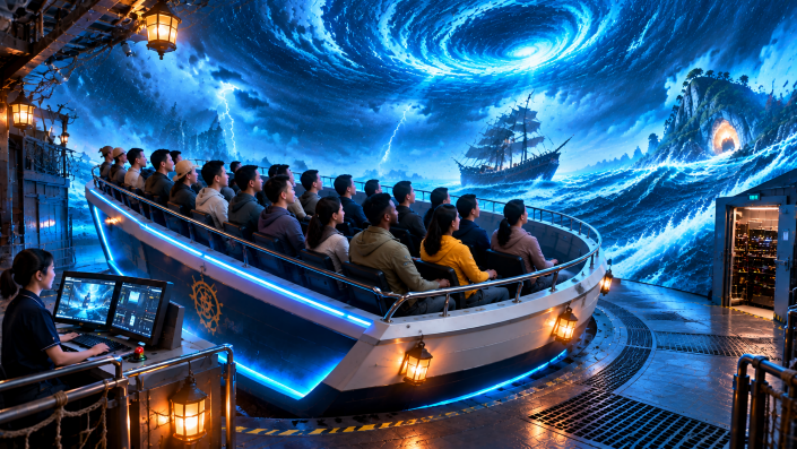
That is different from selling a conventional swinging pirate ship. A motion theater is judged by how well the physical platform, display system, audio, effects, content, and operating controls work together. The quotation should make those connections visible.
What a ship-shaped attraction can change
A maritime attraction can give a scenic area, theme park, mall, or indoor tourism venue a strong visual anchor. Visitors understand the setting before the show starts. A shared cabin can also create a group memory that is easier to photograph and discuss than an individual headset session.
The venue still needs to decide what role the attraction plays. Is it the main ticketed experience, a short activity along a tourist route, or one product in a larger immersive entertainment mix? That choice affects capacity, session length, queue design, content length, and the support package.
MIXR’s Infinite Ark provides a room-based shared-cabin format for 20 people, with a visual system, centralized content management, and themed films. The final Bermuda Adventure layout remains project-specific; the format should not be treated as proof that every building can accept the same capacity.
Separate the themed shell from the motion system
The ship body is an architectural and storytelling element. It tells visitors where they are boarding and gives the attraction a recognizable identity. The motion platform is a mechanical system that carries the audience load and follows the approved show program.
Ask the supplier to separate themed bodywork, seating, restraints, motion equipment, control, visual system, and effects in the proposal. If the venue changes the exterior finish or entry arrangement, the buyer should know which changes affect the mechanical or safety design.
Decorative ship dimensions do not establish movement limits. The supplier should state the supported motion, operating envelope, loading assumptions, and return-to-boarding sequence for the delivered configuration.
Make motion serve the maritime story
The platform does not need to move strongly in every scene. A rise, turn, impact, or storm cue is useful when it matches what the audience sees and hears. Repeated movement without a story reason can add operating burden without improving the experience.
The most useful demonstration includes boarding, the transition into the story, the main sequence, and the return to a settled unloading state. Ask to see the delivered film and the motion program together. A short dramatic extract cannot show whether the full experience is coherent or easy to reset.
The story also needs to suit the customer mix. A scenic venue serving family tour groups may want a shared adventure that fits a short stop. An indoor park may sell the show alongside other activities. The film’s tone and the ticket description should agree with that audience; a frightening storm sequence should not be promoted as a gentle educational journey.
Plan the cabin and room around real visitors
Reserve the full movement envelope and the service access required by the platform. Check nearby scenery, overhead decorations, boarding barriers, and technical cabinets against that envelope. The building engineer should review the manufacturer’s load information and support arrangement for the actual room.
The documented 20-person format is a configuration reference, not a universal site requirement. The room also needs queue space, briefing, entrance and exit routes, equipment access, and a way to handle a guest who needs assistance.
If the attraction uses a curved LED visual option, inspect the scene from front, rear, and side seats. The content should be approved for the delivered display geometry and occupied viewing positions. A desktop preview cannot reveal every issue inside a moving cabin.
What the venue should receive from the supplier
MIXR can coordinate the cabin concept, equipment, themed films, visual presentation, control integration, installation, and staff training for this type of project. The agreed proposal should identify the ship-shaped platform, motion system, seating and restraints, audio, selected effects, commissioning, and support. It must also list owner-supplied base building, utilities, access works, and local construction, so the venue can budget beyond the visible ship body.
For an overseas project, also confirm delivered language versions, media rights, operator interface, spare parts, remote support, and the conditions for content updates. A familiar maritime theme does not establish the same licensing or service scope in every market.
Judge the product by a full show cycle
The acceptance test should cover normal loading, the complete synchronized show, return to boarding position, guest release, and preparation for the next group. Ask how the operator handles an interruption and when technical support is required.
Bermuda Adventure fits a venue that can support a shared cabin, controlled group loading, and coordinated motion-media installation. It is a poor fit where the room cannot provide service access, movement clearance, or a separate waiting route.
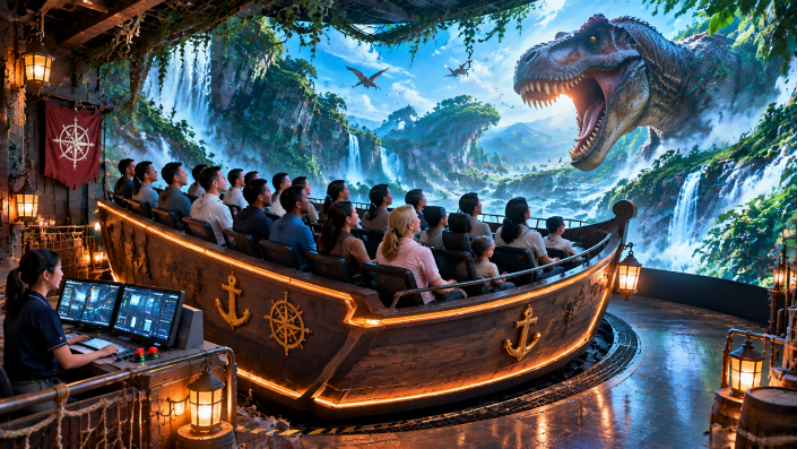
The ship-shaped platform earns its place when it turns the story into a practical group product. The final purchase should explain not only what the audience will feel, but what the supplier will install and support to keep that feeling repeatable.