Flying Theater Motion Seats, Curved Screen, Audio, and Control Explained
Before comparing motion seats or screen quotations, a venue owner needs a saleable reason to install a Flying Theater. For a scenic destination, that may be an indoor experience built around its landscape. For a shopping mall, it may be a scheduled attraction that draws families into a quieter part of the building. The same equipment brief will not necessarily serve both businesses.
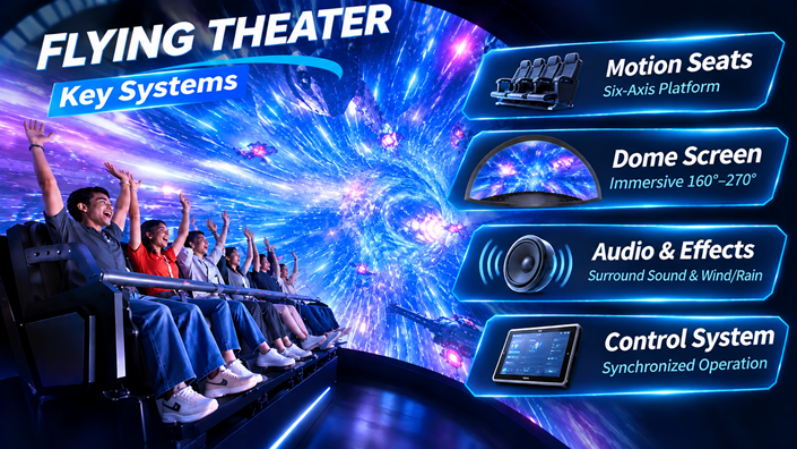
A Flying Theater equipment configuration should show what the venue can sell, how it will operate the attraction, and what the complete project will cost to open. Hardware specifications matter when they support those decisions.
Establish the attraction’s place in the business
Decide whether the show will be included in admission, sold as an add-on, or operated as a standalone ticket. An included attraction needs to contribute to the wider visit. An add-on needs an experience visitors can understand and justify paying for. A standalone venue must attract customers without relying entirely on another attraction’s foot traffic.
For a scenic area, a destination-specific film may extend the local story into an indoor setting. A mall may need a shorter explanation, visible queue, and straightforward purchase process. A museum must judge whether the experience serves the exhibition rather than competing with it.
The plan should explain the intended change: an additional paid activity, a stronger indoor visitor route, or a more memorable cultural experience. These are operating objectives to test, not guaranteed results of installing a large screen.
For an add-on model, track how many existing visitors buy a session. For an included museum experience, review participation and its connection with nearby exhibits. The two projects should not be judged by the same ticket-sales target.
Buy capacity the venue can actually use
The Flying Theater seat system influences group size, but the number of seats is only the starting point. The operator sells completed sessions. Briefing, boarding, assistance, checks, unloading, and preparation all occupy time that a film-duration calculation leaves out.
Use ordinary weekday demand as well as peak-day demand when comparing configurations. A larger installation may require more construction and staff while leaving more seats empty outside busy periods. A smaller format may constrain group bookings. The buyer needs both consequences visible before choosing.
Ask the proposal to state the assumed complete cycle, staffing positions, operating hours, and usable visitor capacity. For a paid attraction, compare realistic attendance assumptions with staffing, maintenance, content, and rent or site costs. A crowded holiday demonstration is not an annual business model.
Compare the cost of opening the attraction
Two quotations with similar equipment lists can leave very different bills with the venue. One may include installation and commissioning but exclude lifting, temporary access openings, cooling changes, or reinstatement. Another may include a standard film while leaving localization and synchronized motion programming outside the price.
Separate the budget into the supplier’s attraction package, owner-supplied building work, opening preparation, and ongoing operation. Name the responsible party for each item. Staff training, trial operation, initial spares, and content rights belong in that discussion before the opening date is announced.
The room also carries an opportunity cost. Queueing, technical access, and boarding space cannot simultaneously be counted as retail or another paid activity. Compare the complete attraction footprint with the alternative use of that area, not just the platform dimensions.
Make the equipment serve the ticket offer
The curved-screen visual environment, motion, and audio give visitors the flight experience. Their business value depends on whether the delivered show supports the promised product. A destination film needs a clear local connection; a family attraction needs a show suited to its intended audience.
Review the proposed Flying Theater motion platform and playback system together with the film, seating arrangement, and audio. A spectacular video shown separately cannot establish what a customer will experience from an occupied seat.
Content also affects future spending. Confirm the opening films, languages, commercial usage rights, and process for adding another show. A film update may also need motion cues, control changes, testing, and staff familiarization. Buying another video file is not necessarily buying a ready-to-sell new experience.
Give MIXR a complete project brief
MIXR can coordinate motion, visual presentation, content, control integration, installation, and operator training. For the buyer, the practical value is having these interfaces handled within a connected project rather than discovering on site that separate suppliers have designed incompatible parts.
The agreed scope should translate that coordination into drawings, responsibilities, and handover requirements. It should show how the attraction fits the measured room, how visitors move through it, which construction interfaces the venue must prepare, and what MIXR will install and commission.
Set review dates around the venue’s opening plan. Room readiness, equipment delivery, content approval, installation, training, and trial operation need separate milestones. Clarify what happens if construction or content approval is late; an equipment shipment date alone does not establish opening readiness.
Accept a working operation rather than a demonstration
Before handover, the intended staff should run complete sessions using the delivered content and controls. Include boarding, guest assistance, normal shutdown, and supplier-approved interruption and recovery procedures. The test should show whether the proposed staffing arrangement works in the finished room.
Agree who handles technical escalation, how replacement parts are identified, and what remote support includes. Warranty duration does not explain how a venue returns to operation after a fault.
A useful enquiry to MIXR therefore includes the measured room, venue type, visitor profile, intended ticket offer, target opening date, and budget scope. Those details allow the discussion to move beyond choosing components toward defining an attraction the buyer can open, sell, and support.