Inside an AGV Dark Ride System: Vehicles, Control, Media, and Interaction
An AGV Dark Ride should be evaluated as a controlled visitor business, not simply as a trackless vehicle purchase. The buyer needs a story worth selling, a route that can serve the expected groups, and an operating team that can recover from interruptions without improvising around moving equipment.
Vehicles, control, media, and interaction matter because they determine those outcomes. A technically flexible system may still be commercially restrictive if its scenes take too long, its loading area becomes a bottleneck, or the venue cannot change content without rebuilding the attraction.
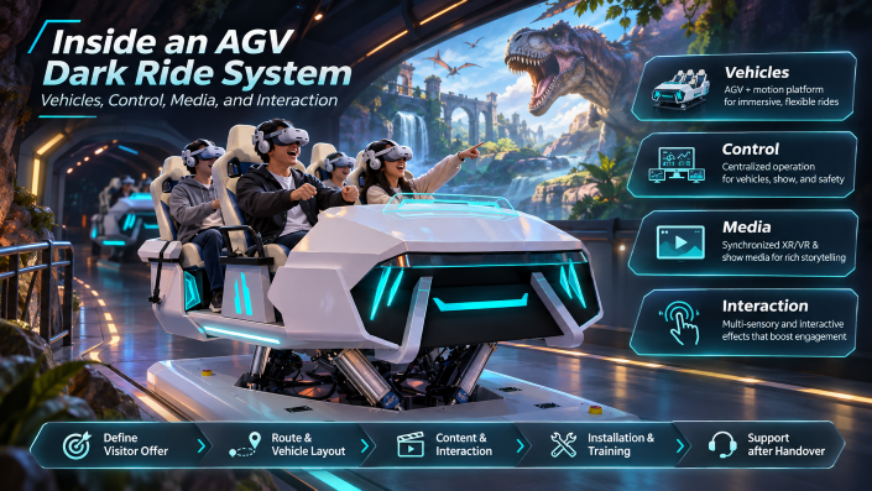
Decide what the ride adds to the venue
An indoor park may need a family attraction that gives guests a shared story. A scenic destination may want a way to present local culture inside an existing building. A larger entertainment project may use an interactive dark ride as the main paid experience around which other activities are arranged.
Each purpose changes the brief. A destination-led ride may prioritize narrative and language options. A repeat-play venue may care more about interaction variety and clearly explained results. Neither should choose vehicle quantity before deciding what a complete guest session includes.
MIXR’s XR Dark Ride brings AGV movement, motion seating, XR presentation, and interactive content into a coordinated attraction concept. For the operator, the relevant question is how that integration supports the chosen visitor offer, not how many separate technology labels appear in the proposal.
Judge AGV Dark Ride capacity by the whole cycle
The vehicle carries the paying group, but the loading arrangement determines how efficiently that group can enter and leave. Ask the supplier to show boarding, assistance, show travel, unloading, and preparation on the same operating plan.
Compare proposals using the complete group cycle, not film duration alone. If several vehicles share a scene or loading position, ask what happens when one group takes longer. Additional vehicles should not be counted as additional earning capacity without checking the shared constraints.
Include the expected audience in the review. A family group unfamiliar with the equipment may need a different boarding process from a pre-booked group briefed in advance. The staffing assumption should match the real visitor mix.
A route that fits more scenes into the room is not automatically the better investment. It may use more floor area and technical support while serving fewer complete groups during the periods that matter to the venue.
Treat control as an operating responsibility
Control connects dispatch, vehicle movement, scene timing, media, and interaction. Procurement should establish who is responsible for the combined behavior when those elements come from different sources.
Ask for a demonstration of a late dispatch, an interrupted scene, and the approved recovery sequence. Does the show resume, restart, or end? Which actions belong to trained venue staff, and which require supplier support? The answer should be documented for the delivered configuration.
The physical recovery route is equally important. Staff need an approved way to assist guests and reach a stopped vehicle. Decorative construction should not conceal the access required to keep the attraction serviceable.
A small but consequential check is whether a scene can be accessed after the scenery is complete. A removable panel drawn on a plan has little value if another contractor later builds a fixed wall in front of it.
Buy the media and interaction as a guest experience
An interaction should have a reason to exist in the story. A museum-oriented route may use participation to reveal information. A competitive attraction may need understandable targets, feedback, and a result guests can discuss afterward.
Request a demonstration of the included functions rather than a broad statement that the ride is interactive. Clarify which scenes, languages, modes, and result features form part of the quoted package.
For an XR Dark Ride configuration quote, separate standard content, venue-specific adaptation, and original production. Identify who approves the story, who supplies cultural or licensed material, and what later changes affect programming or the physical route.
This protects the refresh budget. A new story may involve more than replacing a media file if movement cues, interaction logic, or scenic elements also need alteration.
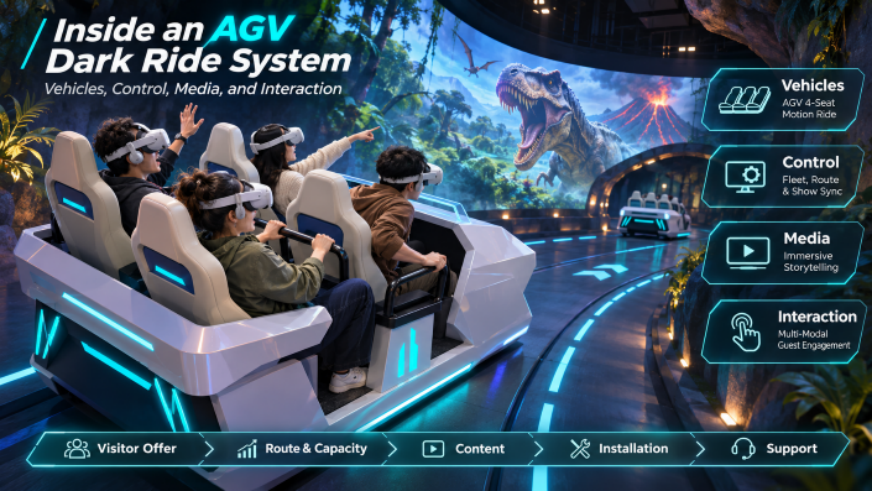
Read the quotation in the order the project will open
Use the following sequence when reviewing the proposed scope:
- Confirm the visitor offer, target group handling, and operating assumptions.
- Approve the coordinated route, vehicle envelope, and construction interfaces.
- Confirm included media, interaction, software access, and content responsibilities.
- Agree installation, testing, staff training, and trial-operation milestones.
- Define the support route, spare-parts process, and responsibilities after handover.
An integrated MIXR proposal should still identify owner-supplied building work, utilities, scenery, and local approvals. Integration does not make those costs disappear.
An AGV Dark Ride fits a venue prepared to manage a controlled route and a timed group experience. It is a poor fit for a room expected to remain an unrestricted public passage or a project without access for maintenance and recovery.
At acceptance, run the attraction as the venue intends to sell it, including an interruption and the next group changeover. The operating team should finish that rehearsal knowing what it can manage itself and exactly when to call for help.