Case Study: How a Theme Park Integrated XR Infinite Space to Boost Visitor Engagement
Theme parks do not usually suffer from a lack of attractions. They suffer from uneven engagement. Some zones feel busy, some feel passive, and some indoor rooms sit underused between peak seasons. In this anonymized case, the park wanted an attraction that could make visitors participate rather than only watch. It also needed a product that could refresh its theme without rebuilding a large ride.
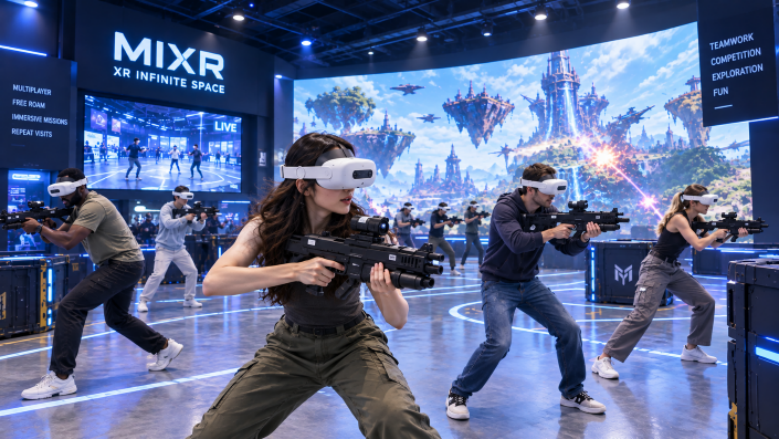
The park chose MiXR’s XR Infinite Space, a free-roam XR attraction designed for multiplayer location-based entertainment. The format gave the park a flexible indoor experience: players could move together, interact with virtual scenes, watch each other through a broadcast screen, and try different themed missions. The goal was not to replace roller coasters or scenic rides. It was to add a participatory layer.
Why the park did not choose a traditional VR room
The park had already tested small VR experiences. They were easy to install but did not create much group energy. One person wore a headset while others waited. The experience was hard to watch from outside. Repeat visits were limited because the product felt like a device trial rather than a shared attraction.
XR Infinite Space solved a different problem. It allowed groups to enter the same virtual world and move through a mission together. MiXR’s materials describe multiplayer free roaming, gesture interaction in selected scenes, real-time scene interaction, and a director or broadcast operating system. For a theme park, those details matter because spectators and waiting friends influence buying decisions.
Company background gives this more weight. The new catalogue describes XR Infinite Space with a PICO headset setup, high-space-efficiency positioning, multi-player interaction, and support for large simultaneous groups depending on configuration. It also presents Operation Ashes as an esports-grade VR immersive shooter and MR-Go Kart as a racing format. These cases demonstrate that the procuring party may also raise requirements including content update schemes, people flow planning, and launch operation support.
The attraction was given a clear operating role
The park positioned XR Infinite Space as a mid-length indoor mission. It was not a quick arcade play and not a long theater show. That middle position worked well for families, teenagers, and friend groups who wanted an active session between larger rides. The park could also use the product during hot weather, rainy periods, or evening programs.
The room was planned around the full visitor cycle: check-in, briefing, equipment fitting, mission play, exit, cleaning, reset, and rebooking. This sounds obvious, but many XR projects lose engagement because the staff routine feels clumsy. A good attraction begins before the headset goes on.
How MiXR product capabilities supported engagement
- Multiplayer free-roam movement gave visitors a shared memory.
- Themed content created different reasons to return.
- Gesture interaction made selected scenes feel more physical and less controller-heavy.
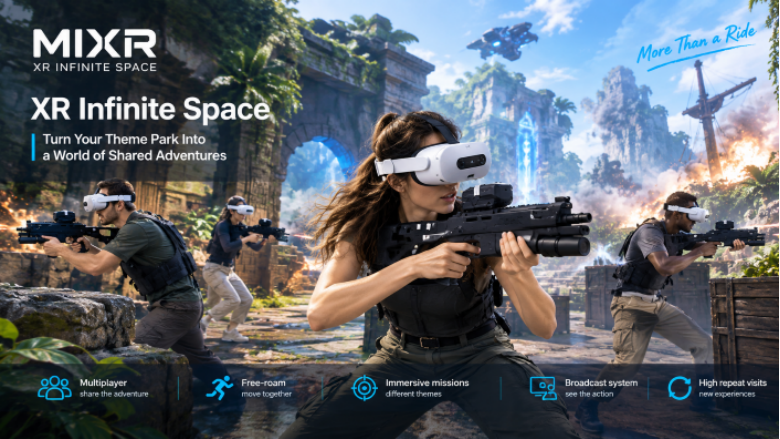
- The broadcast/director system helped staff monitor play and show live content outside the room.
- The product could be marketed as adventure, competition, exploration, or team challenge.
- Light operation made it easier to run beside other park attractions.
The broadcast screen was more valuable than the park first expected. It turned private gameplay into public proof. Visitors outside the room could see friends moving, reacting, and solving the mission. That visible energy helped the attraction feel alive.
Content selection made the difference
The park did not use one theme for every visitor. Families were directed toward exploration and adventure content. Teenagers often preferred competitive or shooting-style missions. School and team groups responded better when the staff framed the session as cooperation. The same room supported different customer reasons because the content and sales language changed.
MiXR’s XR Infinite Space content examples include cultural exploration, ancient-civilization style journeys, shooting missions, and playful simulation themes. For a theme park, that variety is useful. The park can run seasonal campaigns without changing the entire room. It can also test which themes bring repeat bookings.
Why the product increased engagement
The park measured engagement in more than one way. Staff watched whether groups completed missions, whether waiting visitors stopped to watch, whether families asked about another theme, and whether the attraction helped activate the surrounding indoor zone. Ticket sales mattered, but they were not the only signal.
The product increased engagement because it required participation. Visitors talked to each other, moved together, reacted to the same scene, and compared results afterward. That social layer is hard to achieve with a single-seat VR product.
Where XR Infinite Space should be placed in a theme park
The best placement is near existing flow but with enough room for queue, briefing, and reset. It should not be hidden in a dead corner unless the park has strong signage and booking traffic. It also should not be squeezed into a room that makes players feel restricted. Free-roam attraction value depends on movement.
The venue should plan exterior visibility. Screens, staff demos, and short mission descriptions help visitors understand the product quickly. A theme park audience does not want a lecture about tracking systems. They want to know what they will do.
What the park avoided
The team avoided making XR Infinite Space carry the whole park story. That restraint helped. The product became one strong indoor engagement point rather than a confusing attempt to replace every attraction type. Larger rides still handled thrill demand. The XR room handled active group participation and repeatable missions.
The park also avoided excessive technical language. Staff did not sell sensors or hardware. They sold “go in together, finish the mission, and see how your team performs.” That language worked.
Buyer checklist for theme parks
- Choose XR Infinite Space when the park needs active group participation, not passive viewing.
- Place it where waiting visitors can see the energy without blocking the corridor.
- Build the schedule around briefing, equipment, session, exit, and reset.
- Use several content themes for different age groups and campaigns.
- Train staff to explain the mission in plain language.
- Track repeat play, group bookings, and surrounding-zone dwell time.
What the case shows
The park boosted engagement because it matched product format to visitor behavior. XR Infinite Space is suitable when a theme park wants multiplayer movement, visible participation, and content flexibility inside an indoor footprint. MiXR’s product system helped because it provided more than headsets: content, operating control, interaction, and a format that staff could sell as a shared experience.
The useful lesson is simple. A theme park should not buy XR Infinite Space because it sounds modern. It should buy it when the park has a clear place for group missions, repeatable content, and visible customer energy.