Dark Ride Project Budget and ROI Guide
A Dark Ride budget should start with the job the attraction must do for the venue. If the job is vague, the ROI model will be vague too. For a theme park, the job may be an indoor ride that absorbs traffic during heat or rain. For a cultural tourism destination, it may be a paid story journey that turns local IP into visitor spending. For a shopping mall or indoor park, it may be a reason for families and young visitors to come in groups.
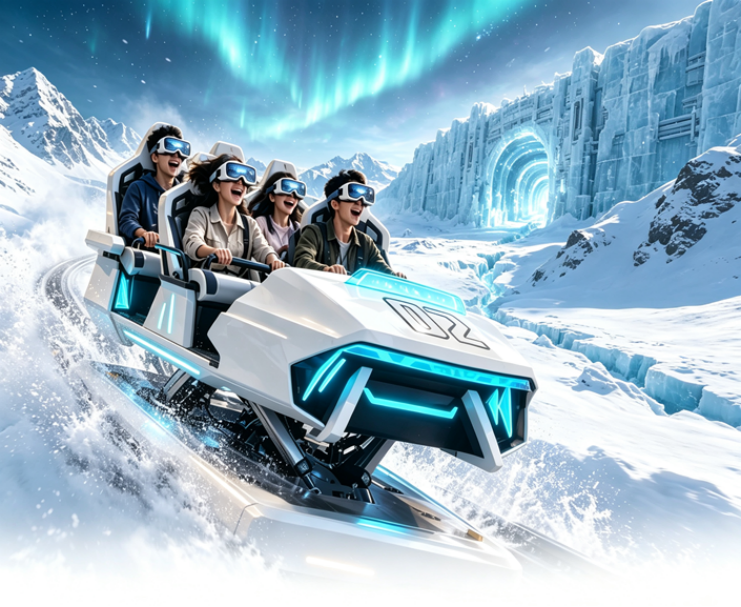
MiXR’s XR Dark Ride fits the type of project where movement, story, and interactive media need to work together. Its product direction combines AGV motion vehicles, XR or naked-eye 3D content, scenic route planning, six-axis motion, and customized themes. That makes it more like a mini attraction project than a single equipment purchase. The budget and ROI guide should reflect that reality.
This is also where the service evidence matters. The English catalogue describes MIXR’s delivery base as including in-house production space, manufacturing staff, CE and ISO9001 references, engineering assembly, and end-to-end testing. In the project chain, design, production, hardware, software, transport, installation, commissioning, training, acceptance, and after-sales support all affect ROI because weak handover can damage revenue after opening.
Start with the operating role
Before a buyer asks for numbers, I would ask one plain question: where will the Dark Ride sit in the visitor journey? A ride near the main indoor circulation can catch impulse traffic. A ride deeper inside a park may need stronger signage, package tickets, or scheduled groups. A ride attached to a cultural exhibition may be judged by education value as well as ticket revenue.
This role decides the commercial model. A premium ticket ride needs a strong story and visible value. A ride included in a park pass needs throughput and reliability. A group-sales ride needs a loading process that does not become chaotic when a tour bus arrives. These are budget decisions, even though they sound like operating details.
What belongs in the project budget
A complete Dark Ride budget usually has more than one cost bucket. Owners should separate them early because each bucket has a different ROI impact.
- Concept and layout: visitor flow, route length, theme, entrance, queue, loading, exit, and emergency access.
- Ride system: AGV vehicle, motion platform, seats, safety devices, control system, and related hardware.
- Media and interaction: XR headsets or screens, tracking, projection or display, audio, triggers, and show control.
- Content: script, visuals, animation, interaction design, sound, testing, and revisions.
- Site work: partitions, power, network, floor, lighting positions, decorative finish, and local contractor work.
- Delivery: freight, installation, commissioning, staff training, acceptance, spare parts, and support.
This split helps the owner see what the supplier is actually delivering. MiXR’s value is strongest when the system, content, and installation logic are treated as one solution. If the owner buys equipment only and leaves route, content, and operations to separate teams, coordination risk rises quickly.
How the Dark Ride can create ROI
ROI does not come from motion alone. It comes from converting traffic into paid or measurable visitor value. A Dark Ride can help in several ways. It can add indoor capacity during weather-sensitive periods. It can create a premium attraction inside a park. It can give a scenic area a stronger evening product. It can make a cultural story easier to sell because visitors enter the story instead of only reading about it.
For MiXR’s Dark Ride, the product’s AGV route and customizable theme matter here. A ride can be designed around interstellar combat, cultural adventure, disaster escape, fantasy travel, or a site-specific narrative. That flexibility gives operators different revenue angles: family ticketing, youth groups, tour packages, holiday events, school trips, or themed festivals.
Throughput is the number that protects the spreadsheet
A lot of ROI models look good because they use the show length and forget the full cycle. The real cycle includes entry control, safety instruction, boarding, restraint check, ride time, exit, cleaning or device reset, and the next group. If the show feels short but the process is slow, revenue capacity drops.
This is why route design and staff workflow deserve budget. A clear loading area, a visible control position, simple instructions, and enough exit space can protect revenue every day. Buyers often want to trim these “soft” items first. That is usually a mistake. A Dark Ride earns money through repeated stable operation, not through one perfect demo.
Where the budget should be higher
I would spend more budget in three places: story clarity, operating flow, and maintenance access. Story clarity makes the ride easier to sell. Operating flow keeps the line moving. Maintenance access reduces downtime when something needs adjustment.
Heavy decoration without operational logic can make the room impressive and still weak as a business unit. The owner should be able to describe the visitor path in simple words: where people notice the attraction, where they buy, where they wait, how they board, what they experience, where they exit, and how they are invited to the next purchase or social sharing moment.
A practical ROI checklist
- Does the site already have enough traffic to feed the ride on normal days?
- Can the attraction be sold as a separate ticket, package upgrade, or group program?
- Is the expected cycle time based on real operation rather than show length only?
- Will staff be able to run the system without relying on engineers every day?
- Does the content fit the venue’s audience and marketing calendar?
- Is there a plan for refresh, maintenance, spare parts, and post-launch support?
When Dark Ride is the right choice
Dark Ride is a strong choice for venues that need a controlled indoor attraction with narrative movement. It suits theme parks, cultural tourism areas, indoor parks, science-fiction zones, and destinations that want a more permanent product than a pop-up VR game. MiXR’s Dark Ride is particularly relevant when the owner wants a combined package of motion vehicle, XR content, route planning, interaction, and installation service.
It is not the right first purchase for every operator. If the venue has uncertain traffic, no room for loading, or only wants a short novelty attraction, XR Infinite Space or a VR Arena may be easier to start with. If the site needs high-capacity scenic viewing rather than route-based interaction, Flying Theater may make more sense.
The budget decision that usually matters
The strongest Dark Ride projects are approved with a full operating picture. The owner knows what visitors will see, how staff will run it, how the route supports the story, and how the attraction will be sold after opening month. That is where MiXR’s product and service capability should be evaluated: not just equipment delivery, but content, system integration, commissioning, training, and future support.
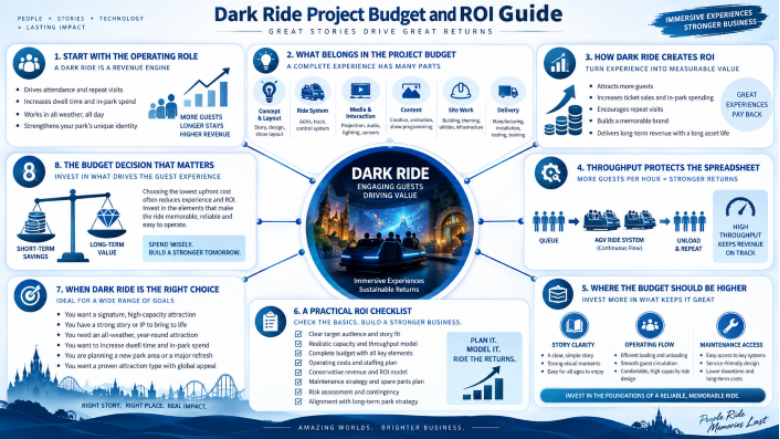
An ROI model can still be wrong. Visitor behavior is never perfectly predictable. But a model built around real customer flow, suitable product choice, and clear operating responsibility has a much better chance than one built around a render and a hopeful ticket price.