Dark Ride Manufacturer Comparison
A Dark Ride manufacturer comparison should not begin with who has the flashiest demo video. It should begin with the attraction type the venue needs to operate. A Dark Ride is a route-based product. Visitors board, move, encounter scenes, react to media or interaction, and exit through a designed flow. The manufacturer must therefore understand machinery, media, story, control, installation, and venue operation.
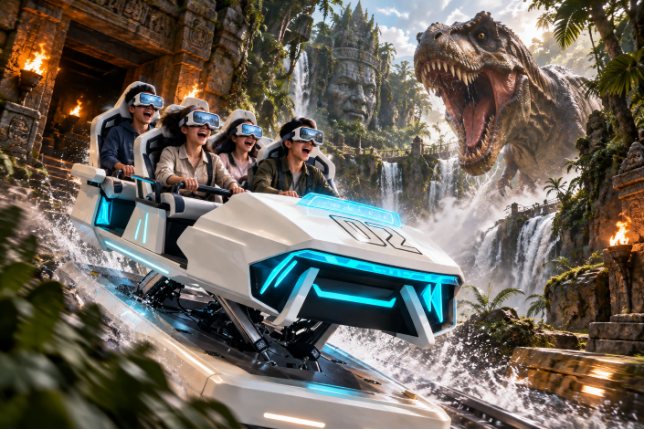
MiXR’s XR Dark Ride belongs to the newer group of immersive attraction products that combine XR visual content with AGV movement, six-axis motion, themed route design, and optional interactive elements. That makes the manufacturer comparison more demanding. Buyers are not only comparing factories. They are comparing the ability to deliver a complete commercial experience.
Compare the product scope first
Some manufacturers are stronger in vehicles. Some are stronger in projection and media. Some can build scenes but outsource content. Some sell VR hardware and call the result a ride. The buyer needs to know which type of manufacturer is being evaluated.
For MiXR, the relevant strength is the combined product approach. The company materials describe Dark Ride as an XR and AGV attraction, with motion vehicle, seats, control equipment, customized route and vehicle options, and immersive content. That is different from buying separate carts, headsets, and decorative walls. It gives the owner one project framework to discuss.
The comparison categories that matter
- Mechanical and vehicle system: motion, vehicle control, loading, safety-related structure, and maintenance access.
- Media system: headset or naked-eye display, projection or screen design, sound, lighting, and show-control timing.
- Content capability: story, scene design, interaction, visual production, and refresh plan.
- Site planning: queue, loading, exit, service area, power, network, and local construction interface.
- Installation capability: commissioning, calibration, training, acceptance, and handover documents.
- Operational support: troubleshooting, spare parts, content updates, and staff retraining.
A manufacturer with only one strong category can still be useful, but the owner then needs a separate integrator. That may work for large theme park groups with technical departments. It is risky for a smaller investor or scenic area operator.
Vehicle quality is only one part of the decision
The vehicle needs to feel stable, safe, and matched to the story. AGV route control and six-axis motion can add strong perceived value when used carefully. But more motion is not always better. If the movement fights the content, visitors feel confused or uncomfortable. The manufacturer should be able to explain the motion design, not only list the platform.
MiXR’s Dark Ride product direction allows the vehicle and route to be customized around the project. That is useful when the venue needs a fantasy vehicle, sci-fi carrier, cultural story vehicle, or disaster-escape feel. The customization should still be controlled. Too much custom work can stretch budget and schedule if the project team keeps changing the story.
Content separates a ride from a moving room
A Dark Ride without strong content is just a vehicle moving through decoration. The manufacturer should understand how long visitors have to see each scene, where attention should go, and how interaction affects the story. If the attraction is for a cultural tourism destination, the content must respect the local subject. If it is for a commercial venue, the content must be easy to explain and fast to sell.
This is where manufacturers with location-based entertainment experience have an advantage. MiXR’s wider product portfolio includes XR Infinite Space, Flying Theater, XR Theater, Glass Theater, and MR museum products. That does not automatically prove every Dark Ride project will work, but it does indicate familiarity with different visitor behaviors and venue types.
Manufacturer comparison by project type
A theme park should prioritize reliability, capacity, and service response. A scenic area should prioritize story adaptation, visual quality, and weather-resistant indoor operation. A shopping mall should prioritize visibility, safe guest flow, and marketing materials. A museum or education venue should be cautious: a Dark Ride may work for an immersive story route, but an MR Holographic Museum may be more suitable if interpretation and learning are the main goals.
This is an important point. A good manufacturer should not force Dark Ride into every project. If the venue needs multiplayer free-roam missions, XR Infinite Space or VR Large Space may fit better. If it needs group scenic flight with high emotional impact, Flying Theater may fit better.
What to request from each manufacturer
- A room-specific layout rather than a generic product image.
- A list of standard and custom product components.
- A content development process with review points.
- A clear operating cycle estimate, including boarding and reset.
- A responsibility matrix for supplier work and owner-side work.
- Installation, commissioning, training, spare parts, and support terms.
- Examples of how the product can be refreshed after opening.
These documents reveal more than a sales meeting. They show whether the manufacturer understands the project as a long-term attraction.
How to read company claims
Manufacturers often present awards, case numbers, partner names, and experience years. Those signals can be useful, but they should not replace project fit. Chaoyuanli’s materials describe many landed projects across scenic areas and commercial venues, plus a product family focused on metaverse cultural tourism. That background is relevant for a buyer evaluating MiXR. Still, the final decision should come back to the proposed Dark Ride scope for the actual site.
Ask for the manufacturer to connect its experience to your room, your visitor flow, and your operating team. If the answer stays general, the comparison is not finished.
This is where MiXR should be asked to turn its company evidence into project evidence. If the materials mention Songcheng Qianguqing, Wanda Plaza, Fashion Tianhe, or other landed venues, the buyer should ask what kind of product was installed, what service scope was provided, and which lessons apply to the new site. Case names are useful only when they lead to better questions.
The updated catalogue gives more names to check. It lists or shows references such as CINESPHERE, Grozny Mall, Cine Metaverso, EVOLT XR, space&time cube, Stellar Cosmos, Songcheng, Mettacity, JJTP Jiwattimupark, GLORY, OwWatch, Shenzhen Science and Technology Museum, and Changsha Window of the World. For tourism references, the older materials also mention Lijiang, Guilin, Sanya, Guangdong, Shanghai, Hangzhou, Jiuzhai, Chengdu, Fengdu Ghost City, and Zhangjiajie 72 Strange Buildings. I would not put all of those names into a proposal as proof of identical performance, but they are useful evidence that the manufacturer has worked across malls, museums, scenic areas, and international entertainment venues.
The practical decision
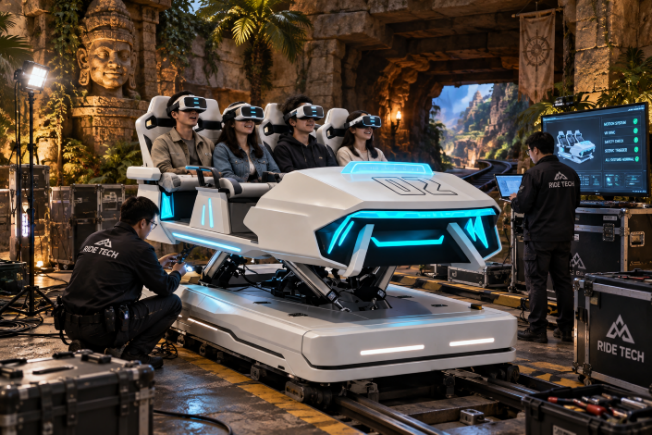
The better Dark Ride manufacturer is not always the one with the lowest quote or the longest equipment list. It is the one that can deliver a ride visitors understand, staff can operate, and the venue can market after the opening rush. For MiXR’s XR Dark Ride, the strongest buying argument is the integration of XR content, AGV motion, route design, and project delivery. The buyer should make sure that integration appears in the actual proposal, contract scope, and handover plan.