Case Study: Building a Successful Flying Theater Attraction for a Tourism Destination
A Flying Theater attraction works best when a tourism destination needs a shared emotional experience that many visitors can understand without a long explanation. In this anonymized case, the destination had scenery, visitor traffic, and local stories, but it lacked a strong indoor paid attraction. Bad weather reduced spending. Evening traffic was not fully used. Tour groups often passed through quickly after taking photos.
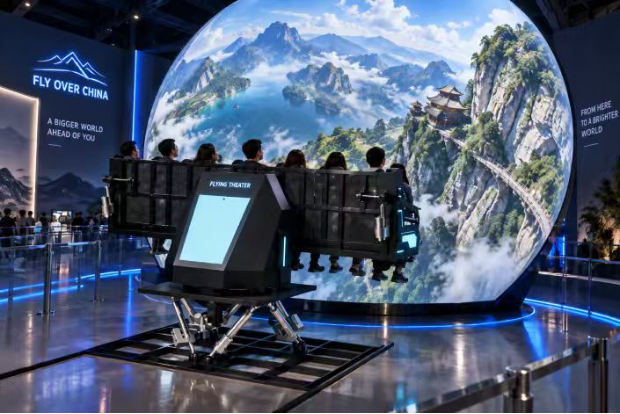
The project team selected MiXR’s Flying Theater because the format could turn the destination’s landscape and cultural material into a seated flight journey. The product combines a six-axis flying platform, dome-style visual space, film content, audio, show control, and environmental effects such as wind, rain, leg sweep, or scent depending on the configuration. For tourism operators, that is easier to sell than a technical VR attraction.
Why Flying Theater matched the destination
The site did not need visitors to learn game rules. It needed a clear attraction that a family, tour group, or older visitor could join together. Flying Theater fits that situation. People sit, buckle in, and travel through a film-based journey. The venue can use regional scenery, fantasy stories, local history, natural wonders, or a city flight route.
MiXR’s Flying Theater materials describe show lengths around 5-6 minutes in some models, with the complete project including design, production, hardware, software, transport, installation, commissioning, training, and acceptance. The short show length matters because tourism sites often handle waves of visitors rather than steady small groups.
The service chain is part of the proof. Chaoyuanli’s materials reference multiple Songcheng Qianguqing-style tourism cases, and Flying Theater is the sort of product where film, platform, projection, audio, effects, installation, and staff handover must be managed as one package. A tourism operator should ask the supplier to explain which of those services are included for the specific site.
The English catalogue also helps here because it separates Flying Theater from Metaverse Immersive Theater and Infinite Ark. That matters for tourism buyers. A seated Flying Theater, a larger immersive theater, and a boat-style Infinite Ark may all use film and motion, but they solve different traffic problems. The supplier’s case base should help the buyer choose between scenic flight, group theater viewing, and higher-capacity narrative transport.
The product was placed as an indoor anchor
The venue placed the Flying Theater near an existing visitor path rather than hiding it as a back-room experience. The entrance used simple promise language: a flight over the destination, not a technology demonstration. This helped different age groups understand the offer.
The attraction also gave guides a reliable product to recommend during rain, heat, or night-time operation. That is a major advantage for cultural tourism. Outdoor scenery cannot always be controlled. A theater can be scheduled, staffed, and sold more predictably.
What the supplier had to deliver
- A theater layout that fit the room, queue, entrance, exit, and maintenance access.
- A motion platform and seating system matched to the capacity target.
- Curved visual space, projectors or display system, audio, and show control.
- Film content that matched the destination’s story and visitor expectation.
- Environmental effects that supported the flight without distracting from it.
- Installation, commissioning, operator training, and launch support.
The project could not be treated as screen installation. Motion, film, audio, and special effects have to be timed together. If the platform moves before the image supports it, the experience feels rough. If the effects are excessive, visitors remember the air blast more than the story.
How the attraction improved customer flow
The Flying Theater gave the destination a timed attraction with clear capacity. Visitors could be grouped, seated, and moved through the experience in a predictable cycle. Tour leaders liked it because the product had a clear start and finish. Families liked it because everyone could participate together. The operator liked it because the theater created paid indoor time without asking visitors to learn equipment.
For destinations with seasonal peaks, this type of controlled capacity is valuable. The attraction can absorb groups during weather changes. It can be packaged with ticket bundles. It can also support evening programs if the surrounding site has night-time traffic.
Why content mattered more than spectacle
The team had to decide whether the film should be pure thrill or destination storytelling. They chose a mixed path. The flight had enough movement and height to feel exciting, but the scenes still introduced the region’s scenery and cultural identity. That choice made the theater useful for tourism marketing, not only for amusement.
MiXR’s product capability is relevant here because the company works with immersive film, theater systems, and cultural tourism products. A supplier in this category should be able to discuss route, rhythm, film structure, audience age, and promotional use. A beautiful screen is not enough.
When Flying Theater is better than Dark Ride or XR Infinite Space
Flying Theater is a stronger fit when the destination wants shared viewing, emotional scenery, and higher audience accessibility. Dark Ride is better when the site needs route-based story movement and interactive scenes. XR Infinite Space is better when the venue wants multiplayer free roaming and repeatable game missions.
In this case, Flying Theater won because the destination’s main asset was scenery and story. The operator needed guests to feel the place, not compete in a mission.
What made the case successful
The attraction succeeded because the product had a clear job: convert existing tourist traffic into a memorable indoor paid experience. It was not presented as “advanced equipment”. It was presented as a flight through the destination. That language made it easier to sell.
The venue also avoided the common mistake of treating the theater as a one-time construction project. It planned marketing clips, group-ticket language, staff scripts, and maintenance routines. MiXR’s turnkey delivery model helped because the operator could discuss film, equipment, installation, and training with one solution provider.
The lesson for tourism operators
A Flying Theater attraction can bring value when it strengthens the destination’s own story. It should make visitors feel they have seen more of the place than time, weather, or geography would normally allow. For scenic areas, cultural tourism zones, and destination parks, that is a practical reason to invest.
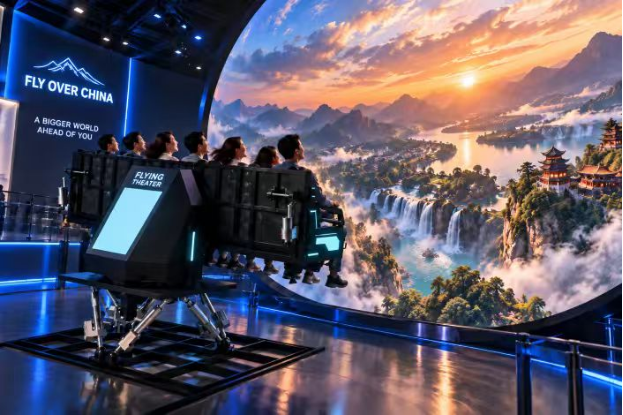
The product is not for every site. A small venue with weak traffic may not support the investment. A venue that needs competitive youth traffic may prefer XR Infinite Space. But when the goal is a shared scenic journey with ticket value and controlled indoor operation, MiXR’s Flying Theater is one of the formats worth serious consideration.