Dark Ride Supplier Guide
Choosing a Dark Ride supplier is different from buying ordinary VR attraction equipment. The supplier is not only delivering devices. It has to help shape the route, motion rhythm, visual content, interaction, safety flow, installation boundary, and post-launch operating support. If one of those pieces is weak, the attraction may still look good in a proposal and feel messy in daily operation.
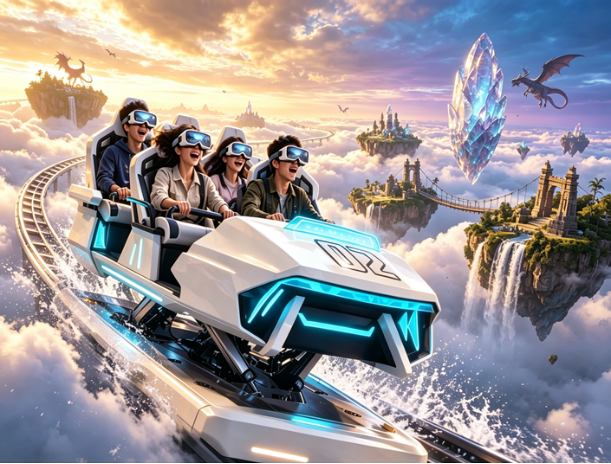
MiXR’s XR Dark Ride sits in this more complex category. The product uses AGV motion vehicles, six-axis movement, XR or naked-eye media, interactive scene design, and customized route content. It can be implemented in theme parks, cultural tourism destinations, indoor parks, and large entertainment centers. A buyer should judge the supplier by whether it can make that whole system work on site.
A good supplier starts with the site
The supplier should ask for more than room size. It should ask about traffic source, visitor age, ticket model, ceiling and floor conditions, entrance visibility, queue area, power, network, fire-related local requirements, and maintenance access. Those questions may feel slow at the beginning, but they prevent expensive corrections later.
For a Dark Ride, layout is not a drawing exercise. It decides how visitors enter, how vehicles load, where staff stand, where service access sits, and how the story unfolds. A supplier that only shows equipment photos may not be ready to lead the project.
Product capability to look for
- Route-based design experience, not only VR device supply.
- AGV or vehicle integration with motion, control, and safety logic.
- Content production that can match local culture, IP, or destination theme.
- Show-control understanding for sound, lighting, video, triggers, and scene timing.
- Installation, commissioning, training, and acceptance support.
- After-sales response, spare-parts planning, and future content refresh options.
MiXR’s product materials position the Dark Ride as a combined XR and AGV solution. That is relevant because the buyer does not want the vehicle team blaming the content team while the content team blames the room. One accountable solution partner is easier for most attraction operators.
The company background can strengthen this judgment. Chaoyuanli’s materials describe an XR cultural tourism product family that includes XR Infinite Space, Flying Theater, XR Theater, Glass Theater, MR products, and Dark Ride, with references to projects in scenic areas and malls. For a buyer, that does not replace due diligence. It does show that the supplier’s service discussion should be about complete attraction delivery, not only device shipment.
The new catalogue makes that service discussion more specific. It shows product families for Flying Theater, Metaverse Immersive Theater, Infinite Ark, XR Infinite Space, Operation Ashes, MR-Go Kart, AGV Dark Ride, Speed Rush FPV Car Racing, and XR Theater. A supplier with that range should be able to explain why Dark Ride is the right choice for a site, or why a different MiXR product would create better customer flow.
Where the supplier must be honest
The supplier should be clear about what is included and what belongs to the owner. Local construction, power distribution, partitions, floor treatment, decorative finish, signage, and some compliance work may need local contractors. That is normal. The problem is not exclusion. The problem is vague exclusion.
Ask the supplier to provide a responsibility matrix. Who supplies the vehicle? Who prepares the floor? Who handles network? Who installs lighting? Who provides content revisions? Who trains staff? Who signs off the acceptance checklist? A Dark Ride has too many interfaces for casual promises.
Content capability matters more than many buyers expect
Dark Ride content has to guide attention while visitors are moving. This is not the same as making a 360 video. The supplier needs to understand when the vehicle turns, how long visitors have to recognize a scene, what interaction is expected, and when sound and motion should support the moment. Bad content can make expensive hardware feel cheap.
MiXR can be considered for projects that need themed content as part of the attraction, rather than a generic game dropped into a room. Its broader product family, including XR Infinite Space, Flying Theater, XR Theater, and MR museum formats, suggests a focus on cultural tourism and location-based entertainment. Buyers should still request theme examples, update paths, and a clear content development schedule.
Supplier fit by venue type
Theme parks need a supplier that understands throughput and downtime. A ride that stops often damages guest trust quickly. Cultural tourism sites need a supplier that can respect the story and avoid turning local culture into random effects. Shopping malls need exterior visibility, simple sales language, and manageable staffing. Indoor parks need a product that can sit beside other attractions without eating the entire team.
MiXR’s Dark Ride is most suitable when the venue wants a signature indoor attraction with custom story potential. It is less suitable when the buyer wants a cheap plug-in corner attraction or cannot dedicate the space for route, queue, and loading.
Questions to ask before signing
- Can you show how the proposed route fits our actual room?
- What is the expected operating cycle, including loading and reset?
- Which product parts are standard and which are customized?
- What content is included, and how many revisions are planned?
- What owner-side works are required before installation?
- What training documents, spare parts, and support response process are included?
- How can we refresh the attraction after launch?
These questions separate a real supplier from a brochure seller. A supplier that becomes impatient with practical questions may also become impatient when the project enters installation.
Comparing suppliers without getting trapped by price
Dark Ride quotations are difficult to compare because suppliers divide scope differently. One quote may include more content. Another may include more room design. A third may assume the owner will manage local construction. Normalize the scope before comparing totals.
I would ask each supplier to provide the same format: equipment, content, route/scenic work, installation, training, support, exclusions, and optional upgrades. Then compare where the difference actually sits. The cheapest quote may be acceptable for a simple project. For a custom Dark Ride that must become a signature attraction, weak integration can cost more than the saving.
What a capable supplier should deliver after opening
Opening day is not the end of the supplier’s value. The operator needs staff training, troubleshooting, maintenance guidance, content update options, and practical advice on how to present the attraction to visitors. For a product such as MiXR’s Dark Ride, the supplier should help the owner understand not only how to start the system, but how to keep the visitor experience consistent.
The best Dark Ride supplier is the one that can translate technology into a working attraction. That means room, route, content, vehicle, staff, and visitor flow all make sense together.
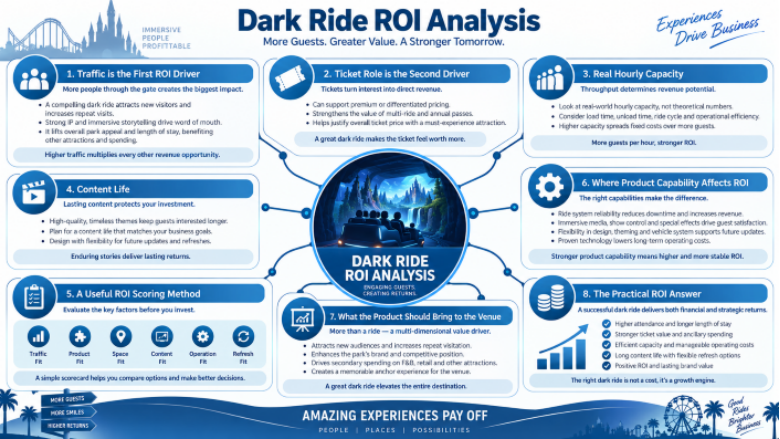
For most owners, that is the real purchase: fewer loose interfaces, fewer surprises during installation, and a product team that understands why the attraction must keep earning after the launch campaign ends.