How an XR Entertainment Center Increased Visitor Traffic by 45% in a Shopping Mall
When an XR entertainment center reports a 45% lift in shopping mall visitor traffic, I would not treat that number as a universal promise. I would treat it as a signal that the attraction solved a mall problem correctly. In this anonymized case, the mall did not need another quiet room with headsets. It needed a visible, group-friendly product that could pull families and young visitors out of the main corridor and give them a reason to stay.
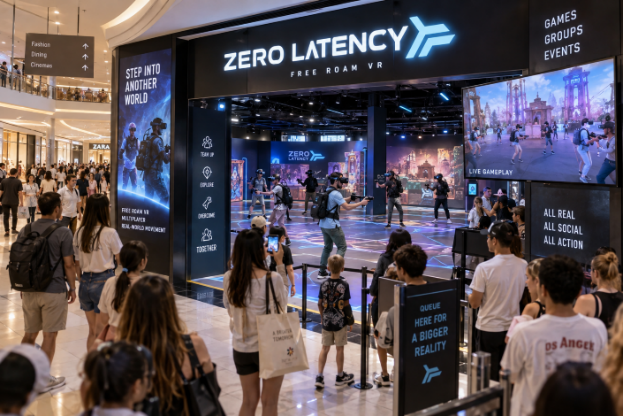
The product used was closer to MiXR’s XR Infinite Space model than to a traditional small VR booth. It supported multiplayer free roaming, themed missions, visible gameplay, a central operating system, and content that staff could explain quickly. The result was not magic. The attraction matched the mall environment better than the earlier entertainment mix.
The mall problem was not only foot traffic
The mall already had people. The problem was weak stopping power. Visitors passed the entertainment floor, looked at a few machines, and kept moving. Parents did not understand what children would get from the small VR seats. Teenagers wanted something social. Birthday groups needed a product that felt worth booking.
That is a common mall issue. Retail traffic is not the same as entertainment traffic. A venue has to interrupt movement, make the value obvious, and then handle groups without slowing the corridor. XR Infinite Space works in this setting because it is not a one-person novelty. It gives people something to watch, discuss, and book together.
Why XR Infinite Space fit the venue
MiXR’s XR Infinite Space is designed as a location-based free-roam experience. The product materials describe multiplayer movement, real-time interaction, gesture recognition in selected content, a director or broadcast operation system, themed games such as cultural exploration and shooting missions, and around 20 minutes of experience time for certain themes. It can be installed in commercial venues, scenic areas, FECs, and cultural tourism spaces.
For the mall, three capabilities mattered most. First, group play made the product social. Second, the secondary display and broadcast operation helped people outside the room understand what was happening. Third, content variety allowed the operator to sell different sessions to families, teenagers, and repeat visitors.
How the center changed its front-end sales
The operator stopped selling “VR”. That word was too broad and too tired for many shoppers. Staff began selling missions: explore, compete, escape, shoot, cook, or travel through a themed world. Parents could understand that. Teenagers could bring friends. Mall marketing could promote it as an experience zone rather than a device room.
The center also moved visual proof closer to the corridor. The broadcast screen showed gameplay and promotional content. Staff used short explanations instead of technical language. A passer-by did not have to imagine the experience from a headset on a shelf. They could see groups reacting inside the attraction and understand the mood before buying.
The customer-flow changes that made the 45% lift believable
- The attraction was placed where corridor traffic could see it.
- The product was sold as a group session, not a solo headset tryout.
- The broadcast screen turned active gameplay into live marketing.
- Staff gave short mission-based explanations instead of equipment speeches.
- Content options allowed the operator to serve families, youth groups, and parties.
- Booking packages made the center easier to use for birthdays and small events.
The reported traffic increase came from these operating changes as much as from the equipment. That is the part other malls should copy.
Where the product created commercial value
XR Infinite Space helped the mall in a few practical ways. It gave the entertainment floor a signature attraction. It created session-based revenue rather than only pay-per-machine spending. It encouraged groups to arrive together. It also increased dwell time around the venue because waiting friends and parents could watch the screen and understand the experience.
For mall landlords, this matters. A strong attraction can support nearby food, retail, and evening traffic. For operators, it creates a clearer product to advertise. A large free-roam mission photographs and films better than a row of small devices.
What MiXR delivered beyond devices
In this type of project, the useful supplier capability is not only headsets. MiXR’s product system includes the experience content, program-control equipment, VR devices, battery or endurance structure, positioning environment, and operation tools such as the broadcast/director system. The owner still needs basic renovation work such as power, network, partitions, wall treatment, signage, and operating tools, but the attraction itself can be delivered as a more complete entertainment solution.
This is also why the company’s mall references matter. Chaoyuanli’s materials mention commercial landings such as Wanda Plaza and Fashion Tianhe, while the new catalogue adds commercial and international references such as Grozny Mall, CINESPHERE, Cine Metaverso, EVOLT XR, and space&time cube. In a shopping mall article, those names are not decoration. They support a practical point: the supplier has had to consider corridor visibility, walk-in explanation, group flow, and daily store operation before.
This matters because many mall operators do not have a technical department. They need a product that staff can learn, explain, and reset without turning every session into a troubleshooting exercise.
What the center avoided
The operator did not overbuild the room. It did not hide the attraction behind a closed facade. It did not make every visitor listen to a long technical briefing. It also did not rely on one theme forever. These decisions sound ordinary, but they protect revenue.
I have seen mall VR projects fail because the product was invisible from the corridor, the explanation was too technical, or the experience felt lonely. Free-roam XR needs to look alive from outside. If shoppers cannot see the energy, they will not stop.
A mall buyer’s checklist
- Can the attraction be seen from natural visitor flow?
- Does the product support group play and easy package selling?
- Can staff explain the experience in less than half a minute?
- Is there a broadcast or viewing method for people outside the room?
- Can the content be rotated or promoted by season?
- Does the operating model fit the mall’s daily staffing reality?
What the case really proves
The 45% traffic lift was case-specific, but the reason behind it is useful. The mall used XR Infinite Space as a visible social attraction, not as hidden equipment. MiXR’s product capabilities – multiplayer free roaming, themed content, gesture interaction, broadcast operation, and light staff workflow – matched the venue’s need for attention and repeatable group sales.
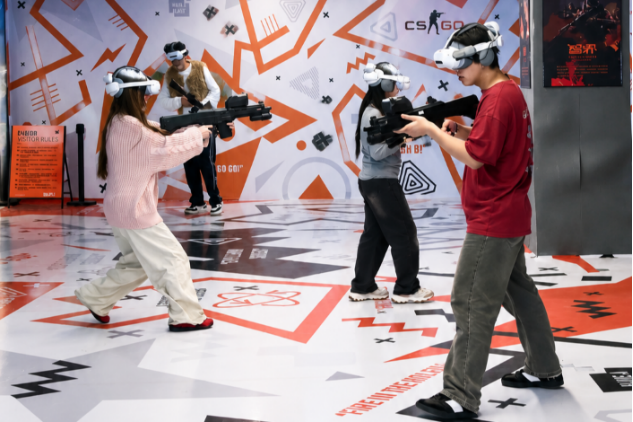
That is the lesson. Shopping malls do not need technology for its own sake. They need attractions that can stop people, make the offer clear, and turn corridor traffic into paid sessions.