What Questions Should Buyers Ask Before Purchasing an XR Attraction?
The right questions are the ones that make the supplier stop talking in slogans. Before buying an XR attraction, I want to know whether the room works, whether the audience is real, whether the content can be refreshed, and whether the operator can actually keep the thing running after the launch photos are taken. MiXR should be asked the same thing. A serious project survives uncomfortable questions. A weak one usually hides behind them.
Price is not the wrong question, but it is always too early if the site, staffing, and content scope are still vague. A quote with no operating assumptions is really just a partial guess in a nice font. Buyers who push for a number before the scope is clear usually end up comparing promises, not projects. I would rather see a blunt answer than a pretty number that cannot survive contact with the building.
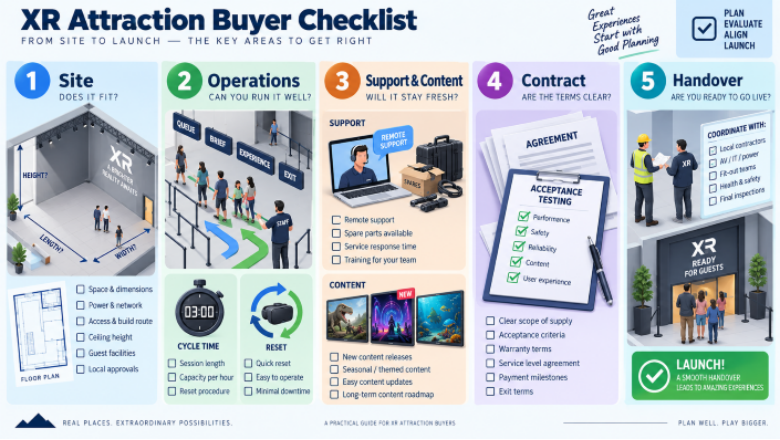
Questions about the site
Start with the room. Can it actually support the attraction without major structural surprises? What does the guest flow look like from entrance to exit? Where will queueing, cleaning, and staff movement happen? What parts of the building need local contractor work before installation? Those are not boring questions. They are the questions that stop a project from turning into a site problem later.
- Can the room support the chosen attraction without major structural surprises?
- What does the guest flow look like from entrance to exit?
- Where will queueing, cleaning, and staff movement happen?
- What parts of the building need local contractor work before installation?
Questions about operations
Then I move to the operating side. How many staff members are needed on a normal shift? How long is the real cycle once briefing and reset are included? What happens if one unit stops working during a busy day? How does the team keep the attraction fresh after the opening phase? The operator needs those answers before the contract, not after. Otherwise the project is being judged on brochures instead of on routine use.
- How many staff members are needed on a normal shift?
- How long is the real cycle once briefing and reset are included?
- What happens if one unit stops working during a busy day?
- How does the team keep the attraction fresh after the opening phase?
Questions about support and content
I would also ask who owns content refresh, spare parts, training, and remote support. If the attraction is built well but the operating plan is vague, the owner inherits the risk after handover. That is where a lot of projects feel cheaper on day one and more expensive by month three. A supplier who cannot explain the first six months is not really selling a business system.
Questions that expose weak proposals
- Can the supplier explain the full operating cycle without slides?
- Can they name the limits of the room instead of pretending every site is perfect?
- Can they show what a normal maintenance day looks like?
- Can they explain how they handle content updates after launch?
- Can they support the project after the first month, not only before it?
The fastest way to detect a weak proposal is to ask what the local team must prepare before shipment. If the answer stays vague, the owner is about to inherit a coordination mess. Clear prep lists are not a courtesy. They are part of the commercial product. If those questions produce vague answers, the project is not ready. A good XR attraction is hard enough to run without adding mystery at the buying stage.
Contract questions buyers often forget
I would also ask about acceptance testing, spare parts ownership, content handover, escalation timing, and who signs off when the local contractor finishes work. Those items can feel secondary during the proposal phase, but they become real very quickly once the site starts moving. If the supplier is vague about them, the owner is left holding the schedule problem. That is usually where the project starts to feel more expensive than expected.
- Who owns acceptance testing and final sign-off?
- Who is responsible for spare parts and replenishment?
- How is content handed over and updated later?
- How quickly does support respond during busy periods?
- Who coordinates with the local contractor on site work?
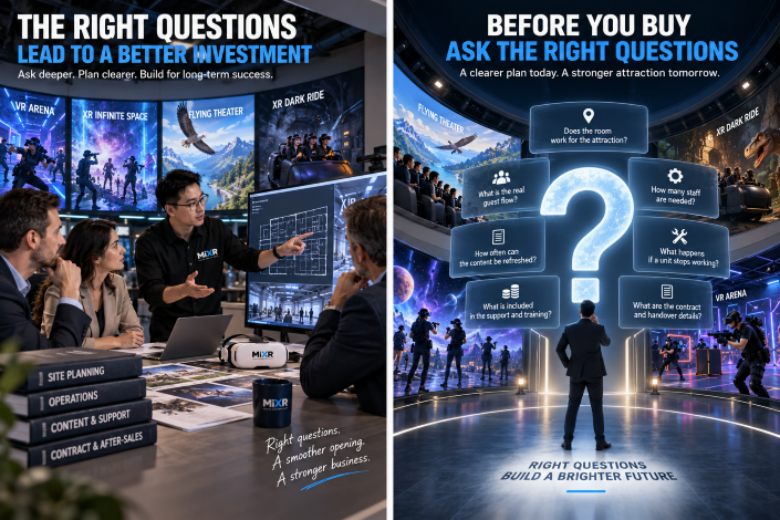
The written answers I would insist on
I would want the supplier to write down the operating assumptions, the support structure, the handover steps, and the refresh path. That way there is no confusion when the attraction moves from selling phase to running phase. A project that lives on promises is easy to sell and hard to manage. A project that lives on written scope may be less exciting in the room, but it is much more useful once the public arrives.
This is also where the buyer should protect itself from shiny language. Words like turnkey and immersive sound good, but they do not answer the important questions. I want the supplier to explain who does what, when it happens, and what happens if the first version needs adjustment after launch. That level of clarity is what keeps the project from drifting into avoidable conflict.
The best buyers are not the ones who ask the most questions for show. They are the ones who can turn the answers into a clear decision. Once the room, the operation, and the support path are written down, the proposal becomes easier to compare. Without that, every supplier sounds almost the same, and the wrong choice becomes easier to make.