Flying Theater vs Dark Ride: Which Attraction Delivers Better ROI?
Flying Theater vs Dark Ride is not a simple cheap-versus-expensive argument. It is a question of which attraction is more likely to return the owner’s money in that specific site. Flying Theater usually wins when the project needs a cleaner ticket story, faster acceptance, and a simpler operating rhythm. Dark Ride can win when the park wants a stronger narrative anchor and can support more construction, more scene work, and more maintenance. MiXR should treat the choice as a site-fit problem, not a beauty contest.
ROI follows those choices. It does not sit above them. A Flying Theater can generate a premium indoor product with broad audience acceptance and a relatively direct sales story. A Dark Ride can carry more emotional weight and more repeat value, but it asks more from the building and from the team. If the park only compares the opening number, it is missing the real decision.
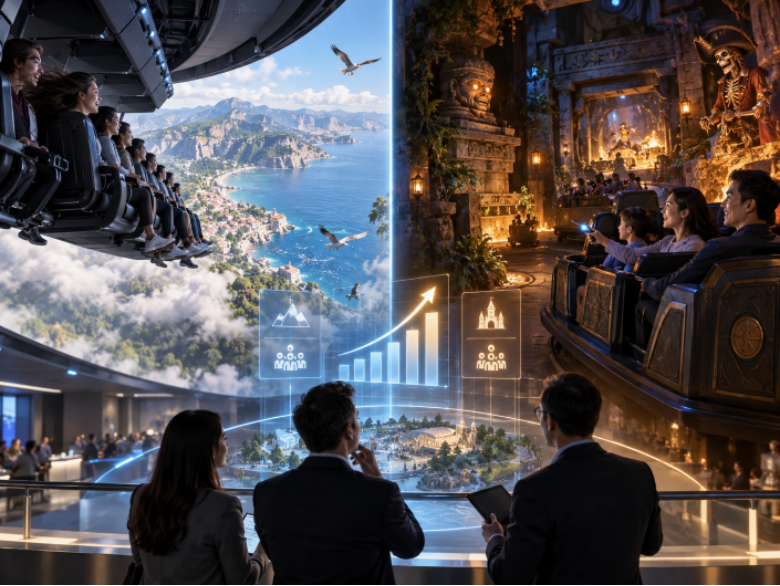
The business logic behind each format
Flying Theater is easier to explain to a mixed audience. Guests sit, lift, move, and feel like they are flying through a destination story. That makes the product a strong fit for tourist areas and theme parks that need a premium indoor slot without a complicated explanation. It can also be easier to run when the operator wants a tighter cycle, less scene maintenance, and a cleaner service pattern. MiXR’s Flying Theater line tends to perform best when the story is clear and the operating plan is disciplined.
Dark Ride works differently. It asks for more build work, but it can also create more emotional pull if the route and scenes are strong. When the site already has traffic and a clear story world, the attraction can become a signature anchor rather than just another ride. That signature effect matters. Guests remember the ride, not just the fact that they were indoors for a few minutes. For some parks, that memory is exactly what supports repeat visits.
Where Flying Theater usually wins
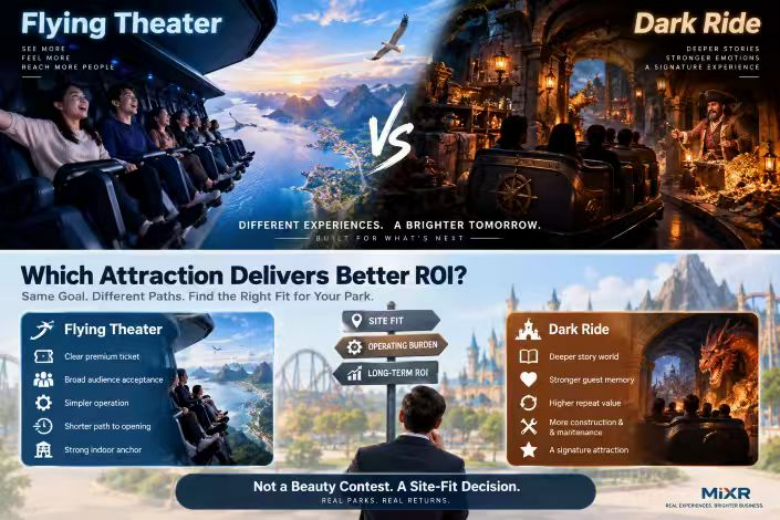
- The site needs a clear premium ticket that guests understand quickly.
- The audience is broad and includes people who do not want a complex ride system.
- The operator wants a simpler daily rhythm and a shorter route from opening to stable operation.
- The building can support motion and visual spectacle without heavy scenic construction.
- The business wants a strong indoor anchor with a direct story promise.
Where Dark Ride can win
- The park already has traffic and can feed a more substantial attraction.
- The story world is deep enough to support scene work and repeat visits.
- The site can handle more construction, more maintenance, and more support planning.
- The operator wants a signature piece that guests remember after they leave.
- The project can tolerate a more involved commissioning and service rhythm.
The variable buyers forget
The hidden variable is operating burden. A project with a slightly lower upfront number can still lose on ROI if the staffing, maintenance, or content refresh load is too heavy. I would not compare the two formats only on capex. I would compare the room, the cycle, the support plan, the likely life of the content, and the amount of attention the attraction will need after opening. A cheap build that wears the team out every afternoon is not cheap for long.
A decision rule
If the site needs a straightforward premium ticket and broad audience acceptance, Flying Theater is usually the cleaner bet. If the park wants deeper narrative and can support more build complexity, Dark Ride may be worth the extra work. Do not force either format into a site that cannot feed weekday traffic. Treat operating burden as part of ROI, not as an afterthought. The cleanest comparison is the one that still makes sense after the first launch month, when the novelty has already stopped helping.
A rough ROI lens
I would compare the two formats by looking at how quickly they can turn traffic into sellable sessions, how easy the story is to explain, and how much effort the team needs to keep the attraction fresh. Flying Theater often has the cleaner pitch and the more predictable daily rhythm. Dark Ride can create stronger memory and longer-term signature value. Those are different kinds of return. The wrong mistake is to treat them as the same commercial asset.
- Flying Theater is often the cleaner choice for broad first-time appeal.
- Dark Ride is often the stronger choice when story depth matters more than quick explanation.
- Operating burden should be counted as part of return, not a separate issue.
- The better ROI is the one the venue can sustain, not the one that looks best in a deck.
When the cheaper option is actually more expensive
A lower capex can be the wrong win if it creates more staffing pressure, slower cycles, or a weaker guest story. That is especially true when the cheaper option depends on constant operator attention or a content package that ages too fast. I would rather pay a little more for a format that the venue can actually keep healthy over time. In attraction work, ease of operation is part of return.
The owner should also compare how each format handles a slow week. A product that only looks profitable when the calendar is full can become a problem when the site enters a normal mid-season lull. A better ROI model has to survive real traffic, not just optimistic traffic.