How to Choose the Right XR Entertainment Supplier for Your Project
The right supplier is the one who helps the project open cleanly and stay usable after the launch photo. If a supplier can only talk about hardware, you are likely to end up managing the harder parts yourself. MiXR should be judged as a system supplier across Flying Theater, Dark Ride, XR Infinite Space, and VR Arena, because the real product is not a box. It is the opening result. A good supplier reduces friction before opening and after opening.
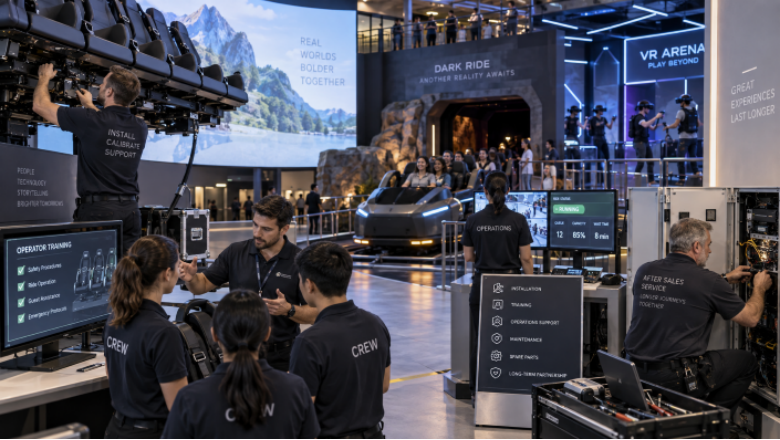
I start with the site. Then I ask about the business model. A supplier who can discuss room flow, queue pressure, daily reset, content refresh, and training is more useful than one who keeps saying turnkey and never explains what the staff does on Tuesday. That is usually the line between a vendor and a partner. The best proposals sound less like marketing and more like somebody has already stood in the room and watched the crowd move.

What a real supplier must own
- Site planning, including room fit, circulation, and utility assumptions.
- System integration, not just shipment of isolated equipment.
- Content logic that matches the venue and the audience.
- Training that normal venue staff can actually absorb.
- After-sales support that still exists after the opening month.
Those five items are where many projects either become smooth or start leaking time. The supplier does not need to do everything in-house, but someone has to own the result. If the answer is always that another contractor will handle it, I start to worry. A serious attraction supplier should be able to explain how the whole project fits together even when local work is involved.
Red flags I would not ignore
I would be careful if the supplier avoids limits, skips the site conversation, or keeps calling every project simple. I would also watch for vague ownership of installation and after-sales work. If nobody can explain who handles the local contractor, who signs off on calibration, or who troubleshoots the first month, the supplier is probably leaving risk on your side of the table. That is not a communication style issue. It is a project risk.
- The quote arrives before the site has been discussed properly.
- The team never explains who handles local coordination.
- Training is described in broad words but not in real tasks.
- Support is mentioned, but nobody can say how fast it works in practice.
How to compare quotes fairly
Good support is not dramatic. It is specific. It means drawings that a contractor can use, a handover process that a normal operator can follow, and response channels that still work after the excitement fades. MiXR should be able to explain the full operating cycle, not only the demo cycle. If the supplier cannot describe what happens after the first weekend, keep looking. The practical conversation matters more than the sales presentation.
Ask for installation scope before final pricing. Ask how the supplier handles training and handover. Ask what happens when a device fails on a busy day. Ask how the content and support plan looks six months later. Those questions reveal whether the proposal is built for a launch or for a business. The best supplier is not the one that sounds the fanciest. It is the one that keeps the attraction from becoming a headache once the public starts using it.
What a good collaboration feels like
A good supplier relationship feels slightly unexciting because there is less guessing. The drawings make sense, the responsibilities are clear, the site questions get answered early, and the handover is not treated like a formality. The owner still has work to do, but the work is visible and orderly. That is usually the difference between a project that opens cleanly and one that needs constant rescue. I would rather buy from the team that sounds practical than the team that sounds polished.
How I would shortlist suppliers
I would shortlist by looking for two things at once: relevant delivery history and a proposal that shows they understand the site. It is not enough for a supplier to say they can do the format. I want to see how they talk about room fit, contractor coordination, support, and the first six months after opening. A supplier with a strong brochure but no practical answer to those points is not ready for a serious project. A supplier with a modest presentation but a clear operating plan is often the safer choice.
The shortlist should also reflect how much the buyer wants to own. Some operators want more control and a more custom process. Others want a tighter turnkey relationship. Neither is wrong. The wrong move is picking a supplier whose working style fights the buyer’s way of doing business. The project gets slower, and nobody enjoys the handover.
- Look for references that resemble the same room type or operating goal.
- Check whether the proposal shows room planning, not just equipment supply.
- Ask how the team supports the attraction after opening month.
- Compare how clearly each supplier explains the first six months of operation.
The supplier list should also reflect the kind of support the buyer actually needs. A project with a strong internal team may be fine with a more modular relationship. A first-time operator usually needs more help and more plain-language handover. The wrong supplier is not simply the most expensive or the cheapest. It is the one whose way of working creates friction for the person who has to run the attraction every day.