Flying Theater Case Study
The most useful Flying Theater case study is not a trophy story. It is a project pattern that shows why the format was chosen, what problems it solved, and where the owner had to be careful. The following is a composite case based on common cultural tourism planning situations, not a claim about one named project. In 2026, this kind of case view is more useful than a glossy launch photo because investors need to understand traffic, capacity, content, and operation before committing to a Flying Theater.
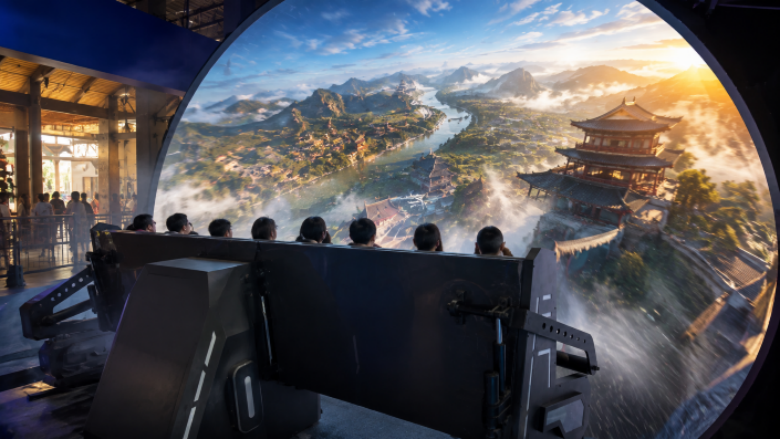
Flying Theater Case Study: A Scenic-Area Brief
Start with the site. A regional scenic area has strong daytime traffic during holidays, weaker weekday conversion, and almost no paid indoor experience after sunset. The management team wants something that can tell the regional story quickly, work during rain, and give tour groups one clear product to buy. A walk-through museum was considered, but the team worried it would feel too slow for mixed-age visitors. A Dark Ride was also discussed, but the civil work and scene package were heavier than the site wanted.
Flying Theater made sense because the promise was easy to understand. Guests could “fly” through the region’s mountains, rivers, old trade routes, or mythic scenes in a short show. The attraction did not need guests to learn controls. It could serve families, older visitors, school groups, and tourists who wanted a strong memory in a controlled indoor room.
Why The Format Was Chosen
The owner needed three things: weather protection, a ticketed anchor, and a story format that could make the destination feel larger. Flying Theater matched those needs better than a small VR room because it could handle groups and present a shared experience. It matched them better than a large physical ride because the project could concentrate the impact into media, motion, effects, and room design.
MiXR’s Flying Theater would be relevant in this case because the project depends on integration. A six-axis flying platform, enclosed dome screen, 8K film content, sound, show control, and effects such as wind or rain need to be timed as one show. Buying those pieces separately would place more coordination pressure on the owner.
Planning Decisions That Changed The Project
The first decision was show length. A 6-8 minute film kept the pace tight and protected capacity. The second decision was queue location. The entrance had to catch guests before they left the main visitor route. The third decision was content tone. The site did not need a random flight film. It needed a story that belonged to the destination.
The fourth decision was staff routine. The team mapped the full cycle, including ticket check, loading, briefing, show, exit, and reset. That pushed the planning cycle closer to 10-15 minutes, which gave a more honest capacity picture.
The fifth decision was marketing language. The team stopped describing the attraction as “a high-tech theater” and started selling the visitor result: a flight through the destination’s most memorable scenes. That sounds like a small copy change, but it affects ticket conversion. Guests buy what they can picture. A technical description may impress managers in a meeting; it rarely helps a family decide at the entrance. For Flying Theater, the promise has to be understood before the guest reaches the cashier.
What Could Have Gone Wrong
The project would have become weak if the owner had chosen equipment before deciding the story. It also would have struggled if the theater had been placed in a quiet corner with poor visibility. Another risk was overloading the film with too much narration. Guests in a Flying Theater feel through movement and image; they do not want a lecture while the seat is moving.
There was also a maintenance issue to think through. Effects are memorable, but they add inspection and service needs. A rain or scent effect should be used because it supports the story, not because it looks good in a feature list.
The same caution applies to media ambition. A project can fail by trying to show every landmark, legend, and festival in one ride. The better film usually chooses a few scenes and lets the motion, sound, and effects breathe. Guests remember a clear sequence more easily than a rushed catalog of local culture.
A Case Review Checklist
- Did the project solve a real site problem, such as rain-day capacity or weak evening revenue?
- Was the story strong enough to justify a Flying Theater instead of a simpler screen show?
- Did the room cycle use real loading and reset time?
- Was the entrance placed where visitors naturally pass?
- Did the supplier cover equipment, content, installation, training, and support?
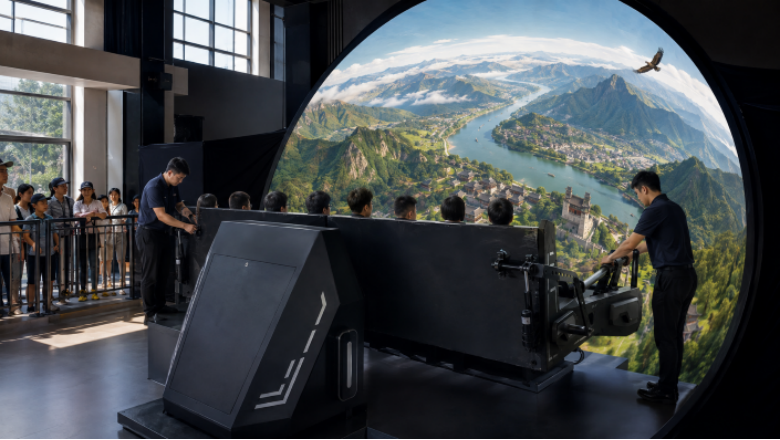
What The Case Teaches Buyers
A Flying Theater case should not be judged only by attendance photos. The better question is whether the attraction fit the site’s traffic and whether the team could keep it running calmly. If the film, location, cycle, and staff routine are right, the product can become part of the destination’s revenue plan. If those pieces are guessed, the same equipment can feel surprisingly weak.