Flying Theater ROI Analysis
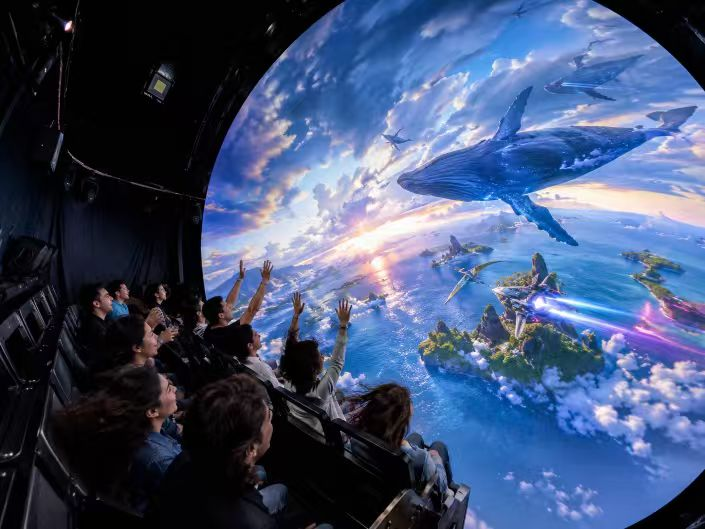
Flying Theater ROI is decided less by the motion system itself and more by how well the attraction fits the site economy. A beautiful flying cinema can still disappoint if the queue is weak, the show cycle is slow, or the ticket is treated as a side product. In 2026, theme parks and cultural tourism operators are more careful with capital spending, so the question is not “Will guests enjoy it?” They probably will. The harder question is whether the room can keep filling seats at a realistic pace. MiXR’s Flying Theater should be evaluated in that practical frame: motion platform, dome or wrapped visual system, film content, effects, installation, and operating support working as one attraction.
Flying Theater ROI Starts With Real Throughput
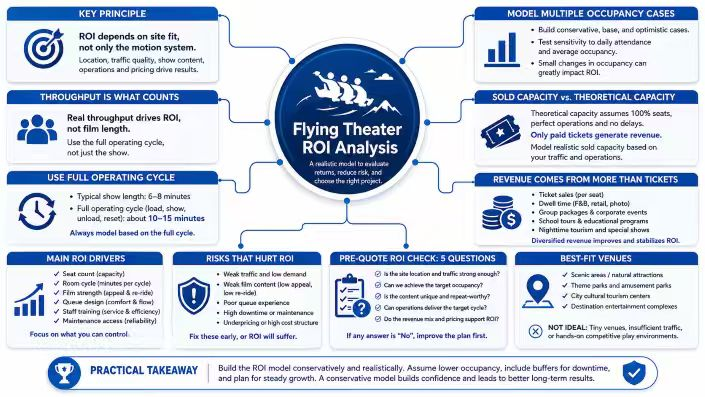
The basic math is simple, but the assumptions are where people fool themselves. A common planning model starts with seat count, show length, loading time, opening hours, expected occupancy, and ticket price. If the show is 6-8 minutes, the full cycle may still be 10-15 minutes after guests enter, sit down, receive instructions, exit, and the room resets. That difference matters. Four smooth cycles per hour can be healthier than six rushed cycles that annoy staff and guests.
Occupancy should also be treated carefully. A holiday crowd is not the same as weekday demand. For early planning, I prefer to model several occupancy cases rather than one pretty number: cautious, normal, and strong. A scenic area with seasonal peaks may see very different patterns from an indoor theme park or a city cultural tourism project.
One practical habit helps here: separate sold capacity from theoretical capacity. Theoretical capacity is what the seat count suggests. Sold capacity is what the site can actually feed after weather, tour-bus timing, school-group arrivals, lunch breaks, and staff rhythm are taken into account. I would rather see an owner plan around a believable 55-70% average occupancy and then enjoy the upside than build a business case that needs full seats most of the day. The first version is boring. It is also the one that survives board review.
Revenue Is Only One Side Of The Model
Ticket revenue matters, of course. But a Flying Theater can also support longer dwell time, group packages, school tour programs, and night-time cultural tourism. Those values are harder to place into one neat spreadsheet, yet they often affect the owner’s final decision. A city tourism site may use the attraction to package local scenery or mythology. A theme park may use it as a weather-resistant indoor anchor. A mall entertainment floor may use it only if the space, ceiling, and traffic allow a destination-style product.
The format is weaker when the site cannot feed steady traffic, when the story is too thin for a screen-led ride, or when the budget leaves no room for proper content. A motion platform cannot rescue a dull film. I have seen buyers spend too much attention on seat hardware and too little on the show itself. The guest remembers the flight, but the flight is carried by the media and timing.
The Parts That Change ROI Fast
Several inputs move the model more than buyers expect.
- Seat count and room cycle determine hourly capacity.
- Film strength affects conversion, reviews, and repeat interest.
- Queue design changes how many guests the team can load calmly.
- Staff training controls downtime, safety briefings, and reset speed.
- Maintenance access affects how quickly small issues are fixed.
None of these is glamorous. They are the working parts of ROI.
Where A Flying Theater Fits Best
Flying Theater is usually a strong candidate for scenic areas, theme parks, city cultural tourism centers, and destination entertainment complexes. It works when the operator wants a premium experience that is easy to explain: guests sit, lift, move, and feel like they are flying through a story. MiXR can package the flying platform, enclosed dome screen, 8K film content, show control, audio, and effects such as wind, rain, leg sweep, or scent according to project needs.
It is not the first choice for a tiny venue that needs a light repeat-play game, or for a project where guests expect hands-on competition. In those cases, VR Arena, Free Roam VR, or XR Infinite Space may be more suitable. If the project needs slow scene-by-scene physical storytelling, a Dark Ride may be the better starting point.
A Simple ROI Check Before You Ask For A Quote
Use this screen before the supplier meeting.
- Can the site feed the attraction on normal weekdays, not only holiday peaks?
- Is the paid ticket easy for visitors to understand in under ten seconds?
- Does the room layout support a 10-15 minute cycle without staff stress?
- Is the film content strong enough to represent the destination or park theme?
- Has the owner budgeted for training, maintenance, and later content refresh?
If three answers are weak, pause the plan. If the answers are mostly strong, the next step is a scoped proposal, not a rough equipment price. A Flying Theater ROI model should feel a little conservative. That is how you keep the project alive after the first month.