Flying Theater Ticket Revenue and Capacity Planning Guide
Flying Theater ticket revenue is a capacity problem before it is a marketing problem. If the room cannot load, run, unload, and reset at a steady rhythm, the ticket price will not save the project. In 2026, operators are trying to squeeze more reliable income out of indoor attractions, especially in weather-sensitive parks and cultural tourism sites. That makes capacity planning a serious buying issue. MiXR’s Flying Theater can be part of that plan when the owner treats the attraction as a working venue, not just a spectacular ride system.
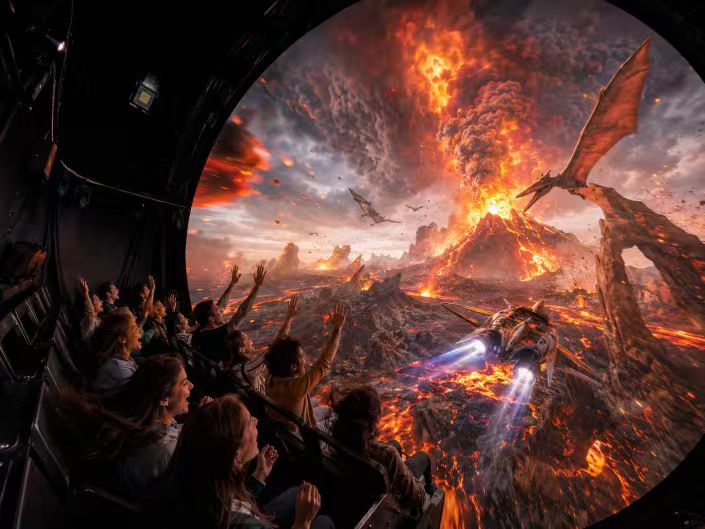
Capacity Planning For Flying Theater
The planning formula is plain enough: seats multiplied by cycles, then adjusted by occupancy. The trick is choosing inputs that match real operations. A show may run 6-8 minutes, but the operating cycle often sits closer to 10-15 minutes when loading, safety checks, effects reset, and guest exit are included. If a sales proposal uses only the film length, the capacity number will look better than the room can actually deliver.
Seat count should also match the site’s traffic. A larger theater is not automatically better. If weekday occupancy is weak, a big room can feel empty and expensive to operate. If the room is too small for a peak tourist site, queues become long and guests walk away. Good planning usually tests at least three days: a slow weekday, a normal weekend, and a holiday peak. Those three pictures are more useful than one average.
There is also a pricing habit I would avoid. Some owners set the ticket first because a nearby attraction charges that number. That can mislead the plan. Start with the visitor promise and the local payment habit. A short regional flight film in a scenic area, a fantasy flight inside a theme park, and a city landmark film sold to tour groups may all need different pricing logic. The ticket has to feel obvious at the counter; if staff have to defend the price for every group, the capacity model will slow down before the ride even starts.
Ticket Revenue Is Built At The Entrance
Revenue starts before the guest sits down. The attraction needs a visible entrance, a simple promise, clear pricing, and enough waiting space to keep the line comfortable. Flying Theater is easy to sell when visitors understand the offer quickly: fly over a region, a fantasy world, a historical route, or a city skyline. If the entrance copy feels abstract, staff will spend too much time explaining it and conversion will drop.
Some sites can charge Flying Theater as a stand-alone ticket. Others fold it into a package with park admission, night tour programs, school groups, or VIP routes. There is no universal answer. A cultural tourism site with strong local scenery may package the ride as part of a regional story. A theme park may use it as an indoor premium add-on. A family entertainment center should be careful; if the unit lacks the right footprint, ceiling, and traffic, a VR Arena or Free Roam VR attraction may fit better.
A Practical Capacity Model
Use this early model before building a revenue forecast.
- Define the available operating hours for normal days and peak days.
- Use the full room cycle, not only the film length.
- Apply cautious occupancy for weekdays and separate occupancy for weekends.
- Reserve time for cleaning, safety checks, and small delays.
- Test whether staff can keep the cycle steady without rushing guests.
This model will not give a guaranteed result. It will show whether the idea is even in the right range.
What Often Gets Missed
The biggest miss is exit flow. Operators plan the entrance carefully and then let the exit spill into the next group. That slows the room and makes staff look disorganized. Another miss is pre-show time. If guests need a short introduction, the space for that introduction should be planned. Doing it inside the main room can reduce capacity more than expected.
Film length is another lever. A longer show may feel richer, but it can reduce hourly seats. A shorter show may improve throughput, but it has to deliver enough emotional value to justify the ticket. I would rather see a tight 6-8 minute film that guests remember than a long ride that starts to drag.
Where MiXR’s Flying Theater Fits
MiXR’s Flying Theater product line is relevant for projects that need the system, content, effects, and installation to be coordinated. The attraction can include a flying motion platform, enclosed visual system, original film content, show control, and environmental effects. That integration helps when the owner is planning revenue capacity because the ride cycle depends on all parts working together.
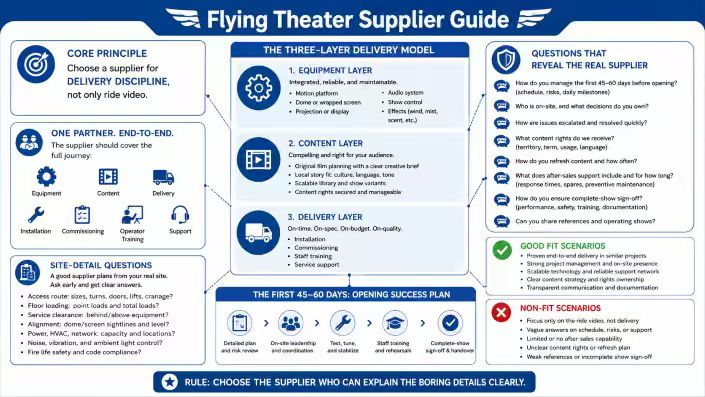
A Buying Rule For Operators
Do not approve the ticket forecast until someone has walked through the guest route minute by minute. Arrival, payment, waiting, loading, show, exit, cleaning, and reset all belong in the model. If the numbers still work after that, the project is much stronger than a forecast built on seat count alone.