Benefits of Flying Theater Attractions
The benefits of a Flying Theater attraction are practical before they are emotional. Yes, guests feel the flight illusion. That is the hook. But operators buy the format because it can create a clear paid experience, handle mixed audiences, and work in places where weather or footprint would make another ride harder to justify. In 2026, that mix matters a lot. A site needs something people understand quickly and something the team can actually run. Flying Theater does both when the project is sized correctly. MiXR’s Flying Theater approach is relevant because the company packages the visual system, motion platform, effects, and installation logic together.
Why guests get it fast
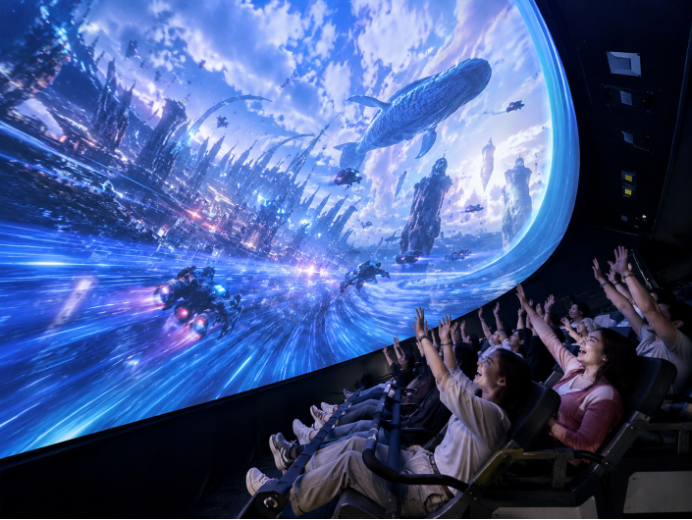
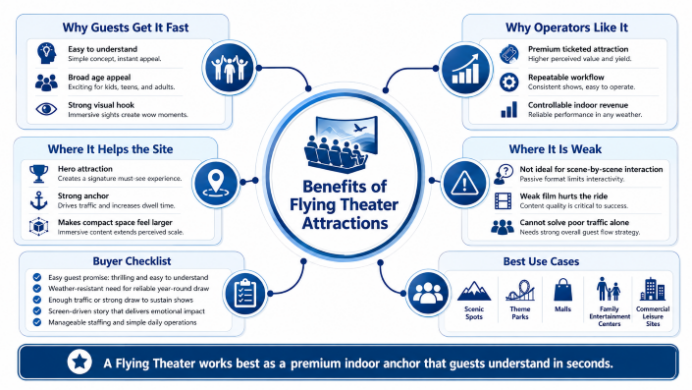
People understand “flying” almost immediately. That sounds simple, but it is valuable. A family group can walk past the entrance, see the screen and motion platform, and know what kind of experience they are about to buy. The attraction does not need a long explanation. That lowers friction at the ticket counter and makes the room easier to market.
The format also scales well across ages. Younger guests get the motion and spectacle. Older guests often appreciate the story, landscape, or travel angle. If the film is well made, the experience feels broad without becoming generic. That is a better fit for mixed traffic than attractions that only appeal to one narrow audience.
Why operators like it
A Flying Theater can turn space into a premium ticketed attraction without needing a full walk-through ride path. That matters for scenic spots, theme parks, malls, and some commercial leisure sites. The attraction can also work when weather is bad or outdoor foot traffic is not reliable. Indoor revenue does not solve every business problem, but it gives the operator a more controllable asset.
Another advantage is repeatable operation. Once the room is designed well, the workflow is fairly clear: queue, load, show, unload, reset. It still requires discipline, but it is not a mystery. That predictability makes staffing and planning easier than attractions that depend on complex physical scenes or many moving parts across a long route.
Where it helps the site
Flying Theater is especially useful when a venue needs one strong hero experience that can anchor a zone. It can also support a broader destination story. Scenic areas can use it for region-based storytelling. Theme parks can use it as a headline indoor attraction. Family entertainment centers can use it as a more premium ticket layer. In each case the attraction does a different job, but the common thread is clear: it creates a strong, easy-to-understand moment.
The format is also useful when a project needs to feel larger than its floor area. Screen scale, motion, and effects can make a room feel more substantial than the footprint suggests. That is one reason the attraction often shows up in projects where developers want impact without building a giant physical route.
Where it is weak
Flying Theater is not the best answer when the project needs intimate scene-by-scene interaction. It is not a substitute for a detailed Dark Ride or a walk-through story. It also does not solve weak traffic by itself. A room with no audience will still be a room with no audience.
The other limit is content. If the film is weak, the attraction falls flat no matter how good the platform is. The buyer should never treat content as decoration. It is the ride.
A buyer checklist
1. Is the guest promise easy to understand in seconds?
2. Does the site need a weather-resistant or indoor anchor?
3. Can the room be fed enough traffic to justify the build?
4. Does the story fit a screen-driven experience?
5. Can the operator run the attraction without too much staffing pressure?
If the answer to most of those is yes, Flying Theater is usually a smart format to study. If not, another product may fit better. That is the kind of decision that keeps a project honest.
What operators should use the format for
Flying Theater works best when the site wants a premium indoor anchor that people understand quickly. It can support a destination story, a rain-day revenue plan, and a ticket structure that is easy for front-line staff to sell. Those are practical benefits, not just marketing language. They matter because the attraction has to work in the same way on a slow Tuesday and a crowded holiday weekend.
It also helps when the venue wants to introduce a larger story without building a giant ride path. The format can carry landscape, travel, fantasy, or regional identity in a way that feels substantial to the guest and still manageable for the operator. That balance is the reason the attraction shows up so often in project plans that need both drama and control.