Flying Theater for Theme Parks
A theme park should use Flying Theater when it needs an indoor anchor, a weather-proof crowd absorber, or a ride that can tell a broad story without eating half the site. It is not the answer to every park brief. But in the right place, it solves more than one problem at once. MiXR’s Flying Theater is relevant here because the park is not only buying equipment. It is buying a way to move guests, shape dwell time, and give the site a clear high-value indoor experience.
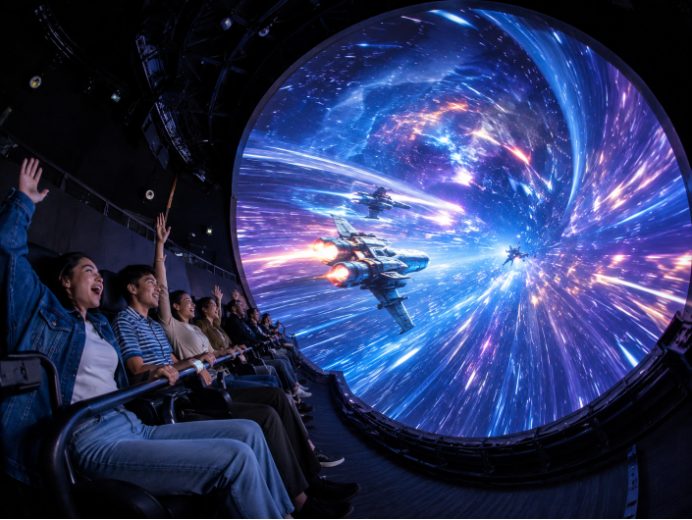
Best park scenarios
Flying Theater is strongest when the park has a regional story or a strong scenic identity. A flight over landscapes, city icons, or fantasy worlds can make sense as a signature experience. It also works well where weather is a real operating issue. If outdoor attendance shifts with season or rain, an indoor attraction becomes more than nice to have. It becomes part of the operating plan.
The format is also useful when the park has a limited footprint but wants a premium-feeling attraction. A large physical ride path is not always possible. Flying Theater can deliver scale through screen, motion, and effects instead. That is a very different build from a Dark Ride, and for some parks it is the more realistic one.
Where it sits in the guest path
Placement matters. A Flying Theater should not feel hidden or hard to find. It works best where it can catch day visitors, school groups, and families who are already looking for a strong indoor option. If it sits in the wrong corner, the room may still be excellent and the revenue still disappointing. Parks sometimes forget that visibility is part of the product.
The attraction also pairs well with other indoor formats. A park might use Flying Theater as a visual anchor, then place a Dark Ride or a smaller interactive attraction nearby. That kind of cluster can support longer dwell time without making a single room carry the whole day.
What park managers often overlook
They underestimate the importance of the show content. A strong platform cannot rescue a weak film. They also underestimate the operational ramp. If the attraction is meant to carry daily traffic, the team needs a clear staffing plan, a maintenance routine, and a backup plan for load management on peak days. A park can spend a lot and still underperform if the operating script is fuzzy.
Another miss is thinking about the attraction only as a ride. It is also a story tool. The best projects use the film and effects to extend the park’s brand, not just fill a gap in the lineup. That is where the attraction starts to feel like part of the destination instead of a separate machine.
When not to use it
Do not force Flying Theater into a park that needs intimate physical scenes, hand-built exploration, or a very slow narrative route. That is where a Dark Ride may be better. Do not use it if the park cannot feed enough traffic or does not have a clear indoor experience strategy. And do not buy it just because the demo feels strong. The park has to use it well every day, not just admire it on opening week.
A simple buying rule
If the park needs broad appeal, weather resilience, and a compact indoor hero attraction, Flying Theater belongs on the shortlist. If the park needs close-up world building and scene-to-scene storytelling, it probably does not. That is the distinction that keeps a purchase from drifting into regret.
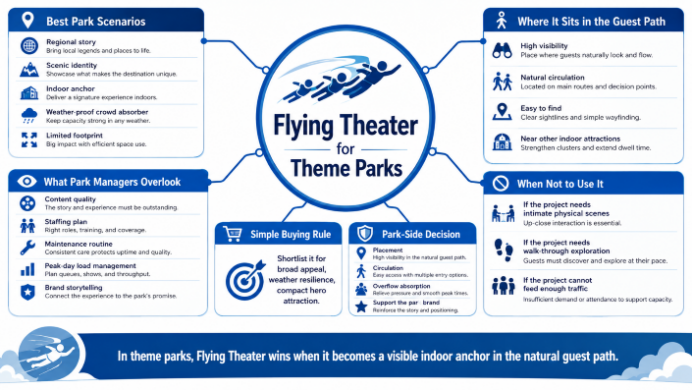
The park-side decision
Theme parks should treat Flying Theater as a placement decision, not just a ride decision. Put it where it can catch families, school groups, and visitors who are already looking for a large indoor experience. If the location is hidden or the pathway is awkward, even a strong show will underperform. The format wins when it becomes part of the park’s natural circulation.
It should also support the brand story of the park. A strong flight film can extend the destination identity instead of sitting beside it like a separate machine. That is usually what turns a simple indoor attraction into a real anchor: guests remember the sensation, but they also remember that it felt like part of this park and not a generic show transplanted from somewhere else.
Operators should also think about peak-day pressure. If the attraction sits where it can absorb queue overflow from the rest of the park, it becomes more useful during crowded periods and less dependent on perfect weather or perfect timing. That kind of placement makes the ride easier to sell and easier to defend when managers review the whole guest path.