Hyper XR Theater Explained for Commercial Venue Buyers
A Hyper XR Theater is a fixed-seat group attraction in which each audience member wears an XR headset while synchronized seating, sound, environmental effects, and selected gesture interactions support the story. It provides a shared theater session without requiring guests to walk through a large tracking area.
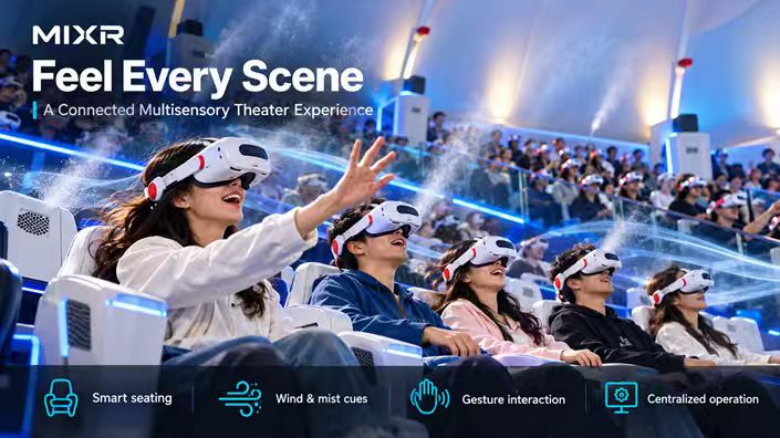
MIXR’s Hyper XR Theater is designed around seated immersive storytelling. Head tracking adjusts the virtual viewpoint, while the smart-seat and show-control systems can coordinate audio, wind, fog, water effects, and other cues with the content. For commercial buyers, the main purchasing question is scope: which parts of that experience are included, integrated, and ready for staff to operate?
This question has become sharper in 2026 as venues compare complete attraction systems with headset-only proposals.
A theater session rather than a headset demo
The audience enters as a group, receives a short briefing, takes assigned seats, puts on the headsets, and follows the same narrative timeline. The experience may include moments where gestures influence a scene, but the format remains controlled and scheduled.
That makes it different from free-roam XR. The venue does not need a large obstacle-free walking zone for each player. It does need organized seating, safe access, device preparation, operator visibility, and a predictable method for collecting and cleaning the headsets after the show.
This format can suit shopping malls, cultural tourism projects, indoor theme parks, science centers, and commercial entertainment venues that want an immersive group product within a defined room.
The headset is only the visual layer
An XR headset gives each visitor a wide virtual view and allows head movement to change perspective. It does not create a complete theater on its own.
The content must be rendered and synchronized for a group session. Audio needs to remain aligned with the scene. The seat and environmental systems need show cues. The control platform must start the correct content on all devices and help staff identify a headset that has not connected.
MIXR’s materials reference enterprise headsets, gesture recognition, fixed seating, environmental effects, and centralized operation. A quotation should show how these components communicate. Separate hardware lists do not prove that the theater has been integrated.
What multisensory effects should do
Environmental effects are most useful when they explain a change in the story. Wind can support fast movement or an exposed location. A short mist cue may reinforce water or weather. Seat vibration can signal machinery, impact, or instability.
The effect should arrive at the correct moment and stop cleanly. Continuous stimulation becomes tiring and makes later scenes less distinct. Buyers should ask to review the show from beginning to end rather than judging a short collection of strong effects.
Maintenance also matters. Fog fluid, water delivery, fans, scent modules, and seat mechanisms have different service requirements. Access panels and replacement procedures should be visible in the technical plan.
Gesture interaction needs a clear reason
MIXR’s Hyper XR Theater can use gesture recognition for selected story actions. A visitor might choose an object, trigger an event, or respond to a character without holding a controller.
That interaction works best when it is simple and well timed. The system should make the required gesture obvious, recognize it within the seated range, and give immediate feedback. A complex tutorial interrupts the theater rhythm.
Commercial buyers should also confirm whether one guest’s action affects only that guest, a small group, or the whole audience. The answer changes the content logic and the way staff explain the experience.
The operating workflow belongs in the quotation
A complete project scope should describe the customer cycle alongside the installed hardware. Entry guidance, health or safety notices, headset fitting, seating, show start, staff monitoring, device return, cleaning, charging, and exit all affect capacity.
The control interface should show device connection, battery status, content version, and session state in language that normal venue staff can understand. If every small interruption requires an engineer, the attraction will be difficult to operate.
Training should cover routine use and exception handling. Staff need to know what to do when a headset does not start, a guest removes it, an effect fails to trigger, or the show is paused.
Questions commercial buyers should ask
Before comparing suppliers, request a clear answer to these questions:
1. How many seats and headsets are included in the quoted configuration?
2. Which seat effects and environmental effects are installed?
3. Is gesture interaction included in the supplied content?
4. What control, charging, cleaning, and storage equipment is provided?
5. Who is responsible for room preparation, network, power, and local construction?
6. What content, language versions, training, spare units, and remote support are included?
MIXR can provide the XR theater equipment and content integration as a project system. The venue should still define its target audience, session length, staffing model, and the role of the attraction within the wider visitor route.
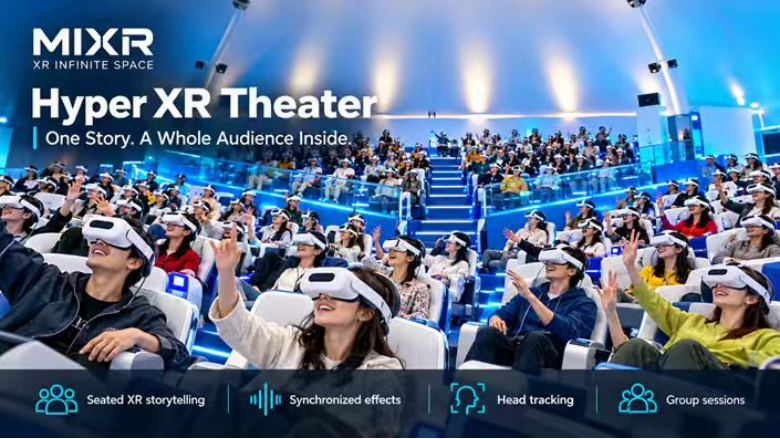
The most useful Hyper XR Theater is not the one with the longest equipment list. It is the one that gives the audience a coherent shared story and gives the operator a manageable cycle. When content, headsets, seating, effects, and control are commissioned together, the technology becomes easier for guests to forget and easier for staff to run.