Case Study: Developing a VR Theme Park from Concept to Operation
If I had to build a VR theme park, I would not start with the equipment list.
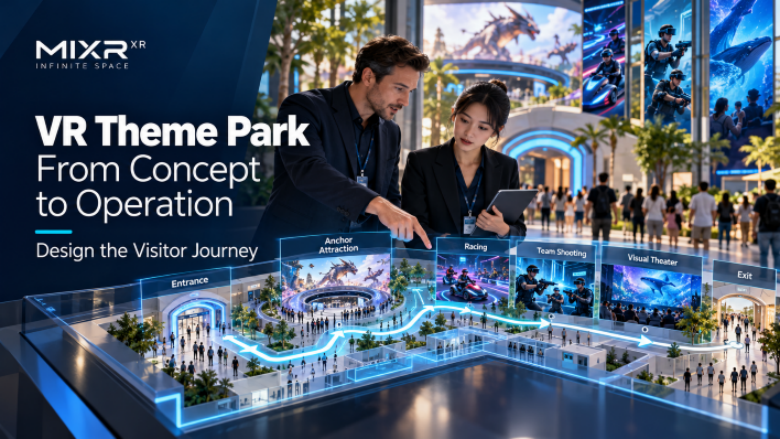
I know that sounds boring. The equipment list is the fun part. It makes the proposal look full. XR Infinite Space. Racing. Shooting. Karting. A visual theater. A few bright renders, and suddenly the venue feels like a serious project.
But visitors do not walk into a venue and think in product categories.
They walk in with a mood.
One person wants something competitive. One is nervous. One parent only came because the child asked. A group of teenagers wants to laugh at each other. A company team wants an activity that will not turn into chaos. Some people want the biggest experience in the room. Some just want to try one thing and leave.
That is where I would begin.
Not with “how many products can we fit?”
With “what does each customer feel safe saying yes to?”
The First Choice Has to Be Obvious
The first few minutes inside a VR theme park are important.
If customers stand there staring at a complicated menu, the venue is already losing energy. Staff start explaining too much. Visitors nod, but they are not really deciding. Then someone in the group says, “Let’s just look around first,” which often means no sale.
I would want the first choice to be easy.
A clear main attraction. A quick-play option. Something competitive. Something visual for people who do not want to play hard. The customer should feel there is a natural starting point, not a wall of choices.
This is where MIXR’s product range can be useful, but only if each product has a job. XR Infinite Space, MR CS, Speed Rush, MR-Go Kart, Holographic Glass Theater, and other formats should not be piled into the venue like a showroom. A showroom impresses visitors for two minutes. A theme park has to guide them through decisions.
One Anchor, Then Smaller Reasons to Stay
I would want one anchor experience.
For many VR theme park projects, XR Infinite Space can take that role. It feels bigger than a small station game. Groups can move, interact, follow a story, and come out feeling they did something together. That gives the sales team a stronger product to talk about when selling birthdays, youth groups, weekend bookings, or repeat visits.
But the anchor cannot swallow the whole venue.
If every customer is waiting for one main session, the floor feels stuck. If briefing takes too long, the queue becomes tense. If exit flow is poor, the next group feels rushed before they even start.
So I would build around the anchor, not worship it.
A product like Speed Rush can keep the front area alive because people understand racing instantly. They see motion. They understand competition. They do not need a five-minute explanation.
MR CS can serve another customer mood: team shooting, faster competition, group energy. I would be clear on the planning detail here: this product does not require a backpack, and it can work under normal commercial ceiling height. That makes it easier for many indoor entertainment venues that do not want heavy site changes.
MR-Go Kart can add a familiar driving layer. Holographic Glass Theater may work if the venue wants a shared visual experience for families or casual mall visitors.
The mix is not about having more. It is about giving people more than one comfortable way to buy.
I Would Keep Phase One a Little Hungry
If I were investing, I would feel the urge to open big. Most people would.
A large opening looks confident. More machines, more photos, more talking points. The problem is that opening big can hide weak decisions for a while. Crowds come because the venue is new. Friends visit. Local media may show up. Staff work extra hard.
Then the second month arrives.
That is when I would rather have a venue that is slightly hungry than one that is bloated. A focused first phase gives the team time to learn. Which attraction gets noticed first? Which one gets repeat play? Which one causes hesitation? Which package sells without pressure? Which product staff secretly dislike operating?
Those answers are worth more than guesses made before opening.
Expansion should come from customer behavior. Not from a desire to fill every corner on day one.
Ticket Packages Should Sound Like Normal Human Language
I would spend real time on the ticket menu.
Not because naming packages is glamorous. It is not. But a confusing ticket menu quietly kills sales.
Customers should not need a lecture to understand the offer. I would keep it simple: a trial option, a main experience ticket, a multi-attraction pass, and group packages for birthdays, students, and corporate teams.
The names should be plain. The time should be clear. The group size should be clear. Staff should be able to explain the difference in one breath.
A good package makes the customer feel helped, not sold to.
That matters in VR entertainment because many visitors are still unsure what they are buying. They may not know whether the experience is physical, scary, difficult, long, or suitable for children. The package should reduce uncertainty.
Training Is Where the Venue Becomes Real
I do not fully trust a VR theme park plan until I see the training plan.
Equipment matters, yes. But staff turn the equipment into a daily business.
They explain rules. They calm first-time players. They help with gear. They reset sessions. They clean. They notice when a group is confused. They keep nervous parents from backing out. They keep excited teenagers from turning the floor into a mess.
That work needs routines.
MIXR’s installation and training support should become simple daily habits for the operator: opening checks, guest explanation, safety reminders, cleaning, reset steps, basic troubleshooting, and closing checks. Nothing too dramatic. Just repeatable.
A venue that depends on heroic staff is not a good venue. A good venue lets ordinary staff do the job well.
The Numbers I Would Actually Believe
Revenue matters. I would not pretend otherwise.
But I would not only read the revenue report.
I would watch the venue.
Where do people pause? Which product do they point at first? What questions do parents ask? Which attraction creates laughter outside the play area? Where does the queue become uncomfortable? Which package do staff recommend naturally? Which product gets a second play without a discount?
I would also listen to complaints from staff. Not every complaint is useful, but repeated complaints usually point to a real problem. Bad signage. Awkward reset timing. Too much explanation. Poor waiting space. A product that looks good in the plan but slows the floor down.
I would fix those before adding more equipment.
The VR Theme Park I’d Be Willing to Operate
The venue I would trust is not the one with the longest product list.
It is the one where every attraction has a reason to exist.
XR Infinite Space can be the main group adventure. Speed Rush can create fast racing energy near the front. MR CS can bring no-backpack team shooting under normal commercial ceiling conditions. MR-Go Kart can add a clear driving option. Holographic Glass Theater can serve visitors who prefer a shared visual experience instead of active play.
But only if the floor can explain it.
Only if staff can run it.
Only if customers can choose without feeling lost.
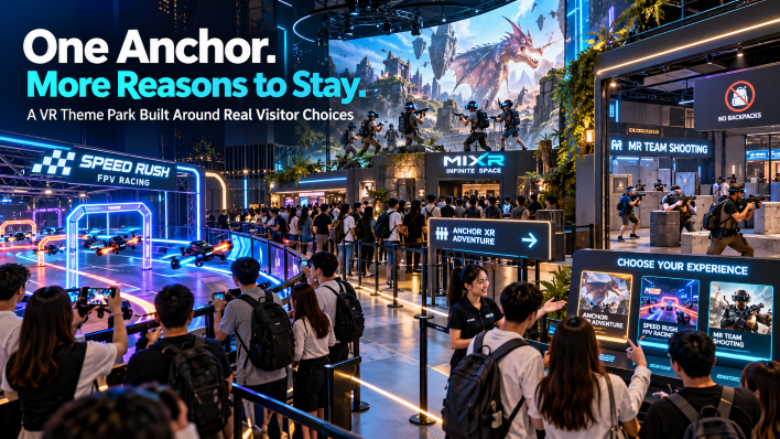
That is the VR theme park I would build: a venue where people know where to start, staff are not fighting the layout, and expansion follows what visitors actually do after the opening excitement fades.