From Concept to Launch: How to Build an XR Entertainment Project
I don’t trust an XR entertainment project when the renderings look good.
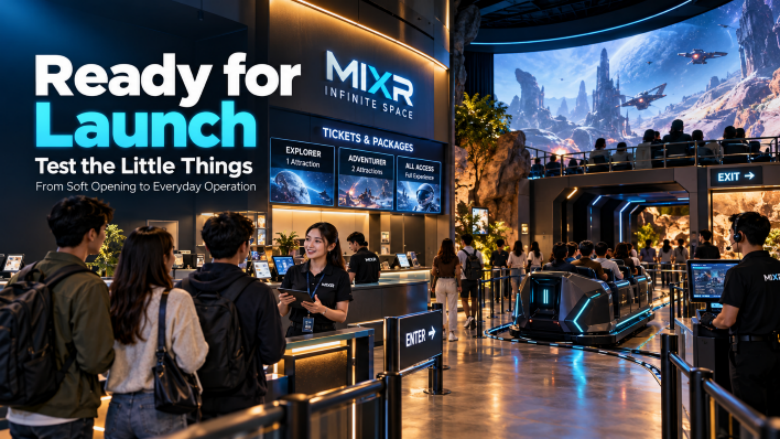
Renderings are supposed to behave. The floor is clean. The visitors are smiling. Nobody is confused. Nobody is asking where to line up. Nobody is standing in the exit path with a stroller. Nobody from operations is saying, “Who is going to reset this between sessions?”
Real launch is not like that.
If I were responsible for an XR project, I would feel ready only when I could imagine an ordinary Tuesday afternoon without getting nervous. Not the opening ceremony. Not the investor visit. A normal day, with normal staff, normal visitors, and a few small problems that always appear once the attraction is actually running.
That is where the project either becomes a business or stays a nice installation.
The First Sentence Has to Be Plain
Before I look at products, I want one plain sentence.
What is this attraction supposed to fix?
Maybe the venue needs a stronger family anchor. Maybe a museum wants visitors to understand one difficult story. Maybe a scenic area needs an indoor experience for rain and evening traffic. Maybe a shopping mall wants people to stop on an entertainment floor. Maybe an FEC needs something groups can book in advance.
If that sentence is vague, the project will drift.
MIXR has enough formats to cover very different jobs: XR Infinite Space for active group exploration, Holographic Glass Theater for shared visual viewing, AGV Dark Ride for route-based storytelling, Flying Theater with a curved-screen visual environment for a cinematic ride, MR CS for no-backpack competitive shooting under normal commercial ceiling conditions, plus Speed Rush, MR-Go Kart, and museum-style MR formats.
That range is useful. It also means the buyer can choose the wrong thing very confidently.
So I would not ask, “Which one looks most exciting?”
I would ask, “Which one makes this venue easier to sell and easier to operate?”
I’d Visit the Room Before Loving the Idea
Some ideas are beautiful until you stand in the actual space.
The ceiling looks lower than expected. The entrance is around a corner. The power point is in the wrong place. The best-looking room has poor visitor flow. The wide area everyone liked is actually where groups already gather and block each other.
These things sound small in a meeting. They are not small after delivery.
I would walk the room with a notebook and be slightly annoying about details: where visitors first notice the attraction, where they wait, how they exit, where staff stand, how equipment gets in, how maintenance happens, whether the queue interrupts another business, whether the next stop after the attraction feels natural.
A hidden room can still be used, but then the marketing burden must be honest. A visible room may cost more or be harder to fit out, but it may save months of fighting for attention.
That trade-off belongs in the decision, not in a complaint after opening.
Content Should Not Arrive Late, Looking for a Place to Sit
Content is where many XR projects get exposed.
The hardware arrives with clear specifications. Content arrives with opinions.
For a commercial venue, the story may need to be quick and easy to sell. For cultural tourism, the tone has to respect the site. For a museum, accuracy and guide language matter. For XR Infinite Space, game rhythm affects staffing and capacity. For an AGV Dark Ride, the story changes how the route feels. For Flying Theater, the visual journey has to justify the ride experience, not just fill the screen.
MIXR can support film and CG production, which is useful, especially when the attraction needs custom content rather than a generic show. But the owner still has to answer the uncomfortable questions.
What should visitors remember?
What must not be exaggerated?
What can staff explain in one sentence?
Where should the emotional peak happen?
If those answers come too late, production becomes rushed and the venue ends up accepting content because the calendar is tight.
That is not a good reason to approve anything.
The Ticket Offer Needs a Rehearsal
I would test the ticket language before launch.
Not in a document. Out loud.
Can a staff member explain the offer naturally? Can a parent understand the time, price, and suitability quickly? Does a group know whether they should buy one experience, a combo, or a package? Does the name sound like something a human would say?
A lot of attractions lose customers right there.
The technology may be strong, but the buying moment feels unclear. Visitors hesitate. Staff explain again. Someone in the group says, “Maybe later.” Later often means never.
So I would build the offer early: single ticket, family package, group booking, school-tour chapter, birthday bundle, mall combo, or tourism route upgrade. Not all of them. The ones that match the venue.
The ticket structure should make the attraction easier to buy, not more impressive on a pricing sheet.
Soft Opening Is Where I’d Look for Embarrassing Little Problems
I like soft openings because they are honest in a useful way.
Bring in a small group. Watch them. Don’t over-explain. Let the weak points show.
Do they stop at the right place?
Do they know where to wait?
Does the first staff sentence work?
Does anyone look nervous before entering?
Does the exit send them somewhere useful?
Do they talk after the experience, or just leave?
The fixes may be simple: move a sign, shorten a script, adjust the queue, rename a package, add one visual cue at the entrance, change the way staff introduce the attraction.
Small fixes before launch are cheap. Small fixes after a big public campaign feel like damage control.
Opening Day Is Too Polite
Opening day is not the day I trust most.
Everyone is trying harder than usual. Managers are present. Staff are alert. Visitors are curious because the attraction is new. Problems get covered by energy.
The first normal week is more useful.
I would ask the team for short notes every day. Nothing fancy. Just what happened.
Which question kept coming up?
Which package sold without pressure?
Where did people hesitate?
Which product made staff tired?
Did visitors understand what they had just experienced?
Did anyone ask to do it again?
Those notes are not paperwork. They are the first operating map.
Before buying more equipment or changing prices, I would fix the friction that shows up repeatedly.
The Version I’d Be Willing to Launch
The XR entertainment project I would launch is not the one with the most technology in the proposal.
It is the one where the purpose is clear, the product choice makes sense, the room supports visitor flow, the content has a reason to exist, staff can explain the offer, and maintenance is not treated as tomorrow’s problem.
MIXR can bring the equipment, content capability, installation support, and product options. The owner still has to make the project fit the venue.
That is the part I would not skip.
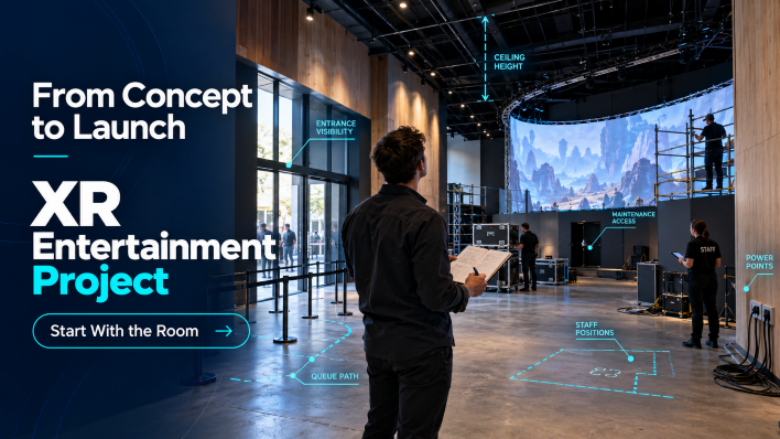
A good launch does not feel like pushing a finished machine into a room. It feels like the venue, staff, content, visitor path, and attraction have finally started speaking the same language.