MR CS Explained: A No-Backpack Multiplayer VR Shooting Attraction
MR CS is a no-backpack multiplayer VR shooting attraction developed for commercial entertainment venues. Players wear headsets, move through a shared tracked area, and compete inside the same virtual battlefield. The game system connects each participant’s physical position with digital weapons, scoring, combat events, and other players.
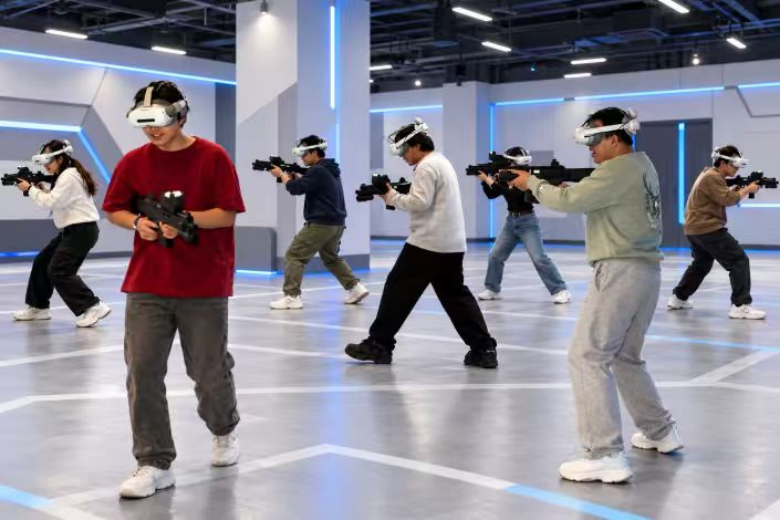
Two product characteristics are especially relevant during venue planning. MIXR’s MR CS does not require players to carry backpack computers or battery units. Its documented configuration also works with a normal commercial ceiling height. Shopping malls, family entertainment centers, and indoor parks can therefore evaluate the attraction without first searching for an industrial-height room.
The floor plan, operating process, and tracking environment usually require more attention than the ceiling.
How Does the MR CS Experience Work?
MR CS can support team battles and individual combat formats. Players see a virtual map through their headsets while moving inside a controlled physical zone. The game tracks their positions and translates movement into the digital environment.
MIXR’s available content references an abandoned warehouse, a starfield battlefield, and a futuristic arena. Gameplay may involve shooting, reloading, grenades, medical items, respawn points, scoring, and timed objectives, depending on the selected content.
Team modes normally encourage communication and coordinated positioning. Individual modes create a less predictable match because every participant chooses a separate route through the virtual map.
This makes MR CS different from a home VR game. A commercial session includes player registration, equipment assignment, briefing, game loading, monitoring, score review, and preparation for the next group. The operator interface must support that complete process, not simply launch the game.
Why Does the No-Backpack Design Matter?
Backpack-based VR systems add another wearable component to every session. Staff must store, charge, inspect, adjust, and fit the backpack before the player enters the arena.
MR CS removes that part of the equipment handover. This can shorten preparation and reduce the number of wearable components handled during each changeover. It may also make fitting easier when a group includes players with different ages and body sizes.
The no-backpack design does not eliminate daily equipment work. Headsets still need charging, cleaning, inspection, and assignment. Controllers or hand-tracking functions require calibration, while the game computer and network must remain stable throughout the operating day.
MIXR’s MR CS materials also reference gesture recognition, high-resolution visuals, adjustable headset fit, immersive audio, and real-time multiplayer interaction. These functions should be tested together under realistic playing conditions. Tracking that appears stable with one stationary user may behave differently when several players turn, cross paths, or briefly block one another.
What Space Does an MR CS Attraction Need?
MR CS does not rely on suspended scenery, flying machinery, or tall physical obstacles in its documented setup. A normal commercial ceiling is suitable.
The usable floor requires a more detailed review. The tracked play area should remain clear of columns, sharp corners, loose furniture, low fixtures, and public circulation. Emergency access must stay outside the play boundary. Operators also need a position with a clear view of the players and the control interface.
Lighting and reflective surfaces can affect tracking conditions, so they belong in the site survey. Wireless performance, network cabling, electrical access, ventilation, entrance flow, and equipment storage also need to be checked before the layout is confirmed.
A suitable ceiling answers one question. It does not replace a measured site plan or an on-site technical survey.
How Should Venues Plan Session Capacity?
The quoted player capacity describes the number of participants in one match. It does not show how many customers the venue can process during a full operating hour.
A complete cycle may include registration, briefing, headset fitting, game selection, loading, the match itself, score review, equipment return, cleaning, and preparation for the next group. Delays often appear between these stages rather than during gameplay.
A practical layout gives each activity a clear position. Incoming players can receive instructions while the current group is competing. Returned headsets can move directly to a cleaning and charging station instead of passing back through the entry queue. A spectator display or scoreboard can keep waiting guests engaged without allowing them into the tracked area.
The complete cycle should be timed during commissioning. This reveals whether account selection, headset adjustment, cleaning, or player assistance is limiting actual throughput.
Where Does MR CS Fit Best?
MR CS suits venues seeking an active multiplayer attraction with a flexible indoor layout. Family entertainment centers can package sessions for birthdays and group visits. Shopping malls can present it as a competitive experience that visitors understand quickly. Indoor parks can schedule it alongside other attractions with relatively short operating cycles.
An open room and a clearly positioned operator station support smoother supervision. Before opening, the venue should also establish age, height, health, and conduct rules based on the supplied equipment and local operating requirements.
What Should an MR CS Quotation Include?
A quotation for VR CS shooting equipment should define the supported player count, included maps and game modes, headset quantities, spare units, charging method, and player-monitoring process.
The technical scope should identify the control computer, network equipment, tracking or positioning components, content license, spectator display, installation, calibration, staff training, and remote support. Buyers should also confirm which site-preparation tasks belong to the venue, local contractor, or supplier.
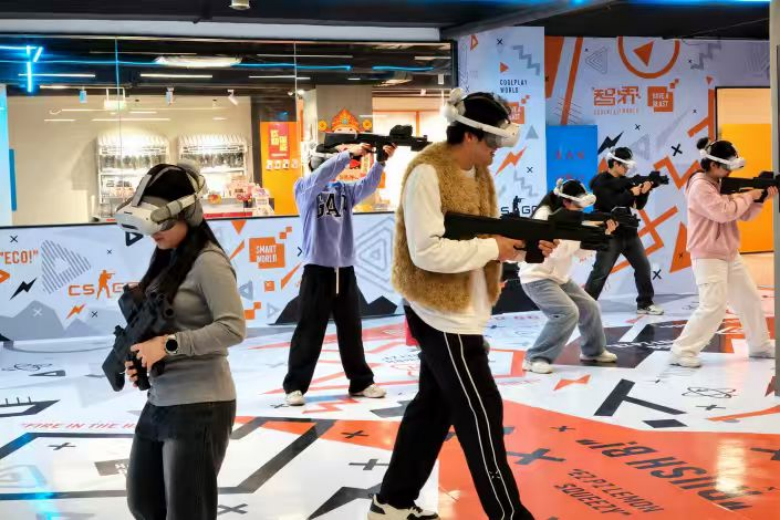
MIXR presents MR CS as a complete multiplayer shooting setup rather than a collection of headsets. That distinction matters in commercial operation. The attraction includes the player journey, game software, operator controls, equipment turnover, site planning, and support route.
For visitors, the finished experience should remain straightforward: receive the briefing, enter the battlefield, play the selected mode, and leave with a clear result. Behind that simple journey, reliable tracking, sensible room planning, prepared staff, and disciplined equipment management keep the MR CS attraction ready for the next group.