Flying Theater Curved-Screen Experience: What the Audience Actually Sees
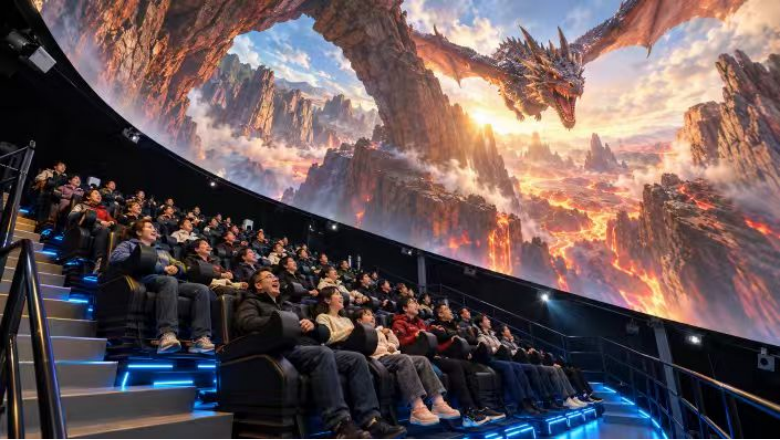
A flying theater audience sees a wide curved-screen world that fills much of the forward view while synchronized seat movement and environmental effects create the sensation of traveling through it. The curved screen is important, but it is not the whole experience. The impression of flight comes from the agreement between camera movement, screen geometry, motion cues, sound, wind, and the audience’s sightline.
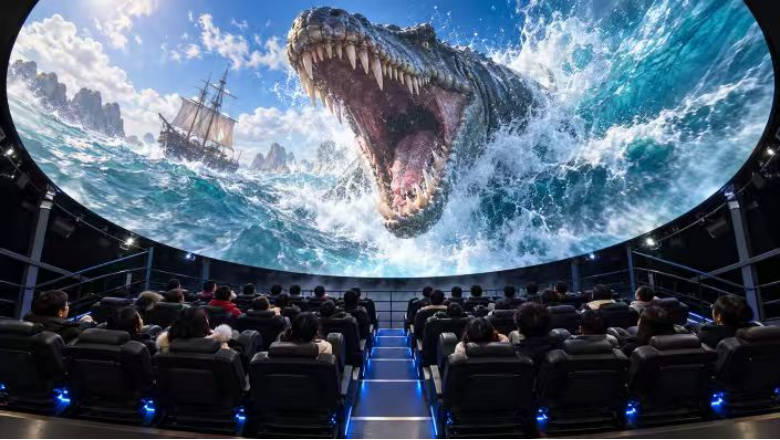
MIXR develops flying theater projects around that integrated relationship. For venue buyers, the useful question is not simply how large the screen is. It is whether every seat receives a convincing visual field and whether the physical movement supports what appears on the curved screen.
That question matters in 2026 because audiences already recognize large-format media; synchronization is what separates a ride from a screening.
The first visual impression
When the show begins, the audience should stop noticing the edges of the display. A curved-screen visual environment brings side content closer to the viewer’s natural field of vision and gives the image more presence than a flat screen of similar width.
The effect depends on where the seats are located. The front row may receive a stronger sense of scale but can expose pixel structure if the viewing distance is too short. The back row may see more of the whole composition but feel less surrounded if the screen does not extend far enough across the sightline.
That is why a flying theater screen cannot be selected from width and height alone. Curvature, seating arc, row elevation, viewing distance, image resolution, and content framing need to be considered together.
Why flight films are composed differently
A normal cinema can cut rapidly between close-ups, conversations, and changing camera angles. A flying theater film asks the audience’s body to follow the camera. Sudden turns, aggressive acceleration, or constant movement can become tiring when the platform reproduces those cues.
Strong flying content gives the audience visual reference points. A mountain ridge shows direction and height. A city street gives a sense of speed. Open sky without nearby detail may provide little motion information.
The camera path needs room to breathe. A slow approach can build anticipation before a drop, while a level section lets the body settle after a strong turn.
MIXR’s content and project teams need the final seat and screen geometry before motion programming is completed. A film preview on a desktop monitor cannot show how the audience will read scale and direction inside the theater.
What motion adds to the curved-screen image
The seat or motion platform supplies acceleration cues that the screen cannot create by itself. A forward tilt may support a dive. A controlled rise can suggest climbing. Roll can follow a banking turn.
The physical system creates short cues that persuade the body to accept the visual event. Those cues should begin, peak, and release at the correct points in the film. If the platform reacts late, the audience notices the disagreement.
This synchronization is one of the most important acceptance tests. Review the show from the center and other seats. Watch the same sequence repeatedly. A cue that feels correct once may reveal an uncomfortable timing issue after several cycles.
Sound and wind shape what the audience sees
Audio changes the perceived size and direction of the image. A helicopter crossing the curved screen should move through the sound field. Water, engines, city noise, or wildlife can establish location before the audience sees the source.
Wind is often used to reinforce speed and exposure. It should arrive with the visual movement rather than run continuously. Constant airflow quickly becomes background noise. A short, well-timed cue is usually more effective.
Other effects may support rain, mist, scent, or temperature changes. Each one needs a story reason and a practical reset plan.
How the screen affects content approval
Curved-screen content needs edge review. Text, faces, and key action should not sit where curvature or seat angle makes them difficult to read. A locally commissioned film should be reviewed in the actual theater or an accurate technical preview.
Color and brightness also need on-site adjustment. A film mastered for another display may look different after installation. Room surfaces, exit lights, screen settings, and projection or LED configuration can change black levels and contrast.
MIXR’s role in a flying theater project can include equipment integration, content coordination, installation, and commissioning. Keeping those discussions connected reduces the risk of a technically correct screen showing a film that was composed for a different viewing environment.
What commercial buyers should inspect
A supplier demonstration should include several seat positions and more than one type of scene. Buyers should look for comfortable sightlines, natural horizon placement, consistent focus, and stable synchronization. The audience should not need to turn sharply to follow essential action.
The venue also needs to review loading time, restraints, staff visibility, emergency release, daily startup, and show-control procedures. The screen may attract attention in the proposal, but the complete operating cycle determines hourly capacity.
The strongest curved-screen flying experience gives the audience a clear sense of direction without making the technology obvious. Viewers remember crossing the landscape, approaching the city, or dropping toward the valley. They do not leave discussing the screen radius. That is the sign that the curved visual environment, motion, sound, and content have started to behave like one attraction.