Sandbox Racing Equipment: How a Miniature RC Attraction Works
Keywords: Sandbox Racing Equipment, Miniature Sandbox Racing, RC Sandbox Racing Equipment
Sandbox racing equipment turns a miniature physical circuit into a multiplayer racing attraction. Instead of watching a fully digital race on a simulator, visitors sit in full-size racing cockpits and control real RC cars moving around a model track.
An onboard camera sends a first-person view from each car back to the corresponding cockpit display. The result combines the visual scale of miniature sandbox racing with the control feeling of a racing game. The vehicle is small, but the steering input, track barriers, overtaking, and recovery process are all connected to physical equipment.
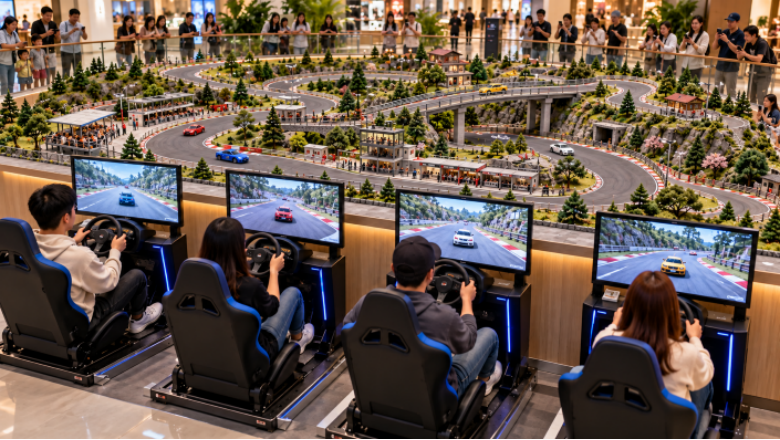
MIXR’s SPEED RUSH FPV RC Car Racing is built around this format. Its system includes full-size cockpits, 1:24 RC drift cars, FPV video transmission, race-control software, lap timing, displays, and a miniature scenic circuit.
How Does Sandbox Racing Equipment Work?
The operating process begins when a player takes a seat and uses the steering wheel, throttle, and brake. Those inputs are transmitted to the assigned RC car on the track. A camera mounted on the car returns the driver’s view through the FPV system.
This creates a different experience from a screen-only racing simulator. The player does not simply watch a digital vehicle turn. The physical car can drift, lose its line, touch a barrier, or become blocked by another vehicle.
MIXR’s documented system uses a 2.4 GHz connection for vehicle control and 5.8 GHz transmission for FPV video. These two functions need to work together during normal operation. A clear image cannot compensate for delayed steering, and accurate controls cannot create a convincing session if the video feed becomes unstable around the circuit.
Race-control software adds structure to the experience. Staff can organize race sessions, manage player assignments, record lap times, and display results. Free-driving mode can also be used when first-time players need to understand the controls before entering a competitive round.
What Is Included in an RC Sandbox Racing System?
A complete RC sandbox racing equipment package usually contains more than the visible miniature track. The working system may include:
- Driver cockpits and displays
- 1:24 RC drift cars
- Onboard cameras and FPV transmitters
- Vehicle receivers and control hardware
- Race-control software
- Lap-timing equipment
- Batteries, chargers, and spare parts
- Track barriers and scenic elements
The integration between these parts is important. A track can look impressive while the car assignment process remains unclear. A cockpit can feel well designed while the operator still has difficulty identifying which player controls which vehicle.
The track itself is also part of the equipment. Surface finish affects grip and drifting. Barrier placement affects recovery time. Scenic structures need to leave enough access for staff to retrieve a stopped car, remove debris, or make a quick adjustment.
Why Does Miniature Sandbox Racing Work in Commercial Venues?
Miniature sandbox racing gives visitors something easy to understand from outside the attraction. People can see the cars moving, watch a race develop, and recognize the competitive purpose without a long technical explanation.
This makes the format suitable for shopping malls, family entertainment centers, indoor theme parks, and racing-themed venues. An FEC can use rankings and repeat challenges to encourage another round. A shopping mall can place the track where passing visitors can watch before deciding to play.
The attraction also uses less space than a full-size karting track while retaining a physical vehicle-control element. That can be useful for venues with limited floor area or buildings that cannot support outdoor motorsport equipment.
The operating team still needs to plan for daily handling. Tires and body shells can wear. Batteries require charging and rotation. Dust and small objects can affect the track. These tasks are manageable, but they should be included in the venue’s maintenance and staffing plan.
How Much Space Does an RC Sandbox Racing Project Need?
MIXR documents configurations for four to eight cars per session, with circuit planning beginning at approximately nine square metres depending on the selected layout.
The circuit footprint is only one part of the space calculation. The venue also needs room for cockpits, visitors waiting to play, spectators, staff movement, battery charging, and basic service work. A compact track can still create an uncomfortable operating area if the queue or maintenance access is ignored.
The layout should allow staff to reach every section of the track without moving large scenic elements. Sightlines also matter. Visitors waiting nearby should be able to see enough of the race to understand what is happening, while the operator should have a clear view of the vehicles and the control interface.
Electrical supply, display placement, ventilation, flooring, and delivery access should be reviewed before the final layout is approved.
What Should Buyers Check Before Ordering?
A supplier quotation for sandbox racing equipment should explain the complete operating scope. Buyers should confirm the number of active cars, spare vehicles, battery and charger quantities, control method, FPV video system, lap timing, race software, displays, track construction, installation, and staff training.
For overseas projects, the quotation should also identify voltage, plug type, software language, packing arrangements, installation responsibilities, and the process for remote support. Replacement body shells, tires, batteries, and other frequently handled parts deserve separate attention.
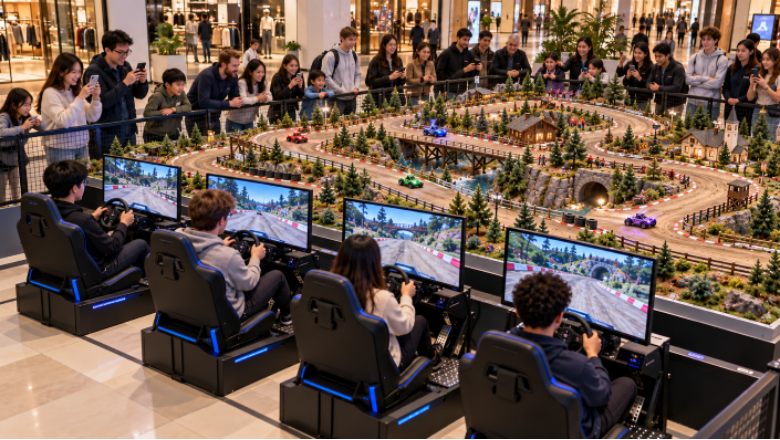
The supplier should demonstrate more than one clean race. A useful acceptance test includes free driving, a timed competition, several cars operating together, a stopped vehicle, a reset process, and the changeover between two groups.
MIXR’s SPEED RUSH FPV RC Car Racing combines the cockpit, physical RC cars, FPV connection, timing, control software, and miniature circuit into one attraction concept. The commercial value of the system depends on how consistently those parts work together after opening.
For visitors, the experience should feel simple: sit down, take control, race, and see the result. The planning behind that simplicity is what turns RC sandbox racing equipment into a reliable paid attraction.