Holographic Glass Theater Supplier Guide for Museums and Attractions
I would not choose a Holographic Glass Theater supplier from a demo video alone.
A demo is supposed to look good. The lighting is right, the camera angle is right, the music is right, and nobody is asking about delivery access, local contractors, staff training, or what happens when the opening date moves closer.
The supplier I would call back is the one that makes the project feel clearer after the first conversation.
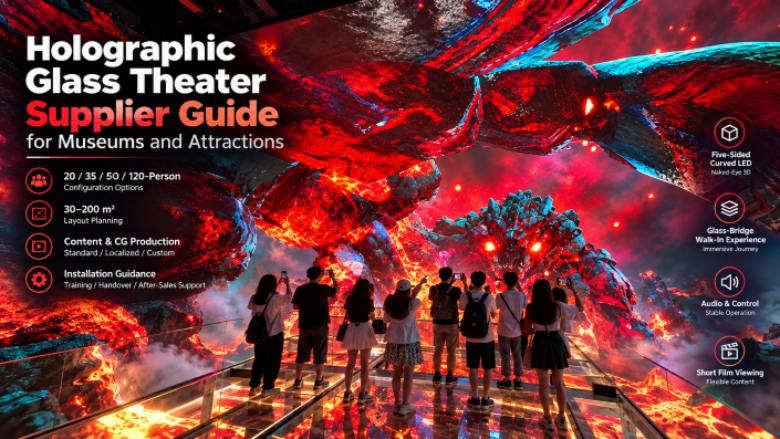
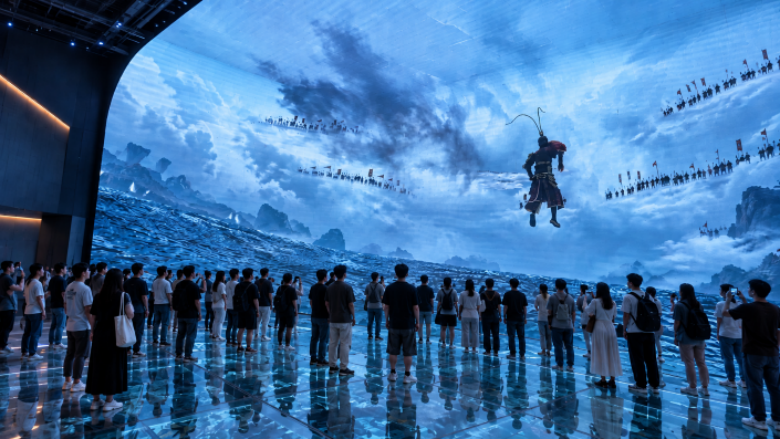
MIXR has a solid product base for this discussion. Its Holographic Glass Theater can be planned in 20, 35, 50, and 120-person configurations, with documented layouts around 30-200 square metres. The attraction includes a glass-bridge walk-in experience, five-sided curved LED naked-eye 3D visuals, audio, control, and short film viewing.
That tells me what the product is. It does not tell me yet whether the supplier can help me build a working attraction.
I’d Listen to the Questions First
The supplier’s first questions would matter to me.
If they only ask for budget and room size, I would slow down. Those details are necessary, but they are not enough. A museum, scenic attraction, or commercial venue has more moving parts than a room dimension.
I would feel more comfortable if the supplier asks about visitor flow, guide routes, group size, entrance visibility, delivery access, content review, local construction, staff training, and launch timing.
A supplier who asks where people queue is already thinking about operation. A supplier who asks how visitors exit is thinking beyond installation. A supplier who asks who approves the film script understands that cultural projects can move slowly for good reasons.
That kind of meeting feels different.
A Real Room Would Tell Me More Than a Drawing
A clean drawing makes everything easier than it is.
I would want the supplier to look at real site photos or walk the space if possible. Door width, columns, ceiling conditions, access paths, waiting area, control position, exit direction, maintenance access… these are the things that change the project after everyone thought it was simple.
A Holographic Glass Theater is not only the room where the show happens.
Visitors wait outside. Staff explain outside. Guides gather people outside. Families decide outside. Maintenance happens after the public leaves.
If the supplier talks only about the inner system and not the space around it, I would feel uneasy.
Content Attitude Would Tell Me Their Level
For a museum or cultural tourism venue, content is not just “the film.”
It is part of the product’s value.
A commercial venue may use a broader visual theme if it sells quickly. A museum usually needs more connection. The story may need local meaning. Narration may need review. Subtitles may matter. Guides may need language that links the film back to the exhibition.
MIXR has film and CG production capability across its immersive attraction products, so I would expect content to be discussed early. Not after the room and equipment are already fixed.
I would not want the supplier to push custom content every time either. That would feel like selling. I would prefer practical judgment: standard content where it fits, localized content where it helps, custom content where the venue really needs its own story.
I’d Compare Responsibility, Not Just Price
The lowest quote would not automatically win for me.
I would compare who is responsible for what.
Does the supplier include installation guidance? Commissioning? Training? Content support? Acceptance? Operation documents? Remote support? What stays with the venue? What belongs to the local contractor?
Those differences matter.
Power, flooring, wall treatment, ventilation, entrance design, queue rails, signage, content review, launch materials, staff training, and maintenance support cannot sit in the air. Someone has to own them.
The supplier who helps me see those responsibilities clearly is easier to trust.
I’d Bring the Operations Team Into the Room
The final supplier conversation should not be only a sales meeting.
I would bring the people who will operate the attraction.
Ticket staff may know whether the offer sounds hard to explain. Guides may see that the content does not fit the route. Maintenance staff may notice that access is too tight. The operations manager may see a queue problem before anyone else.
These comments are not small.
After opening, they become the visitor experience.
If the supplier listens to those people, I feel better. If the supplier only wants to return to the equipment specification, I would hesitate.
After-Sales Support Should Sound Ordinary and Clear
I do not need dramatic promises.
I need practical answers.
Who trains the staff? What documents do we keep? What checks happen every day? What should the team do if something feels off? Which spare parts should be planned? How does remote support work? Who responds during a busy period?
These questions are not glamorous. They are exactly the questions the venue will care about after opening.
A supplier who can answer them without making everything sound complicated is the one I would prefer.
The Supplier I’d Trust
The supplier I would call back is the one who makes the project feel less cloudy.
The room is clearer.
The route is clearer.
The content plan is clearer.
The quote is clearer.
The handover is clearer.
That is what I would want before buying a Holographic Glass Theater.
A good product matters, of course. But for a museum or attraction, I also need a supplier who helps the venue open the attraction, operate it calmly, and keep it useful after the first wave of curiosity fades.