Holographic Glass Theater ROI Analysis for Venue Operators
I would not judge a Holographic Glass Theater from opening week.
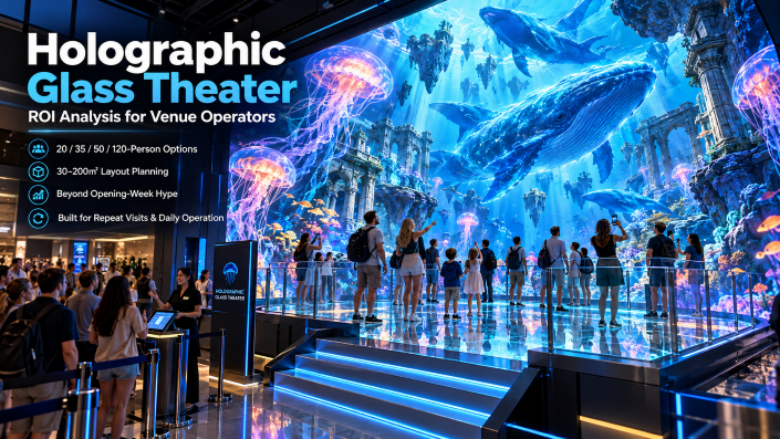
Opening week is noisy in a good way. People are curious. Staff are careful. Managers keep checking the floor. Marketing is still fresh. Everyone wants the new attraction to work, so the whole venue gives it more attention than it will get later.
That is useful, but it is not the real test.
The real test starts when the attraction becomes part of the daily route.
MIXR gives the operator a clear product base: 20, 35, 50, and 120-person configuration options, documented layout planning around 30-200 square metres, a glass-bridge walk-in structure, five-sided curved LED naked-eye 3D visuals, audio, control, and short film viewing. That is enough to understand the system.
After launch, I would be watching something else: whether the venue can keep selling it without making staff push too hard.
I’d Stand Near the Entrance First
If I were operating the theater, I would spend more time near the entrance than in the office.
That is where visitors make the first decision.
Some slow down and keep walking. Some read the sign but still look unsure. Parents glance inside and try to judge whether children will feel comfortable. A guide checks the time and decides whether the group can fit it in. A family waits to see if another group enters first.
Those tiny moments tell me whether the attraction is easy to buy.
If too many people need a long explanation, I would not blame the product first. I would look at the entrance message. Is the sign too technical? Is the staff script too long? Does the front show enough of the glass-bridge experience? Is the ticket package easy to understand?
A strong attraction should not require staff to restart the sales pitch from zero with every visitor.
I’d Stop Talking About Maximum Capacity
After opening, maximum capacity becomes less interesting to me.
Real session behavior matters more.
A 50-person theater does not need 50 people every time. That would be unrealistic. But if most sessions feel thin, I would want to know why. Maybe the version is too large for the normal flow. Maybe the package is weak. Maybe the theater is in the wrong part of the route. Maybe the content is not being explained well.
The 120-person version needs steady group traffic to feel healthy. The 20-person version can work well when the experience is guided, premium, or tied to a smaller cultural route. Mid-size versions often suit museums and venues with steady but moderate flow.
I would track quiet weekdays, weekends, group days, and holidays separately. One blended average can make the business look smoother than it really is.
Different days tell different truths.
I’d Watch the Exit
The exit tells me whether the experience has landed.
Do visitors talk about a scene? Do children pull parents toward a photo spot? Do guides connect the show back to the exhibition? Does anyone ask whether there are other films? Do people move naturally to the next part of the venue?
If everyone leaves quietly, I would pay attention.
For a museum or cultural tourism venue, the Holographic Glass Theater should leave visitors with more than “nice visuals.” I want them to remember a place, a story, a landscape, a historical scene, or at least one image that belongs to the venue.
That memory gives the operator something to sell again.
I’d Keep Asking Whether the Film Still Helps
I would not refresh content just to look busy. That can waste money.
But I would keep asking whether the current film still helps the team sell.
A scenic destination with mostly first-time tourists may use one strong film for a long time. A commercial venue may need seasonal clips, holiday themes, or campaign material. A museum may want content tied to temporary exhibitions, school programs, or study-tour groups.
MIXR has film and CG production capability across its immersive attraction products, so I would want the update path clear before the venue feels stuck.
Not every site needs frequent updates. Every site should know what its options are.
The ROI I’d Believe
The ROI I would believe is not loud.
Visitors still notice the attraction after the opening campaign. Staff explain it without forcing the sale. Sessions run at a rhythm the team can handle. The room does not feel empty too often. The content still gives the venue something to say. Maintenance has a routine.
That is the return I would want from a Holographic Glass Theater.
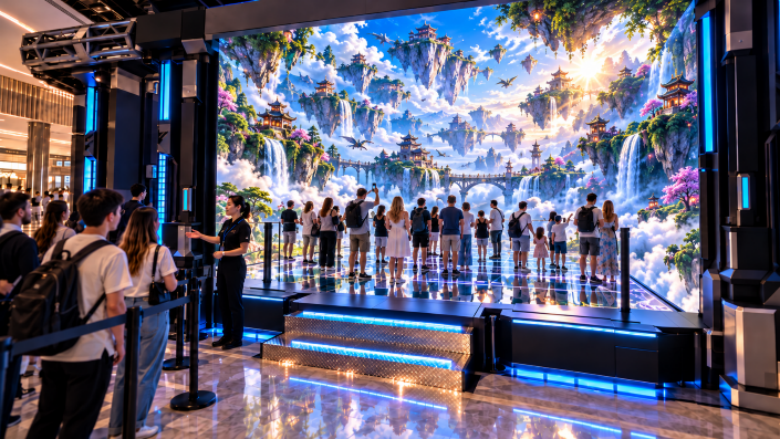
Not one exciting first week. A second and third month where the operator can say, without trying to sound optimistic, “Yes, this still belongs here.”