Case Study: How a Dark Ride Attraction Increased Repeat Visits in a Theme Park
If this were my theme park, I would not buy a Dark Ride because the park needs another headline.
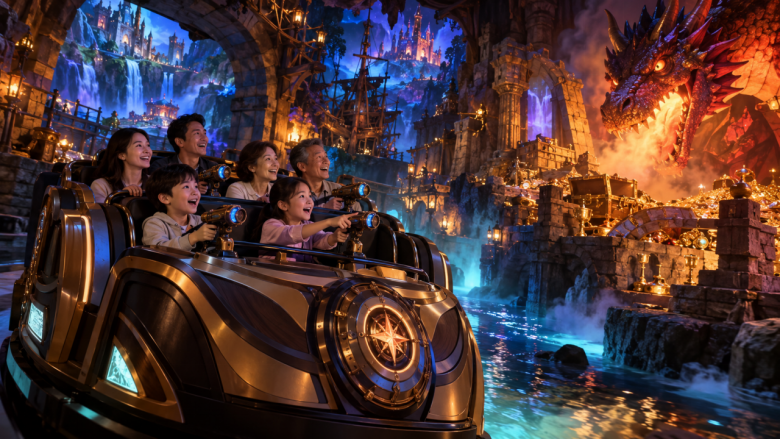
A headline is useful for opening week. It gets photos, short videos, maybe a few local media mentions. Fine. But after that, the ride has to live inside the park’s normal rhythm. Wednesday afternoons. School holidays. Local family passes. Tour groups with limited time. Parents trying to decide whether one more attraction is worth the walk.
That is where I start caring about a Dark Ride.
Not because it is new. Because it can give people a reason to return.
The Repeat Visit Problem Is Usually Quiet
Repeat visits do not disappear in one dramatic moment. They fade.
A family comes once. The children enjoy the big outdoor rides. The parents take photos. Everyone leaves happy enough. Then, three months later, when the park runs another promotion, the family hesitates. “We already went.”
That sentence is dangerous.
A Dark Ride can help only if it gives the park something more specific to bring back into the conversation: a story, a route, a character, a mission, a scene people remember, or a seasonal version that feels worth another visit.
For this kind of project, I would look closely at MIXR’s AGV Dark Ride. The reason is simple. It is not just a screen product sitting in a room. It can be planned as a moving, route-based attraction with vehicles, scene design, media, lighting, sound, interaction, and show timing working together. That gives the operator more material to build around.
Still, I would be careful. A Dark Ride should not feel like equipment installed in an empty building. Visitors can sense that immediately.
I’d Start at the Entrance, Not the Ride Vehicle
Before talking too much about the ride system, I would stand outside the entrance.
Does the attraction feel like part of the park?
Can a parent understand it in five seconds?
Do children pull adults toward it, or does everyone walk past because the doorway says nothing?
That entrance matters more than people admit.
If the ride is meant to support repeat visits, the story has to begin before boarding. The queue, signage, lighting, staff script, and first visual cue all have work to do. A blank queue wastes attention. A confusing entrance makes staff explain too much. A doorway with no emotional hook becomes another building.
I would want visitors to feel, even before entering, that this ride belongs to the park’s world.
Families Would Be My Main Test
Thrill seekers are easy to impress for a short time. Families are harder.
A family group has several decision-makers. A child wants excitement. A parent wants safety and clarity. Grandparents may care about comfort. Someone is tired. Someone wants food. Someone is already asking about the next ride.
So I would watch family behavior carefully.
Do parents look relaxed when boarding?
Do children talk during the queue?
Does the ride feel exciting without becoming too intense for younger visitors?
Can staff explain it without sounding like they are reading a manual?
If the answer is yes, the attraction has a better chance of becoming a repeatable family stop, not a one-time curiosity.
That is the value of a good Dark Ride. It can sit between pure thrill and passive viewing. It gives movement, story, and indoor control, while still allowing a wider visitor group to participate.
The Story Needs Room to Breathe
A Dark Ride should give the marketing team more than one poster.
If every campaign has to say the same thing, the ride gets old quickly. I would want a story structure that can support small changes: holiday language, member previews, school group explanations, limited-time missions, or a refreshed ending scene.
Not a full rebuild every time. That becomes heavy.
But the ride should have enough story space for the park to keep using it. A character can return. A mission can change. A scene can be highlighted differently. Even small seasonal adjustments can help local visitors feel the ride is not exactly the same as last time.
This is where planning matters. The story should not be treated as decoration after the technical plan is finished. For a Dark Ride, the story is part of the operating value.
Where MIXR Fits in This Type of Project
MIXR makes sense in this discussion because its AGV Dark Ride is not positioned as a loose equipment purchase only. The attraction needs vehicle movement, scene packaging, media content, control systems, lighting, sound, interaction, installation, and project coordination to line up properly.
That matters for a theme park operator.
A park team usually does not want to manage five separate suppliers and discover too late that the vehicle timing, content rhythm, scene layout, and queue design do not match. The project has to feel like one attraction when visitors enter it.
I would still compare formats. A Flying Theater may be stronger for a grand scenic journey. XR Infinite Space may be better for active multiplayer play. A Holographic Glass Theater may suit group viewing in a cultural or commercial venue.
But if the park’s real problem is “people came once and we need them to come back,” I would keep Dark Ride high on the list.
The Result I’d Want to See
I would not judge the project from the opening weekend.
Opening weekends are noisy. Everyone is curious. Staff are alert. Managers are nearby. Marketing is fresh.
I would look later.
Can the ride still draw families after the first campaign?
Do members mention it when renewing?
Can the marketing team create new reasons to promote it?
Do staff still explain it with energy?
Do visitors remember a scene after leaving?
That is the kind of Dark Ride I would trust.
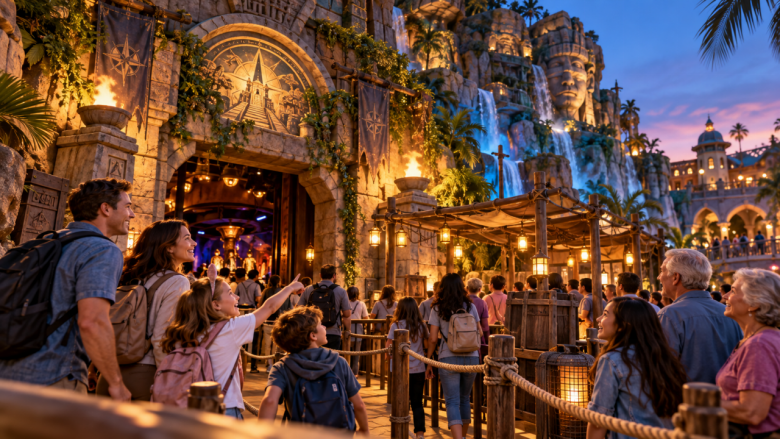
Not a ride that depends on being new forever. A ride that gives the park a story it can bring back into the visitor’s mind again and again.