Holographic Glass Theater Pricing by Capacity and Content Scope
Holographic Glass Theater cost is usually determined by two questions: how many visitors should enter one session, and how much original content does the venue need? Capacity affects the room, glass-bridge structure, control workflow, and visitor movement. Content scope affects the story, visual production, review process, and future update path. Treating the project as a screen purchase makes the quotation look simpler than the actual work.
Capacity Is a Visitor Flow Choice
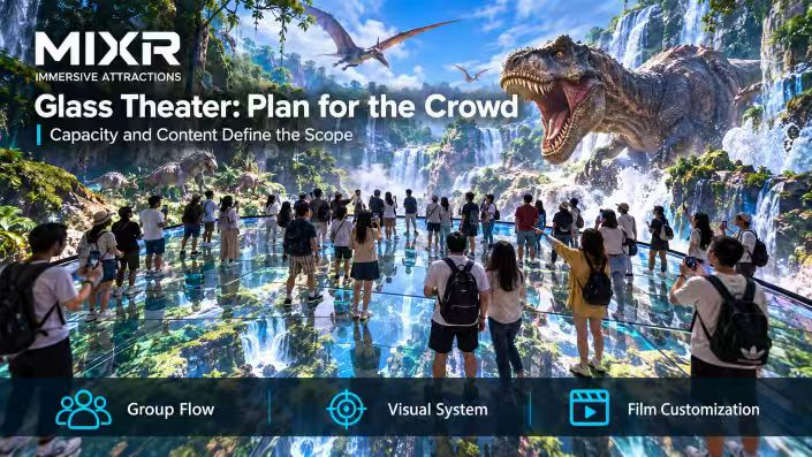
MIXR documents Holographic Glass Theater configurations for 20, 35, 50, and 120 people, with planning layouts of approximately 30 to 200 square metres. These figures give a buyer a useful starting range, not an automatic answer.
A 20-person format may suit a compact museum route, a premium cultural attraction, or a venue where groups arrive in smaller batches. A 35- or 50-person version can provide a balanced group experience without making the room feel oversized. The 120-person option is more appropriate when the site receives steady tour groups or needs to move a larger audience through a controlled indoor attraction.
The choice should be checked against weekday traffic, waiting space, guide schedules, and the exit route. A larger capacity can improve peak-hour throughput, but it also changes the size of the queue, the loading rhythm, and the staffing pattern. The most useful Holographic Glass Theater Cost discussion therefore includes normal operating conditions, not only holiday attendance.
Capacity also changes how visitors perceive the room. A group experience should feel active without feeling crowded. When the room is too large for the normal audience, the theater can lose energy. When it is too small for the main group flow, the queue becomes part of the problem. The supplier and venue should compare both situations before choosing the final version.
The Structure and Visual System Belong Together
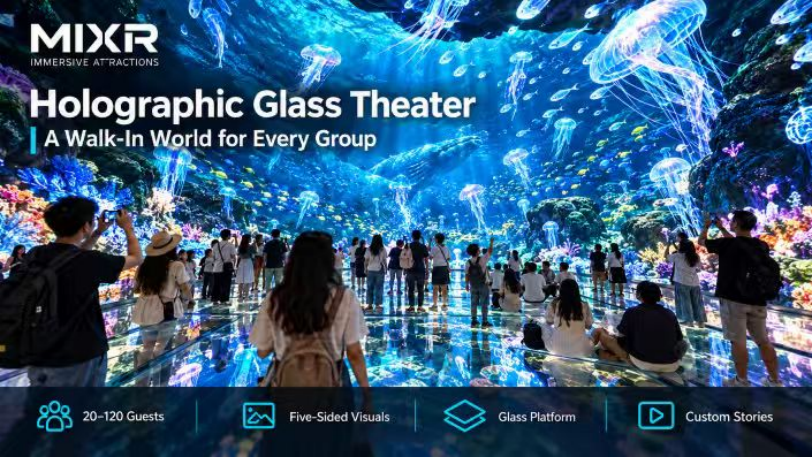
The experience uses a glass-bridge walk-in structure with five-sided curved LED naked-eye 3D visuals, audio, control, and short film viewing. Visitors do not simply sit in front of a flat screen. They enter a defined visual environment and move through it as a group.
That structure affects the quotation. The venue needs enough room for the bridge, access points, visitor circulation, staff position, cabling, and maintenance. The layout should also account for how people with different walking speeds enter and leave. In a cultural venue, older visitors and school groups may need a calmer loading process than a fast-moving commercial audience.
A supplier should identify which structural components are included, what the venue must prepare locally, and where service access is located. These details are easy to ignore while looking at a rendering and difficult to change after installation.
Content Scope Can Move the Budget Quickly
Glass Theater Content Customization may range from adapting an existing film to producing a story built around the venue. The first option can shorten the content process. The second gives the attraction a stronger local identity but requires more decisions.
Custom content may involve research, script development, concept art, 3D or CG production, scene review, narration, music, subtitles, and final integration with the playback system. A museum may need historical review. A scenic destination may want local geography and landmarks. A commercial complex may prefer a seasonal or brand-linked theme. Each choice changes the amount of production and approval work.
The buyer should ask whether the quotation includes a finished film, localized versions, revision rounds, language support, and the source or update arrangement for later content. It is also useful to decide who has final approval. A clear content owner prevents technical completion from being mistaken for editorial completion.
Installation Is Part of the Price
A Glass Theater Project Quotation should show more than the visible theater structure. Room preparation, electrical work, network planning, audio positioning, screen calibration, control setup, installation, testing, staff training, and acceptance all affect the project.
The venue may need a measured survey before the final layout is confirmed. Delivery access matters because glass and LED components need careful handling. The queue and exit should be tested with real group movement rather than judged only from a floor plan.
MIXR can combine the Holographic Glass Theater system, visual content, special-effects integration, and project installation into a single project discussion. That is useful for a tourism operator, museum, or commercial venue that wants one team to explain how the pieces work together.
A Better Way to Compare Quotes
Two quotations may show similar capacity while offering different content, installation, and support scopes. Compare them by asking what visitors will see, how the room will run, what staff must do between sessions, and what happens when the film needs a revision.