MR CS Equipment Price: What a Complete VR Shooting Setup Includes
MR CS equipment price depends on player capacity, headset quantity, tracking and interaction scope, game content, control hardware, spectator display, installation, and support. A quote for several VR headsets is not the same as a complete multiplayer shooting attraction.
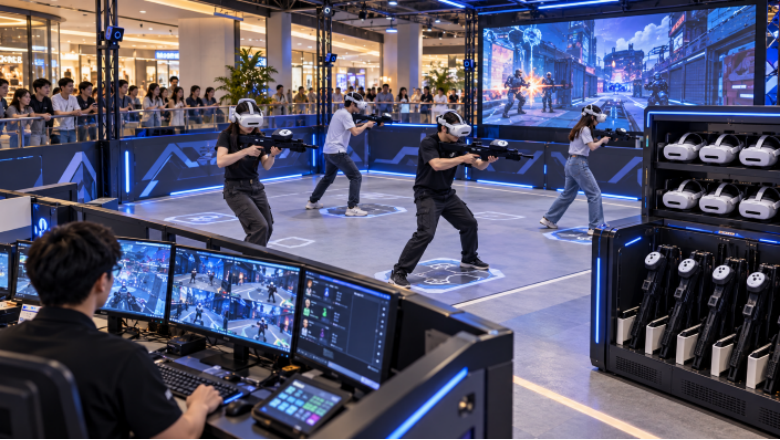
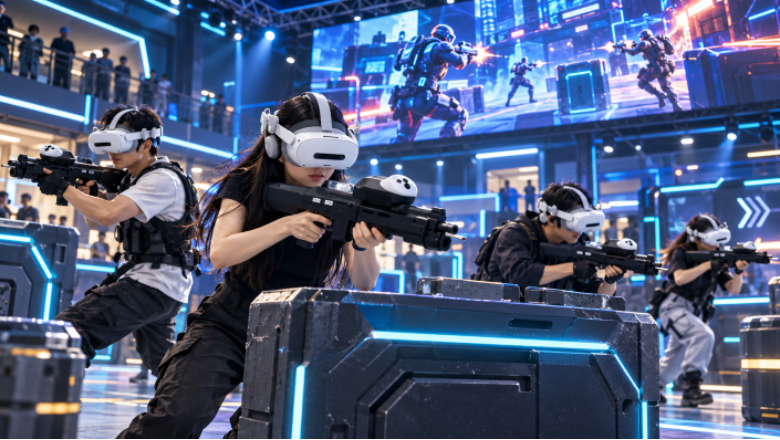
MIXR’s MR CS is a no-backpack system designed for shared combat modes such as free-for-all and team battle. Its documented setup can use normal commercial ceiling height. Those features can simplify site planning, but the final project still needs a complete play area, stable networking, charging, operator control, content, calibration, and equipment turnover.
In 2026, buyers increasingly compare that full operating package rather than headset count alone.
Player capacity sets the hardware baseline
The first pricing question is how many people must play at the same time. Each active position requires a headset and the associated tracking, account, audio, and game connection. The venue also needs enough charging and storage capacity for the operating schedule.
Spare headsets affect the price but protect availability. If every device is assigned to a player, one damaged cable or charging problem can reduce the next session. The quotation should distinguish active units, spare units, demo units, and any equipment reserved for staff testing.
Capacity also affects the game computer, network, control interface, cleaning station, briefing area, and staffing model. The equipment list should reflect the intended commercial cycle rather than the maximum number printed in a presentation.
The price includes more than wearable devices
MIXR’s MR CS materials reference high-resolution headsets, immersive audio, adjustable fit, gesture recognition, multiplayer interaction, and player-data recording. Those functions depend on a control and software layer.
A complete setup may include the game server or central computer, operator console, router or network switch, positioning or tracking components, charging equipment, storage, spectator screen, score display, and cabling. Site-side power and network work should be identified separately if they are not part of the supplier scope.
Because MR CS has no backpack, the wearable equipment list is shorter than some free-roam systems. Buyers should still ask how the headset receives power during use, how batteries are rotated, and how device status appears on the operator screen.
Game content is a priced part of the system
The attraction needs maps, modes, player rules, scoring, weapons, interface language, and operator settings. MIXR’s supplied content references an abandoned warehouse, a starfield battlefield, and a future arena, along with individual and team formats.
The quotation should state which maps and modes are included. Ask whether future content is licensed separately, whether the venue can change round duration or team settings, and whether branded or localized content requires additional production.
Language work can affect more than the menu. Briefing screens, voice prompts, scoreboards, safety notices, and spectator output may all need localization for an overseas venue.
Site preparation remains part of the project price
A normal commercial ceiling is sufficient for the documented MR CS setup, which removes one common concern. The floor still needs to be clear, level, and suitable for tracked movement. Columns, reflective finishes, loose furniture, public access, emergency routes, and operator sightlines should be reviewed.
The buyer may be responsible for partitions, floor finish, power outlets, network cabling, entrance treatment, waiting space, and signage. If the supplier provides positioning surfaces or graphics, the quotation should state the dimensions and installation method.
The final budget should also include delivery, insurance, import handling where applicable, local labor, installation access, and any travel required for commissioning.
Installation and training should be defined
Commercial setup includes device registration, network configuration, tracking calibration, content loading, multiplayer testing, operator setup, and acceptance. A single-player demonstration is not enough. The team should run full sessions with movement, scoring, team assignment, interruption, and restart.
Training should cover normal operation and daily care. Staff need procedures for headset fitting, cleaning, charging, game selection, score review, fault reporting, and safe shutdown. Remote support needs a named contact method and a clear description of what the supplier can diagnose online.
A complete MR CS quotation should show
1. Number of active and spare headsets.
2. Tracking, gesture, audio, and interaction components.
3. Game computer, network, operator console, and spectator display.
4. Included maps, modes, language, licenses, and update terms.
5. Charging, storage, cleaning, spares, and maintenance tools.
6. Shipping, installation, calibration, training, warranty, and support scope.
7. Buyer responsibilities for room preparation, power, network, and decoration.
MIXR can quote MR CS as a multiplayer attraction with equipment, game content, control, and deployment support. Buyers should compare proposals at that system level.
The final price should answer a practical question: can the venue receive a group, fit the equipment, run a complete match, show the result, clean and recharge the devices, and prepare the next session with the supplied package? A clear spare-parts and support route should remain visible after installation. When the quotation describes that full cycle, the number has a clear commercial meaning.