How Flying Theater Quotes Change by Capacity, Motion System, and Content
The price of a Flying Theater project is shaped by three connected decisions: how many visitors enter a session, how the seats move, and what film the audience will watch. A quotation that lists only the platform and screen leaves out the choices that usually make the project more or less complex. For a tourism operator, the useful question is not simply “How much is the equipment?” It is whether the proposed configuration fits the visitor route, the available room, and the story the destination wants to sell.
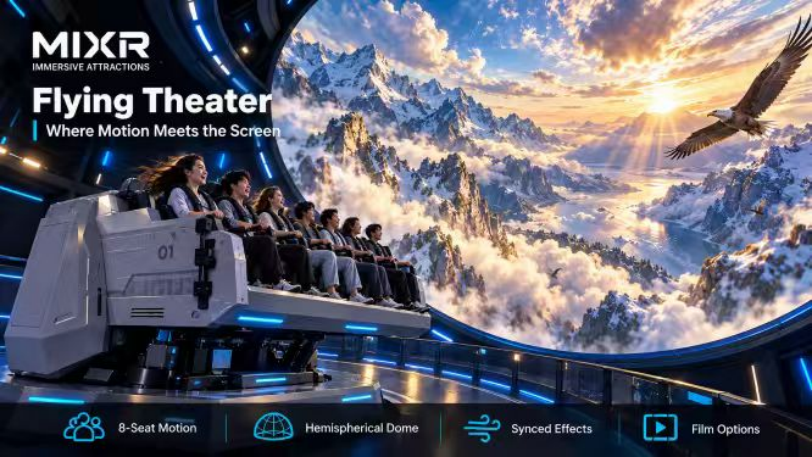
Capacity Changes the Working Scope
Capacity is an operating decision before it is an equipment decision. A small group format may suit a museum, a cultural venue, or a premium indoor attraction where visitors arrive in separate waves. A larger format makes more sense when tour groups, school groups, or a busy scenic route feed the attraction at predictable times.
The capacity line in a Flying Theater project quotation should be read together with the loading plan. More seats mean more than extra chairs. The venue may need a wider entrance, a larger waiting area, more staff during boarding, and a clearer exit path. The control system, safety checks, audio coverage, and motion layout also have to serve the full group. A quotation that changes the seat count but leaves every other line untouched deserves a closer review.
Capacity should also be judged against ordinary weekdays. A theater that works beautifully during a holiday rush may feel oversized when the visitor flow is light. The right equipment configuration keeps the session active without making the operator carry an unnecessary room and staffing burden.
| Decision | Mainly changes | Buyer should confirm |
| Capacity | Seats, queue, staff | Normal group flow |
| Motion | Platform, control, testing | Movement and safety scope |
| Content | Film and approval work | Deliverables and revisions |
The Motion System Has Its Own Cost Logic
The motion platform is one of the most visible parts of the attraction, but it is not the only part that matters. Buyers should ask how the seats move, how much movement the content uses, and how the system returns to its starting position between sessions. A more elaborate motion sequence can require additional control, safety interlocks, installation work, and commissioning time.
Motion should be matched to the film rather than selected from a brochure. A calm aerial journey may need smooth lift, tilt, and banking cues. A fast fantasy sequence may use sharper changes, but the movement still has to remain comfortable for a mixed family audience. The supplier should explain the operating envelope, the seat layout, the emergency stop arrangement, and the daily inspection points.
The quote should separate the platform, seat structure, control equipment, safety system, and installation. Keeping these items visible makes later discussions much easier when the venue changes the room or asks for a different capacity.
Curved Screen Geometry Affects the Room
Flying Theater content is designed for a curved-screen visual environment. The screen geometry, viewing distance, seat position, and image alignment work as one system. It is not enough to purchase a large display and place seats in front of it.
The Flying Theater equipment configuration should show the screen type, image system, audio arrangement, control hardware, and any environmental effects included in the scope. Wind, vibration, or other synchronized effects may be useful, but they should be linked to specific scenes in the film. Otherwise the venue may pay for effects that staff rarely use or cannot operate consistently.
Room drawings matter here. The buyer should check sightlines from the side seats, ceiling clearance above the moving platform, maintenance access behind the screen, and the route used to bring large components into the building.
Film Production Is a Separate Decision
Flying Theater film production can be a standard content package, a localized regional film, or a fully customized story. These options have different implications for the budget and for the attraction’s identity.
A standard film may help a venue open with a controlled content scope. A destination film can show a city, landscape, historical route, or local legend in a way that supports the ticket narrative. Custom work usually adds script development, visual design, 3D or CG production, review rounds, voice work, music, and localization. The quotation should state which of these steps are included and how many approval rounds the venue receives.
Content approval should not be left to the final installation week. The tourism team, cultural advisers, marketing staff, and supplier need a clear owner for the script and final cut. A technically impressive film can still feel disconnected if it does not give visitors a reason to associate the flight with the destination.
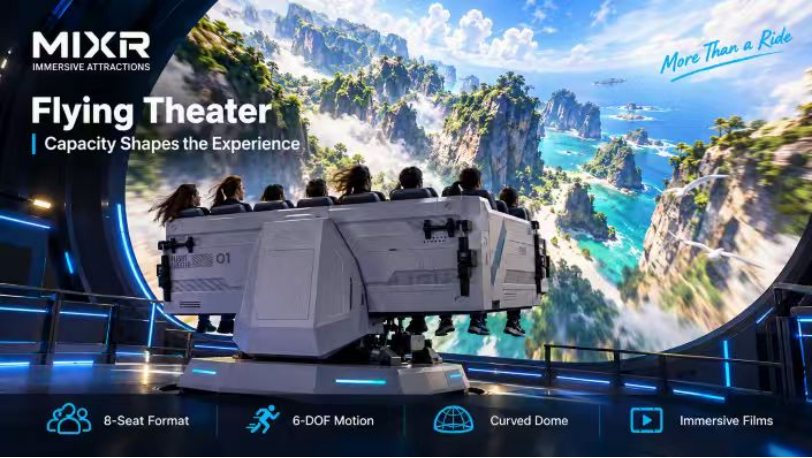
How to Read the Final Quotation
The most useful quotation divides the project into capacity, motion system, screen and media, film production, room preparation, installation, training, and after-sales support. Each line should explain what is included, what depends on the site, and what will be confirmed after the survey.
MIXR can support this kind of project through its Flying Theater equipment, visual content, special-effects integration, and installation planning. The buyer should still request a room drawing, operating cycle, maintenance list, content scope, and acceptance procedure before approving the final version.
1. Confirm the session size against weekday traffic.
2. Separate platform, media, film, and site work.
3. Approve the content scope before final installation.