Why Dark Rides Remain Popular
Dark rides remain popular because they still solve three problems many parks have not solved any better: weather, mixed-age appeal, and indoor revenue. A dark ride gives the operator one paid experience that works when the forecast turns bad, when the outdoor queue is getting tired, or when the park needs a more controlled place to hold guests. MiXR’s Dark Ride makes sense in that role because it is not only a ride system. It is an indoor anchor with story, motion, and a clear commercial purpose.
The format also keeps winning because guests do not need to learn anything before they enjoy it. Parents understand it immediately. Kids do too. Nobody has to read a rule sheet, calibrate a headset, or figure out how to move through a game space. That matters more than people admit. A park can sell a dark ride to grandparents, school groups, tourists, and day-trippers with one explanation. The attraction feels easy from the outside, which is often the real reason it keeps getting booked.
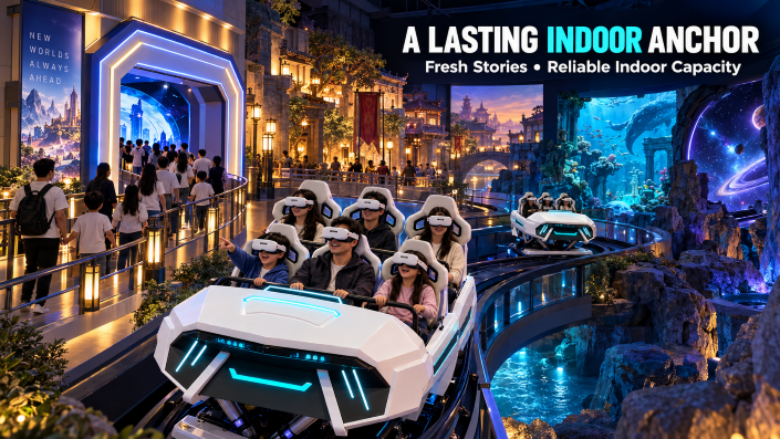
What the format keeps doing well
Dark rides work because they can be family-friendly without feeling childish. They can be immersive without asking the guest to become a player. They can be tied to a local story, a character world, or a broader fantasy route, and they still feel coherent. That flexibility helps theme parks and tourist attractions fit the format into very different brand identities. A site does not have to rebuild itself around the ride. It just has to give the ride a reason to belong there.
The other advantage is emotional control. The operator decides what is seen, how long it is seen, and when the reveal lands. That is useful in a world where so many attractions are noisy but forgettable. A good dark ride can slow the visitor down without making the day feel slow. It can make a family sit together, react together, and leave with one shared memory. That is a hard thing to buy with a pure throughput attraction.
Why operators keep coming back
Operators like dark rides because they can keep guests inside the gate longer and fill gaps in the day. A strong indoor route also helps on days when outdoor circulation is weak or when the park needs a premium product that still feels family-safe. In a better park, the dark ride does not just absorb traffic. It gives the park a reason to market a night visit, a rainy-day visit, or a shoulder-season visit. That is why the format has stayed useful even as other attraction types come and go.
The ride still has to be comfortable, though. If the pacing is too aggressive, families back away. If the story is too thin, repeat visits fade. If the transitions are sloppy, guests notice. Dark rides are popular because they can carry emotion, but they only keep that advantage when the operating team respects the details. MiXR’s Dark Ride projects work best when the story, service plan, and maintenance access are built together instead of being separated into different departments.
Where the format stops working
- The site is too small to support a proper route and queue without awkward compromises.
- The budget only covers a thin story with no real scene depth or refresh path.
- The park wants a cheap thrill instead of a destination anchor that can carry traffic over time.
- Weekday demand is too thin to justify the staffing and support burden.
That is also why dark rides age better than many people think. They can be refreshed in stages, they can carry a park through bad weather, and they do not depend on guests already knowing how to play. They are slower-burn assets than many people want to admit, which is useful when a destination needs something with staying power instead of another short-lived novelty.
If the conditions above are present, I would not force a dark ride into the project just because the format is popular. Popular and practical are not the same thing. The format is still strong, but it deserves a site that can actually use what it offers.
Who still chooses the format
The buyers who still choose dark rides usually share one trait: they want a guest to remember the visit after the day ends. That includes major theme parks, family destinations, and tourist attractions that need an indoor story with real staying power. A park does not pick the format because it is fashionable. It picks it because the format still gives the operator control over pacing, atmosphere, and group experience in a way that many simpler attractions do not.
- Large parks that need a signature indoor anchor.
- Family destinations that want a broad-age, low-friction experience.
- Tourist attractions that need weather resilience and repeatable indoor sales.
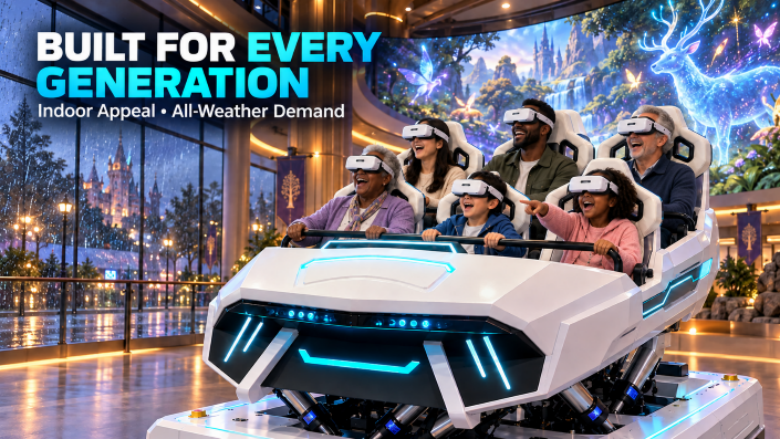
Why the format keeps getting refreshed
Dark rides do not stay popular by standing still. Parks refresh them because the format can absorb new story layers without losing its core appeal. A good route can take a new character, a new visual theme, or a new scene sequence and still feel like the same attraction families already trust. That is useful for operators who do not want to rebuild the whole building every time they want a new reason for people to come back.
The format also survives because it is easy to place inside a wider park strategy. It can support a daytime family flow, an evening ticket, or a weather backup without turning into a separate business. When a park owns a dark ride, it owns a piece of reliable indoor capacity. That is a practical asset, and practical assets tend to stay in the plan longer than novelty assets.