XR Infinite Space Case Study
This XR Infinite Space case study is a composite example based on common project conditions in shopping malls and tourist commercial zones. It is not presented as a named client result. The purpose is to show how an operator might think through site fit, cost, capacity, and ROI before buying a multiplayer XR attraction.
The project setting is simple: a mid-sized entertainment unit inside a busy mall attached to a tourist district. The mall has weekend traffic, school holiday traffic, and a reasonable number of young visitors. The problem is that several upper-floor units have weak conversion. People pass through, but they do not stay long.
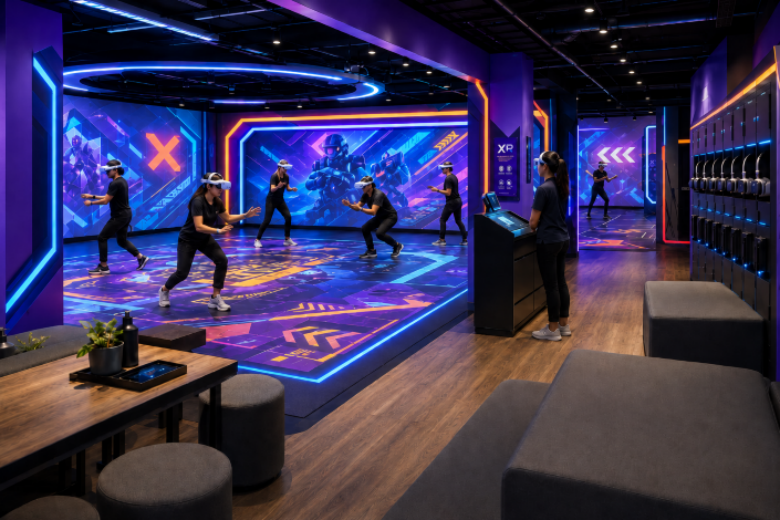
The Site Problem
The operator does not need another passive display. They need a paid activity that can pull small groups from the corridor and keep them for a short session. The attraction also needs to work for friends, families, and birthday groups.
The available area is not huge. After queue space, storage, staff counter, and safety margins, the playable area is smaller than the floor plan first suggested. This is a common issue. Gross area is not usable play area.
Why XR Infinite Space Was Considered
Traditional seated VR would be easier to install, but the operator worries that it will look like a basic arcade product. A larger ride is not realistic because of ceiling height, structure, and rent.
XR Infinite Space fits the middle ground. It can offer multiplayer missions, visible group activity, and content that can be refreshed. Players enter together, move through a mapped area, and share the same game world.
MiXR’s XR Infinite Space would fit this type of scenario because it can be planned as a commercial package: playable space layout, hardware integration, multiplayer content, installation support, and operation guidance.
Planning the Configuration
The operator should avoid buying the largest system first. A better approach is to configure around realistic traffic and staff capacity.
The planning questions are:
- How many players can staff onboard smoothly?
- How much queue space is needed during peak periods?
- Can passersby see or understand the gameplay?
- What content works for first-time visitors?
- Can the attraction support birthday groups and repeat players?
- How often should new missions or events be introduced?
In this case, the recommended direction would be a moderate player count, clear storefront preview, and content that does not require long explanations.
Operating Model
The attraction should be built around the full cycle, not only game time. Ticket checking, storage, briefing, headset fitting, play time, exit, cleaning, and reset all count.
If the game lasts 10-12 minutes, the real cycle may be closer to 18-22 minutes in daily operation. Staff training can reduce wasted time, but it cannot remove every step.
The operator should calculate revenue using conservative weekday traffic, stronger weekend traffic, and peak holiday traffic separately. One average number will hide too much.
What Would Make the Project Work
The attraction is more likely to work if:
- The storefront shows enough activity to attract passersby.
- Pricing supports group play rather than only single tickets.
- Staff can explain the experience in one short sentence.
- The first content library includes more than one mission style.
- Maintenance supplies and spare parts are ready before opening.
- The mall supports launch marketing and seasonal campaigns.
These points are not glamorous, but they decide performance.
What Could Go Wrong
The project may underperform if the entrance is hidden, the queue blocks nearby tenants, the content is too difficult, or the staff cannot reset sessions quickly. It may also weaken after the first month if the operator has no content refresh plan.
Another risk is overbuilding. A large system may look stronger in a proposal, but if local traffic cannot fill it, the cost and staff burden rise faster than revenue.
Lessons From the Case
The main lesson is that XR Infinite Space should be planned as a live attraction, not a technology installation. The product needs traffic, visibility, staff discipline, content rhythm, and a clear revenue model.
For a mall or tourist commercial zone, the best version is not always the biggest one. It is the version that visitors understand quickly and staff can run repeatedly without friction.
That is the kind of case study buyers should ask suppliers to walk through before signing. It tells more than a demo video.
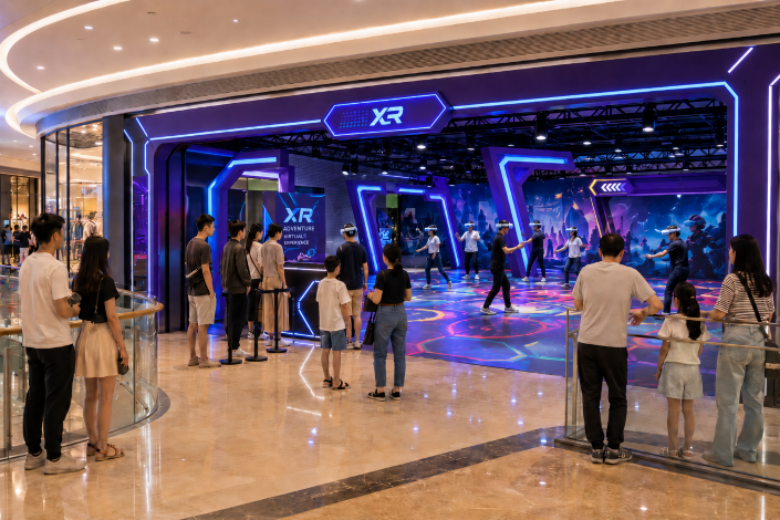
How This Case Should Shape Procurement
The operator should use the case to build a supplier brief. The brief should include traffic assumptions, available area, desired player count, target ticket price, staffing limits, and expected opening date. With that information, suppliers can propose a realistic configuration instead of guessing.
The buyer should also ask for a basic launch plan. Not a complicated marketing campaign, just the essentials: storefront message, opening offer, staff script, group package, and the first content refresh timing. These details help turn the case from a technical installation into a working attraction.
The biggest lesson is restraint. A case study should not push the buyer toward the most expensive version. It should show which version the site can actually support.