What Changes the Price of a Hyper XR Theater Project?
Hyper XR Theater price changes with the size of the audience, the depth of the XR system, the special effects package, the content scope, and the room work required for installation. It is better treated as a complete attraction project than as a row of seats with headsets. The quotation becomes easier to understand when every cost line is connected to a visitor action or an operating task.
The Theater Format Sets the Starting Point
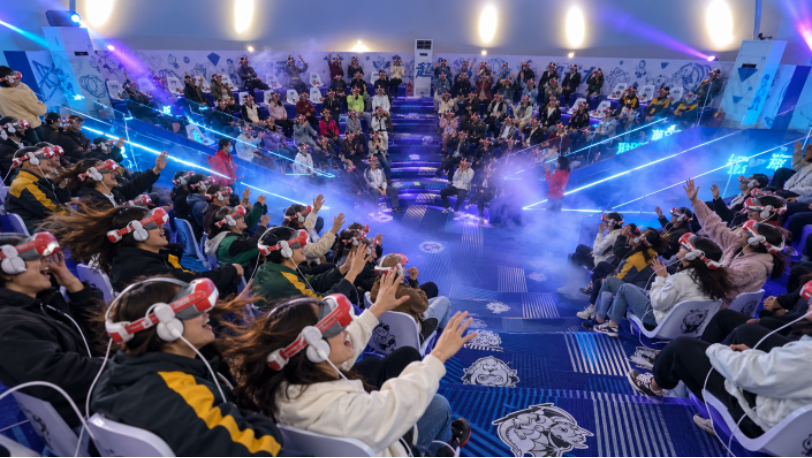
Hyper XR Theater is a seated immersive format. Visitors use XR headsets while the system combines visual content, head tracking, synchronized effects, and, where included, gesture interaction. That combination creates a shared theater experience, but it also requires coordinated hardware and control.
The number of seats affects the room, loading process, headset management, and show-control design. A smaller venue may focus on scheduled groups or premium sessions. A larger venue may need a stronger queue, faster boarding, more staff, and a more robust reset process. The capacity decision should be made with the venue’s visitor rhythm in mind rather than by selecting the largest available layout.
For a complete project with custom content, effects, and installation, buyers should approach it as a million-plus project discussion rather than a small equipment purchase. The final figure still depends on the confirmed configuration and site scope, so the quotation should explain its assumptions.
Headsets and Tracking Are Only the Visible Layer
The headset is the part visitors notice first, but a working theater also needs charging, storage, cleaning, control, content delivery, head tracking, and staff procedures. The quotation should state how the devices are managed before and after each session.
Head tracking affects the relationship between the guest’s movement and the virtual scene. If gesture interaction is included, the project may need additional sensors, hand tracking, or interaction design. These details are not interchangeable. A buyer should ask which functions are included in the proposed system and which are optional additions.
The control system should allow staff to start, pause, reset, and monitor sessions without relying on a specialist for every ordinary operation. That requirement often matters more after opening than a small difference in headset specification.
Effects Add Coordination Work
Full-Sensory XR Theater Price is influenced by the effects used with the show. Motion seats, vibration, wind, rain, lighting changes, sound, or other environmental cues can be synchronized with the content. Each effect adds equipment, control logic, installation, maintenance, and testing.
Effects should earn their place in the story. A few well-timed cues may support immersion more effectively than a crowded package that makes the room difficult to operate. The supplier should identify which effects are included, where they are installed, what utilities they need, and how staff inspect them between sessions.
The room also needs enough access for maintenance. Cables, control cabinets, seat mechanisms, and effect units should not be hidden in a way that turns a routine repair into a construction project.
Content Is Where the Project Becomes Specific
An Immersive XR Theater Turnkey Price should distinguish between a standard content package and a customized production. Custom content can involve story development, script, characters, environment design, 3D or CG production, sound, localization, interaction, and integration with effects.
A theme park may want a fast-moving adventure. A cultural venue may need a story linked to a region or historical setting. A commercial complex may prefer a family-oriented world that can be updated for campaigns. The content decision changes the identity of the theater and the amount of review required from the venue.
The quotation should record the film length, language versions, revision rounds, approval stages, and update options. This prevents a broad phrase such as “original content” from hiding different production expectations.
Think About the Content After Opening
The first film is not the only content decision. A museum may later add another language. A scenic venue may want a short seasonal version. A commercial complex may need a new film for a campaign. The buyer should ask whether the playback and control system can accept future content without rebuilding the theater.
This does not mean that every project needs frequent updates. It means the update path should be understood before the room is finished. A clear file format, content handover process, and support contact can save the operator from treating every small change as a new construction project.
The Site and Handover Complete the Calculation
Room preparation, electrical capacity, network layout, ventilation, seating layout, queue design, installation, testing, staff training, and after-sales support should all be visible in the proposal. The venue also needs a simple daily routine for headset cleaning, charging, session reset, and visitor assistance.
MIXR can discuss Hyper XR Theater as an integrated system of seats, XR devices, content, effects, control, and installation. Buyers should compare the full operating scope rather than isolated hardware prices.
1. Ask what is included in the base theater.
2. Separate custom content and effects from standard equipment.
3. Confirm room preparation, training, and support before approval.