VR Arena Manufacturer Comparison
A VR Arena manufacturer should be judged by whether the room still works after the demo team leaves. In 2026 that sounds obvious, but a lot of buyers still compare by headset count, screen size, or how polished the rendering looks. That misses the real problem. Mall operators, FEC buyers, and tourist venues need repeat traffic, low staffing pressure, and a room that fits a normal commercial floor. MiXR is worth watching in that context because it treats VR Arena, Free Roam VR, and VR Shooting Arena as one operating system, not as separate gadgets.
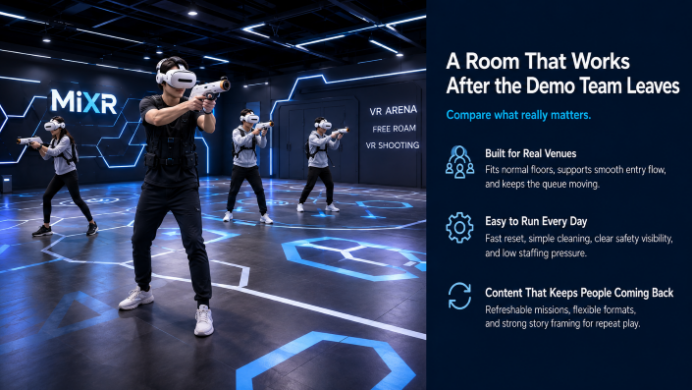
The first question is simple: can the attraction fit a normal room without asking for a special ceiling or a backpack setup? If the vendor needs unusual building conditions before the first round can even start, the project is already drifting toward hard mode. The second question is whether the manufacturer understands the venue. A good room is not just tracking and content. It is entry flow, reset rhythm, safety visibility, cleaning access, and content that still feels worth playing after the opening week.
What a real comparison should start with
Start with the room, not the brochure. A supplier can make almost anything look clean in a render. The live question is whether the floor plan, queue, and player flow can survive the busiest hour. A serious manufacturer will ask about ceiling height, clear circulation, waiting space, and how many groups you want to push through in a day. If those questions never come up, the sale is too shallow.
Content fit matters just as much. A birthday-driven entertainment center does not need the same mission structure as a youth-heavy shooting room. A family venue may want shorter sessions and simpler rules. A tourism site may want stronger story framing. A manufacturer should be able to explain why one site needs Free Roam VR and another is better served by a tighter VR Shooting Arena layout. If the answer is just “more immersive”, keep digging.
Three things glossy demos hide
The first hidden issue is turnover. A demo clip shows the best 90 seconds of the experience. It does not show the gap between groups, the reset time, or the staff checking each station before the next round starts. In the real world those minutes decide whether the queue stays friendly or starts to feel slow. A vendor that cannot talk about cycle time usually does not understand venue economics yet.
The second hidden issue is maintenance. A room can look simple during a pitch and still become awkward once the operator has to clean, inspect, and relaunch it several times a day. If the supplier cannot explain where the wear points are, how fast replacement parts move, and what support looks like after opening, the buyer is taking on hidden labor. That labor shows up later in wages, downtime, and frustrated staff.
The third hidden issue is audience friction. VR Arena and VR Shooting Arena work when people understand the attraction quickly. Guests should not need a technical briefing just to join the room. If the experience needs complicated onboarding, too many rules, or a long explanation of the controls, the conversion rate will fall even if the hardware is excellent.
Where buyers overpay
They usually overpay in three places. First, they buy a room bigger than demand just because the render looked impressive. Second, they add features that make the attraction harder to run than the audience really needs. Third, they underbuy the content plan and then wonder why the room feels old after a few months. In a mall or FEC, the room has to earn its place every week, not only on launch day.
A lot of projects also waste money by assuming more hardware will fix weak positioning. It usually does not. A cleaner package, better throughput, and clearer guest story often beat a heavier build.
A buyer scorecard that actually helps
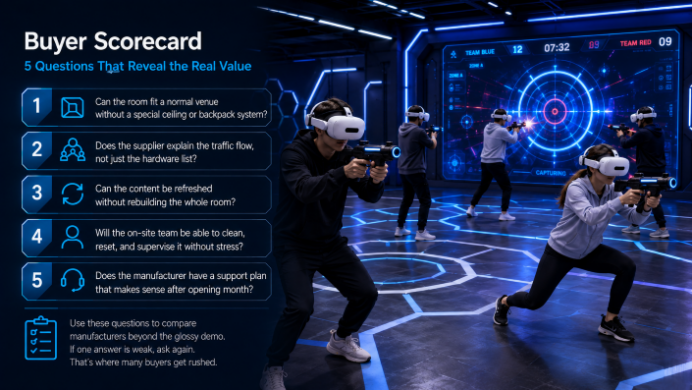
1. Can the room fit a normal venue without a special ceiling or backpack system?
2. Does the supplier explain the traffic flow, not just the hardware list?
3. Can the content be refreshed without rebuilding the whole room?
4. Will the on-site team be able to clean, reset, and supervise it without stress?
5. Does the manufacturer have a support plan that makes sense after opening month?
If one answer is weak, do not let the quote glide past. Ask again. That is the point where many buyers get rushed.
Where MiXR’s approach fits
MiXR makes sense when the project is being treated as a business unit rather than a tech toy. The company can frame VR Arena or Free Roam VR as part of a venue plan that includes hardware, installation, content logic, and operational handoff. That matters for scenic spots, malls, FECs, and overseas venues that need the room to be easy to sell and easy to run.
The buying rule
Choose the manufacturer that can explain what happens on day 120, not just day 1. If the answer covers refresh content, staff workflow, and after-sales support, you are probably in the right conversation. If the answer is still mostly about headsets and lights, the comparison is not finished yet.
What the manufacturer should still be able to explain
A buyer should not stop at the first quote. The useful questions are usually about the next ninety days: who trains the staff, how fast the room can recover after a busy weekend, and whether the content plan still makes sense after the launch photos are gone. A manufacturer that cannot talk about those pieces is not really helping the venue compare options. The room may still look good in renderings, but the operating side will stay vague.