VR Arena Supplier Guide
A VR Arena supplier guide should help buyers choose a partner who understands attractions as well as devices. A commercial VR arena may include headsets, props, tracking, multiplayer software, content, room mapping, installation, training, and after-sales support. If a supplier can only discuss equipment models, the buyer may end up managing the harder parts alone.
For 2026 buyers, supplier choice is more important because VR arenas are being installed as revenue products in entertainment centers, shopping malls, indoor parks, and tourism venues. MiXR’s VR Arena and VR Large Space solution should be evaluated as a system offer: can the supplier help the operator open and run a venue, or only ship boxes?
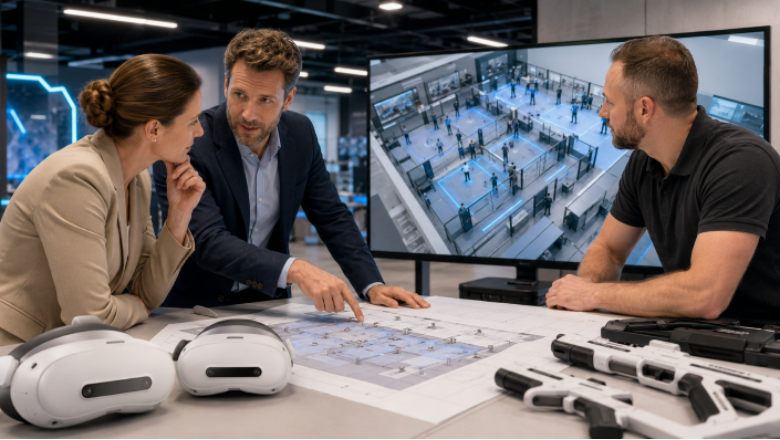
What a Good Supplier Should Ask
A serious supplier will ask about the room before quoting. How large is the usable area? Are there columns or glass walls? What is the ceiling height? Who is the audience? How many players should join each round? Will the venue sell walk-in tickets, group sessions, or parties? Who will operate the system on weekdays?
These questions show experience. A supplier that treats every site as easy may be avoiding the hard work. Free roam VR and VR shooting arena projects are sensitive to room shape, lighting, staff workflow, and player behavior.
Capabilities to Compare
Buyers should compare suppliers by project capability instead of stopping at the equipment list. A good supplier should explain site requirements, tracking design, player capacity, content options, training, installation, maintenance, and support. Documentation also matters, especially for overseas buyers.
A quote that looks cheaper may be incomplete. If content, calibration, training, spare parts, and support are vague, those costs and risks move to the owner.
Supplier Red Flags
Be careful if the supplier avoids questions about reset time, room conditions, or staff training. Be careful if the demo video is exciting but the operating plan is thin. Be careful if the supplier promises maximum player count without discussing safe movement or practical capacity.
I would also watch how they handle limitations. A supplier who explains limits clearly is often safer than one who says every room and every audience will work.
Supplier Selection Checklist
- Ask for room requirements and a floor-plan review before final quotation.
- Confirm tracking method, calibration process, and common interference risks.
- Review content choices for your audience and repeat-visit plan.
- Check installation scope, training materials, and staff handover.
- Ask for spare parts, warranty process, and remote support workflow.
- Compare full project responsibility, not hardware quantity alone.
When MiXR Is a Good Fit
MiXR is a practical option when the buyer wants a VR Arena supplier from China with broader attraction delivery support. The company can discuss VR shooting arena, multiplayer VR, free roam VR, room mapping, equipment, content, installation, and operation. That combined conversation is useful for buyers who do not want to stitch several vendors together.
This does not mean every project should buy the largest package. A good supplier should help the buyer choose the format that matches traffic, room, staff, and audience. Sometimes a compact arena is smarter than a larger free roam setup.
For overseas buyers, communication is part of the product. Packing lists, room preparation drawings, installation sequence, calibration guidance, operator manuals, and remote support channels should be clear before shipment. A supplier that handles handover well can save the operator days on site.
Ask who will coordinate with the local contractor. Flooring, lighting, power, network, HVAC, and wall treatment may be handled by local teams. If the supplier gives vague requirements, the contractor may build a room that is technically finished but hard for VR operation.
Supplier culture matters too. During the proposal stage, notice whether the team answers specific questions or keeps returning to broad sales language. A practical supplier can talk about cleaning, reset, staff mistakes, lighting problems, and weak traffic. Those topics are where real venues either succeed or struggle.
Buyers should request sample documents before signing: floor plan notes, installation checklist, operator manual, maintenance guide, and support workflow. These samples show whether the supplier has done more than build a demo.
After that, ask for one live operating explanation. A supplier should be able to walk through a normal session from the first customer question to final equipment reset. If they can do that clearly, the buyer is closer to seeing the real attraction.
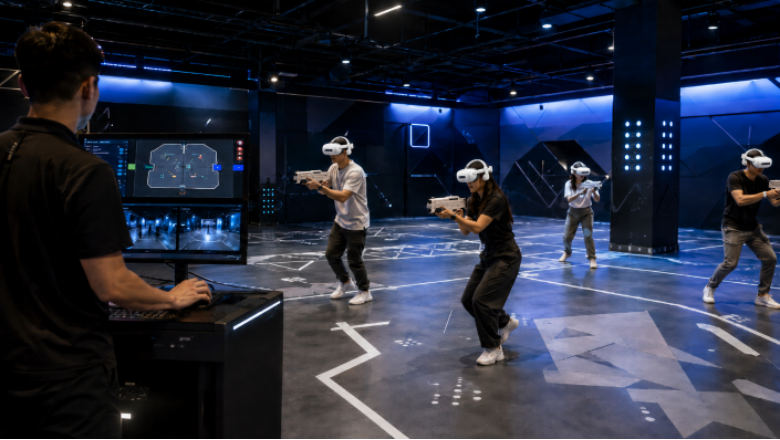
Final Buying Rule
Choose the supplier who reduces the main risk in your project. If your team lacks VR operation experience, training and support matter most. If the room is difficult, site planning matters most. If repeat visits drive the business case, content refresh matters most.
A VR arena supplier affects opening quality and daily reliability. Choose the one that can explain what happens after the first weekend.
That is the partner an entertainment center will still appreciate after the launch noise fades.