VR Arena ROI Explained
VR Arena ROI is created by real sessions, not by the excitement of the first demo. A strong arena can sell group tickets, birthday packages, youth events, corporate sessions, and repeat challenges. A weak arena can have good equipment and still underperform because the room is hidden, staff are slow, or the content feels like a one-time trial.
For 2026 entertainment center buyers, ROI matters because VR is no longer automatically impressive. Visitors have seen headsets. Operators now need proof that the attraction can run, sell, and refresh. MiXR’s VR Arena solution should be evaluated by practical capacity, visitor conversion, repeat value, staff workload, and support.
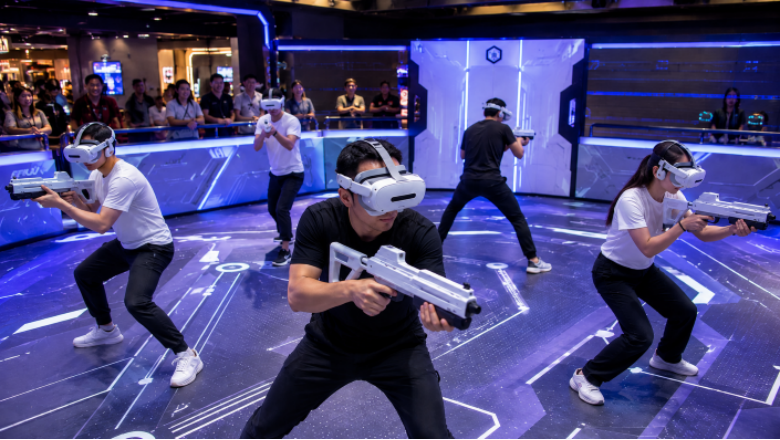
Start With Real Capacity
Capacity is the first ROI number. Do not start with total mall traffic or total park attendance. Start with nearby traffic that can actually see the arena and decide to pay. Then calculate full session cycle time.
A game may last 10-12 minutes, but staff need time for payment, briefing, fitting, exit, cleaning, and reset. If a room handles 6 players every 15 minutes, the maximum hourly capacity is different from a model that assumes a round starts every ten minutes. That gap can decide whether the ROI case is realistic.
Conversion Depends on Visibility
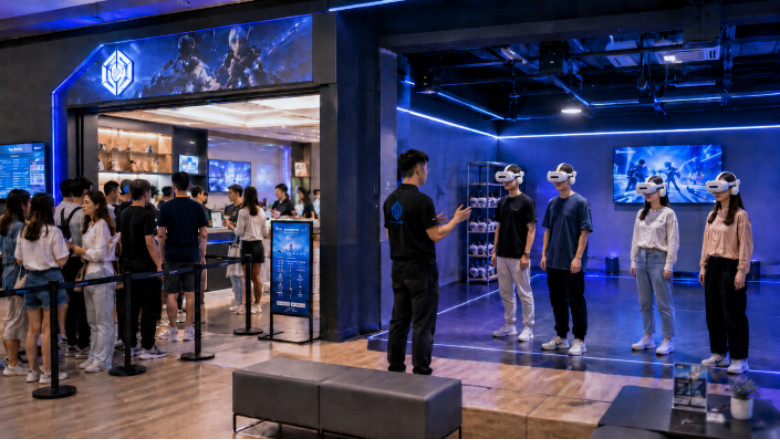
A VR arena should be easy to understand from outside. Visitors should know whether it is a battle, a team mission, a family adventure, or a party attraction. If they have to ask too many questions, many will keep walking.
Storefront design, waiting area, sound control, session names, price board, and staff explanation all affect conversion. These items may look like marketing or decoration, but they belong in ROI analysis because they decide how many people enter.
Repeat Value Is the Second Test
Launch traffic can distort the picture. People try new attractions once. Repeat value comes from missions, scores, team competition, content updates, events, and group packages. If the arena has no reason for visitors to return, ROI depends too heavily on new foot traffic.
I would ask the operator to plan the first 90 days before opening. What is the launch offer? What is the second campaign? What group product will be sold after the first rush? That plan does not need to be perfect, but it should exist.
ROI Checklist for Buyers
- Use nearby visible traffic as the conversion base.
- Calculate full cycle time instead of using game duration alone.
- Model average occupancy instead of maximum player count.
- Include staff wages, cleaning, maintenance, and equipment wear.
- Plan group sales, birthday packages, and repeat-player campaigns.
- Ask the supplier how downtime, content updates, and support are handled.
Where ROI Gets Inflated
ROI gets inflated when every session is assumed to be full, every visitor pays the highest ticket, and staff time is treated as free. It also gets inflated when the model ignores downtime. A headset, prop, charger, router, or tracking device may need attention. The system should have a plan for small failures.
Another common inflation is assuming that content will stay fresh forever. A VR shooting arena may open strongly, but regular players will ask for new missions or ranking challenges. Content refresh is not a luxury if repeat visits are part of the business case.
When the ROI Case Is Strong
A VR arena has a stronger ROI case when the venue already has group traffic, the entrance is visible, staff can operate sessions smoothly, and the content supports repeat play. It is weaker when the room is hidden, the audience is unclear, or the owner wants a passive low-maintenance attraction.
The operator should also have someone responsible for ongoing sales. Many venues open well, then stop promoting the attraction after the first month. ROI improves when the arena has a calendar: birthday offers, team ranking nights, school holiday campaigns, company packages, or seasonal missions. The content gives the reason; the venue still has to sell it.
Refunds and complaints should be treated as ROI data. If visitors mention dizziness, confusion, waiting, or uncomfortable equipment, those comments show where revenue is leaking. Fixing small issues can produce better returns than adding another piece of hardware.
Operators should also track why people do not buy. Do they think the session is too intense? Too expensive for the time? Too private? Too hard to understand? Staff hear these objections every day. Recording them for two weeks can reveal whether the issue is price, message, location, or content fit.
ROI improves when the attraction becomes easier to say yes to. Clear session names, visible group results, simple booking options, and confident staff can raise conversion without changing the system.
MiXR can support ROI planning by connecting equipment, room mapping, content, training, and support into one project discussion. The buyer should still build a conservative model. If the project works only under perfect conditions, it is not ready. If it works with modest weekday traffic and realistic reset time, the arena has a healthier chance.