VR Shooting Arena Cost Analysis
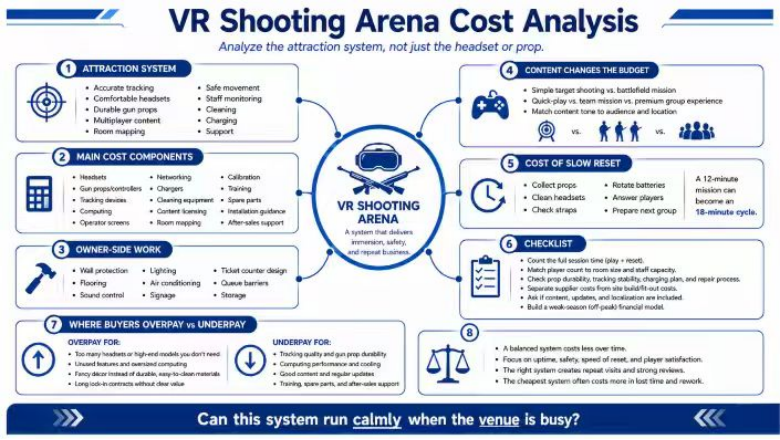
VR Shooting Arena cost analysis should focus on the attraction system, not on the weapon prop or headset alone. A shooting arena needs accurate tracking, comfortable headsets, durable props, multiplayer content, room mapping, safe movement design, staff monitoring, cleaning, charging, and support. Leave out one of those parts and the venue may still open, but the operation will feel rough.
By 2026, buyers are asking sharper questions because action-based VR has moved beyond novelty. A shopping mall or entertainment center wants group revenue, party bookings, repeat missions, and a strong weekday plan. MiXR’s VR Shooting Arena should be evaluated as a location-based VR attraction that must work under normal public use, not as a private game setup.
The Main Cost Components
The visible components include headsets, controllers or gun-shaped props, tracking devices, computing, operator screens, networking, chargers, and cleaning equipment. The less visible components include content licensing, room mapping, calibration, staff training, spare parts, installation guidance, and after-sales support.
Owner-side work also matters. The room may need wall protection, flooring, sound control, lighting adjustment, air conditioning, signage, ticket counter design, queue barriers, and storage. These items may not be part of the supplier invoice, but they are part of the project.
Content Changes the Budget
A simple target-shooting game is not the same as a multiplayer battlefield mission. More complex content may need stronger props, more careful room mapping, richer sound, clearer staff instructions, and a better refresh plan. The buyer should decide whether the arena is meant to be a quick play product, a team mission, or a premium group experience.
The content tone also affects the venue. Some operators want intense combat. Others need a cleaner, more family-friendly style. A supplier should help match content to audience instead of treating every shooting arena as the same product.
The Cost of Slow Reset
Reset time is easy to underestimate. Staff need to collect props, clean headsets, check straps, rotate batteries, answer nervous players, and prepare the next group. A 12-minute mission can become an 18-minute operating cycle if the workflow is poor.
That difference changes ROI more than many equipment upgrades. I would rather see a slightly simpler setup that runs cleanly than a dramatic system that staff dread during peak hours.
Cost Analysis Checklist
- Count full session time, including briefing, gameplay, cleaning, and reset.
- Match player count to room shape and staff capacity.
- Check prop durability, tracking reliability, charging, and repair process.
- Separate supplier scope from decoration, HVAC, power, signage, and local work.
- Ask whether launch content, updates, and localization are included.
- Build a weak-season model before accepting the strong-season forecast.
Where Buyers Overpay
Buyers overpay when they buy a large combat format for a venue that cannot feed enough groups. A hidden location, weak youth traffic, or poor storefront can make a strong shooting arena underperform. The problem may be business placement, not technology.
They also overpay when they purchase a premium-looking setup with no content refresh path. Shooting content can have strong launch appeal, but repeat players need new missions, scores, rankings, or team challenges.
Where Buyers Underpay
Underpaying usually shows up in tracking, support, and staff training. If props disconnect, headsets are hard to clean, or staff cannot solve small problems, the attraction loses trust. Public venues are tough environments. Equipment has to survive repeated use by people who are excited, nervous, or careless.
I would also watch the cleaning setup. A shooting arena has more contact points than many passive attractions: headsets, straps, face areas, controllers, props, and sometimes vests or accessories. If cleaning is slow or awkward, the venue either delays sessions or lowers hygiene quality. Neither is good for repeat business.
Supplier response is another hidden cost. A small fault during a busy weekend can become expensive if the operator does not know who to contact or what to check first. Clear support procedures reduce panic, especially for venues that do not have in-house VR technicians.
The buyer should test the attraction from the staff side before accepting the budget. Put on the headset, then watch the reset. Where do used props go? Who wipes the headset? How does staff know the battery level? What happens when the next group arrives early? These small answers decide whether the cost is realistic.
Another point is audience mix. A high-action VR shooting arena may be strong for teenagers and office groups, but a family entertainment center may need a softer mission as a second option. If the budget allows only one content style, choose the one that matches the most frequent paying audience.
MiXR’s value is strongest when the buyer wants the shooting arena planned as a complete venue product: equipment, content direction, room mapping, installation, and operation. The cost analysis should end with one question: can this system run calmly when the venue is busy? If the answer is unclear, the budget is not finished.