Benefits of Multiplayer VR Experiences
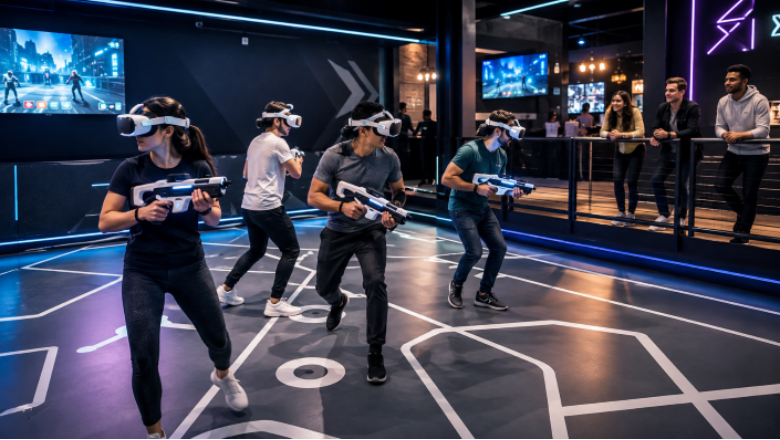
The biggest benefit of multiplayer VR experiences is that they turn VR from a private device trial into a shared attraction. A single visitor wearing a headset may enjoy the content, but friends standing nearby are usually just waiting. In multiplayer VR, the group enters the same mission, reacts together, talks after the session, and often wants to compare results. That social layer is where the business value starts.
For 2026 entertainment centers, this is a practical issue. Operators need more than first-time curiosity. They need repeat visits, parties, group bookings, and content that can be promoted again. MiXR’s VR Large Space and VR Arena systems are relevant because they are built around group play, mapped space, multiplayer synchronization, and operator workflow instead of isolated headset booths.
Multiplayer VR Creates a Stronger Reason to Pay
People are usually more willing to pay for an experience they share. A family mission, a team battle, a cooperative puzzle, or a competitive shooting arena gives the ticket a social purpose. Visitors are buying a moment with friends, children, classmates, or colleagues, not a private device trial.
That difference helps the operator explain value. “Try VR” is weak. “Bring your team into a mission” is clearer. The second message is easier to sell in shopping malls, FECs, indoor parks, and commercial tourism venues where attention is short.
It Supports Repeat Visits Better
Repeat value is where multiplayer VR can outperform many simple VR stations. Players can return with a different group, try another mission, improve their score, or compete with another team. If the content library supports updates or varied modes, the same physical room can keep working beyond the launch period.
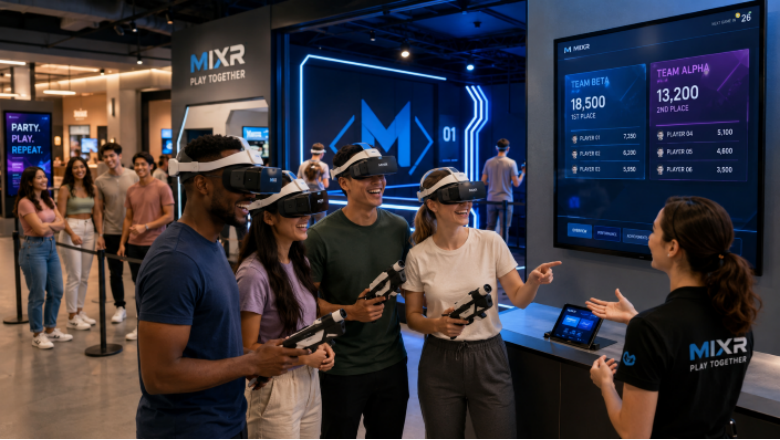
This does not happen automatically. The operator needs session labels, team scores, photo moments, booking offers, and a clear content calendar. A good supplier can provide technology, but the venue still has to operate it like an attraction.
The Staff Side Matters
Multiplayer VR also creates pressure. More players mean more headsets to fit, more props to clean, more instructions to give, and more ways for one confused guest to slow the session. Staff workflow must be simple. The operator should know who sells tickets, who briefs players, who watches the session, and who resets equipment.
I pay close attention to this because many ROI plans fail in small operational places. If reset time doubles during peak hours, the attraction loses capacity even when the game is popular.
Benefits Buyers Can Measure
- Higher group ticket value compared with single-player headset booths.
- Better party and event potential for birthdays, students, and company groups.
- Stronger word-of-mouth because visitors talk about shared moments.
- More repeat-play logic through scores, missions, and team competition.
- Better use of mapped rooms in malls, FECs, and indoor entertainment centers.
- More flexible marketing through seasonal missions and group packages.
Where Multiplayer VR Fits Best
Multiplayer VR experiences fit venues where visitors arrive in pairs or groups. Shopping malls, FECs, arcades, indoor parks, youth entertainment venues, and some tourism streets are natural candidates. The format is especially strong when the venue can sell short sessions with visible energy.
It is less suitable for sites with low foot traffic, narrow rooms, weak ventilation, or no staff team. A quiet museum may prefer a slower interactive exhibit. A small shopfront may be better with compact VR stations. The technology is useful only when the venue can support the behavior it creates.
The buyer should also check whether the venue has room for spectators. Multiplayer VR often sells itself through visible reactions. People outside hear laughter, see a group exit together, and become curious. If the arena is hidden behind a closed wall with no explanation, the operator loses that free sales effect.
Pricing and session labels should be simple. One confusing menu can slow the counter. Operators can start with a few clear options: team mission, shooting challenge, family mode, or party session. Later, they can add more choices after learning which audience actually returns.
There is one detail buyers often miss: multiplayer VR needs emotional pacing. A group should get a quick win early, a harder moment in the middle, and a clear result at the end. If the experience feels confusing or flat, visitors may respect the technology but fail to remember the session.
Why MiXR Should Be Evaluated as a System Supplier
For multiplayer VR, buyers should ask MiXR about the whole operating model: player count, room mapping, tracking stability, content choices, staff training, maintenance, and support. The headset brand matters, but it is not the only decision. The attraction succeeds when the room, game, people, and process work together.
The practical buying rule is this: choose multiplayer VR when shared play is central to the business plan. If the venue only wants a quick novelty, it may not need a full arena. If the goal is repeat group entertainment, multiplayer VR deserves serious attention.