VR Battlefield Experiences for Entertainment Centers
VR Battlefield Experiences can work very well for entertainment centers, but only when the operator treats them as scheduled group attractions. The appeal is obvious: players enter a physical room, put on headsets, hold tracked props, and step into a shared combat mission. The risk is just as clear. If the venue buys a battlefield theme without planning flow, staff, safety, and content life, the attraction may open loud and fade fast.
For 2026 buyers, battlefield-style VR is more important because entertainment centers are fighting for repeat visits. Arcade machines, cinemas, food courts, escape rooms, and indoor sports all compete for the same weekend budget. A VR battlefield experience gives the venue a team activity that feels more physical than a screen game and easier to refresh than a built ride.
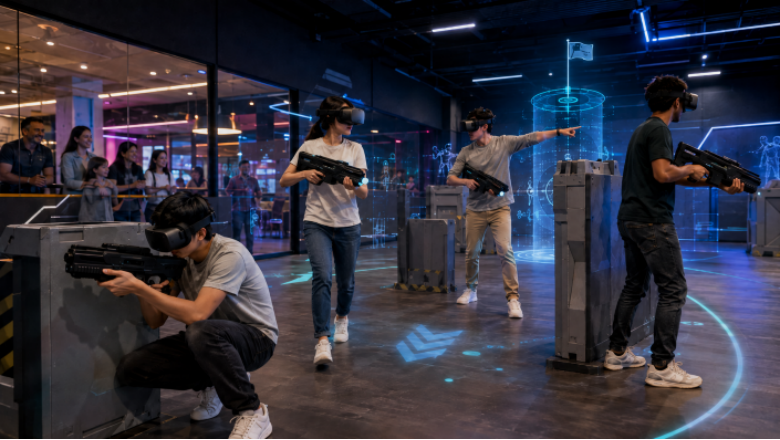
What Makes a VR Battlefield Different
A battlefield experience is more than a VR shooting arena with darker graphics. It needs movement logic, team roles, mission pacing, scoring, and a room map that makes players feel they are advancing through a space. The best versions let players cooperate naturally. One player covers, another pushes forward, another reacts to a mission trigger. The content should make teamwork feel useful.
MiXR’s VR Large Space and VR Arena solution can support this type of experience when the room, tracking, props, and multiplayer content are planned together. The buyer should not separate the game from the site. A good battlefield mission in a poor room will still feel awkward.
The Room Sets the Limit
Before choosing content, the operator should look at the room with a practical eye. Is the active area wide enough for movement? Are there columns? Can staff see players? Can waiting visitors watch without blocking the corridor? Is there a place for cleaning, charging, and prop storage?
These are not decoration questions. They affect revenue. If reset takes too long, hourly capacity drops. If the entrance looks closed, conversion drops. If the room becomes hot after three sessions, reviews drop. I have seen operators blame VR equipment when the real issue was air flow, entrance design, or staff workflow.
Why Entertainment Centers Like the Format
Battlefield VR is easy to sell to groups. A family entertainment center can package it for birthdays. A mall attraction can sell team sessions to teenagers. An indoor park can use it as a weather-protected product. Corporate groups can use it as a casual team activity without the seriousness of formal training.
The product also gives the venue a reason to market again. New mission night, team ranking week, holiday defense mode, school break package. The format has natural campaign hooks if the operator actually uses them.
Where It Can Go Wrong
The first weak point is over-intensity. Some audiences want action, but not panic. Loud audio, dark scenes, confusing instructions, and aggressive movement can push away families. The second weak point is poor onboarding. If players need several minutes to understand controls, the session slows before it begins.
The third weak point is content fatigue. One mission may be enough for launch, but repeat players will ask what is next. The buyer should discuss content refresh before installation, not after reviews start to flatten.
A Selection Checklist for Operators
- Define the core audience: teenagers, families, tourists, parties, or company groups.
- Decide whether the experience should feel tactical, arcade-style, or family-friendly.
- Match player count to real room shape and staff ability.
- Check whether props can survive repeated public use.
- Confirm how scoring, team results, and repeat missions are handled.
- Ask the supplier to show the full operating cycle along with battle footage.
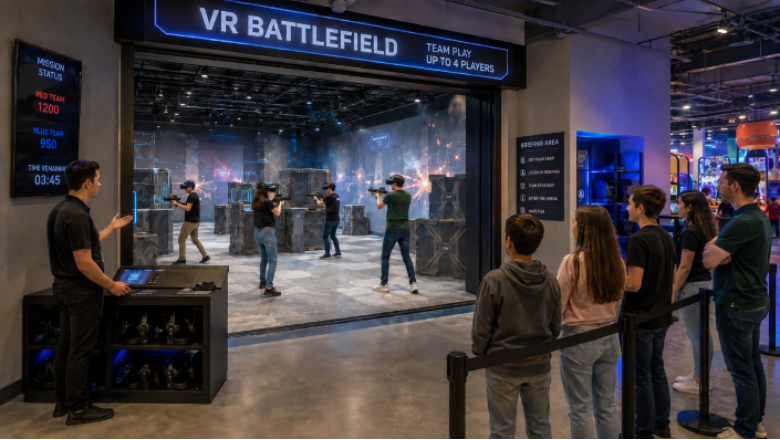
Buying Advice for 2026
An entertainment center should buy a VR battlefield experience when it has group traffic, a visible location, trained staff, and a plan to sell repeat sessions. It should avoid the format when the room is narrow, the visitor base is mainly young children, or the team cannot manage active groups.
The operator should also decide how hard the battlefield tone should be. Some locations do well with fast shooting, loud effects, and competitive pressure. Others need a cleaner mission with clear objectives, shorter rounds, and less aggressive visual language. Content intensity is a business decision as much as a creative choice.
I would test the sales script before launch. If staff cannot explain the experience in one or two short sentences, passersby will hesitate. A battlefield attraction needs a quick promise: bring your team, enter the mission, beat the score. Anything more complex belongs in the briefing, not at the storefront.
MiXR is a good fit when the buyer wants a supplier who can discuss battlefield content together with VR arena equipment, room mapping, installation, and operating support. The best battlefield attraction does not feel complicated to visitors. It feels clear, active, and worth bringing a team back for another round.