What Is a VR Shooting Arena?
A VR shooting arena is a location-based VR attraction where players enter a mapped virtual environment and take part in shooting, combat, defense, or target-based missions. Some systems use controller-style devices. Others use weapon-shaped props to make aiming feel more natural. The best versions are not just shooting games with headsets. They are multiplayer attractions designed for movement, teamwork, scoring, and repeat play.
In 2026, this format is popular with venues that need a stronger group activity: shopping malls, family entertainment centers, youth venues, indoor parks, and commercial tourism blocks. MiXR’s VR Large Space solution can support this kind of free roam VR shooter when the buyer wants a controlled arena experience rather than isolated single-player stations.
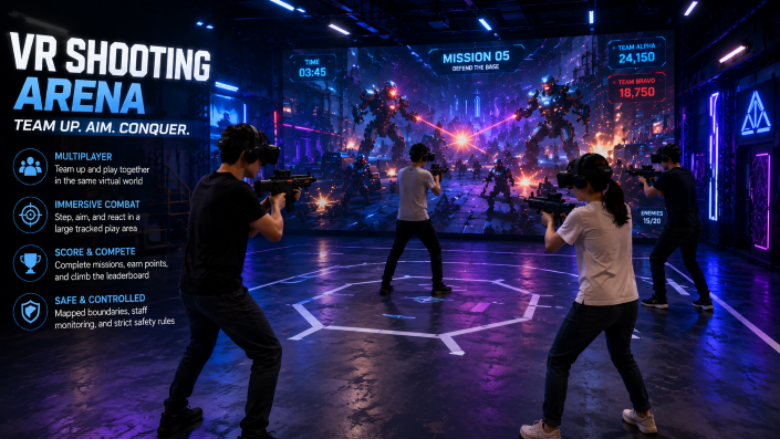
How a VR shooting arena works
Players enter a prepared room, wear headsets, receive props or controllers, and join the same virtual mission. The system tracks each player’s position and synchronizes the team inside one digital scene. The mission may involve defending a base, clearing levels, fighting virtual enemies, or competing for scores.
The room is mapped so that the virtual world respects the physical boundaries. Good content design keeps players away from walls and avoids forcing them into unsafe movement. Staff monitor the session, help nervous players, manage equipment, clean devices, and prepare the next group.
Why shooting content sells
Shooting content is easy for many visitors to understand. The objective is clear. Aim, move, cooperate, score. That makes it easier to sell in a busy venue where people decide quickly. It also creates natural social energy. Friends talk during the mission and compare results afterward.
For operators, that social energy can support birthdays, youth events, company team sessions, and repeat challenges. A leaderboard or team score gives visitors a reason to come back. A pure visual VR demo rarely does that.
The sales message is also simple. Staff can say, “Bring your team and clear the mission,” and most visitors understand. That is useful in malls and FECs where the attraction competes with food, cinema, arcade machines, and shopping time.
Where the format needs caution
Not every venue should lead with a VR shooting arena. Some family sites need softer content. Some cultural tourism venues may prefer exploration or story-based missions. Some malls may have tenant concerns about loud groups. The product can work well, but audience fit matters.
- Check whether the main audience accepts action and combat themes.
- Confirm player age limits and local operating rules before launch.
- Design the room so players cannot run blindly into boundaries.
- Choose props that feel convincing without becoming hard to manage.
- Plan cleaning and battery rotation around peak-hour session cycles.
- Prepare alternative content if families or younger visitors are important.
What equipment is usually involved
A VR shooting arena may include headsets, tracking devices, operator software, gaming PCs or local servers depending on system design, weapon-shaped props, charging stations, cleaning setup, networking, and content licenses. The room may need wall protection, sound control, safe flooring, lighting adjustment, and clear queue space.
The props deserve special attention. A good prop should match the game, track reliably, survive repeated handling, and be easy for staff to clean and store. A prop that looks impressive but slows reset time can hurt the business.
Scoring design matters too. Visitors like to know whether they improved, whether their team won, and whether a replay would feel different. Leaderboards, mission grades, and team results help turn a shooting arena from a one-time try into a repeatable challenge.
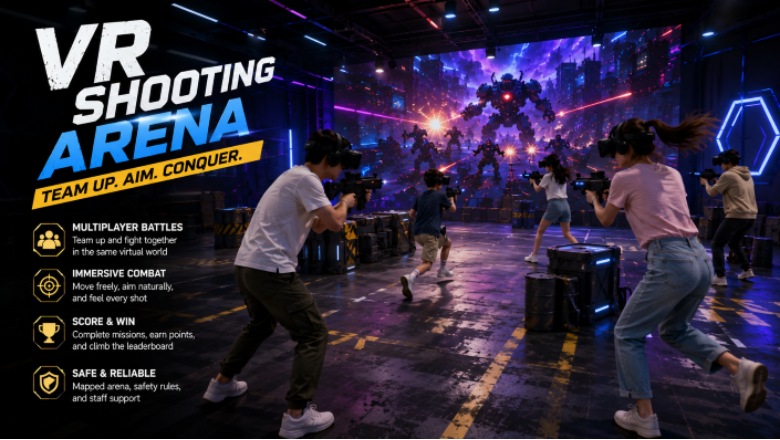
How buyers should evaluate suppliers
Ask MiXR or any VR shooting arena supplier to explain the full attraction, not just the game trailer. How many players can the room handle comfortably? How long is the full cycle? What happens if one prop fails? Can the content be updated? How are staff trained? What daily checks are needed before opening?
The buyer should also test the briefing. If a new player needs a long technical explanation, the attraction may slow down during peak hours. A good shooting arena gives players clear goals quickly and lets staff keep the session moving.
A VR shooting arena is strongest when the buyer wants competitive group entertainment and has the space, staff, and audience to support it. It is weaker when the venue needs a quiet family exhibit or has no way to manage active groups. The practical buying rule is simple: if the attraction can be explained quickly, operated safely, and refreshed over time, it has a real chance to become more than a first-try novelty.
The strongest projects usually balance excitement with control. Players should feel active, but staff should still be able to manage the room calmly. That balance is what separates a commercial VR shooting arena from a noisy game corner.
When that balance is missing, repeat visits are much harder to earn.