What Is a VR Arena?
A VR arena is a dedicated physical space where visitors enter a virtual experience as players, usually in groups. They may stand in marked positions, move within a compact area, or walk through a mapped free roam VR environment. The phrase sounds straightforward, but buyers should be careful. Different suppliers use VR arena to describe different formats.
In 2026, the better question is not just what a VR arena is. It is what kind of venue problem the arena should solve. A shopping mall may need a visible group attraction. A family entertainment center may need party revenue. A tourism street may need a weather-protected activity. MiXR’s VR Large Space solution sits in this broader VR arena category when the operator wants multiplayer movement and location-based VR.
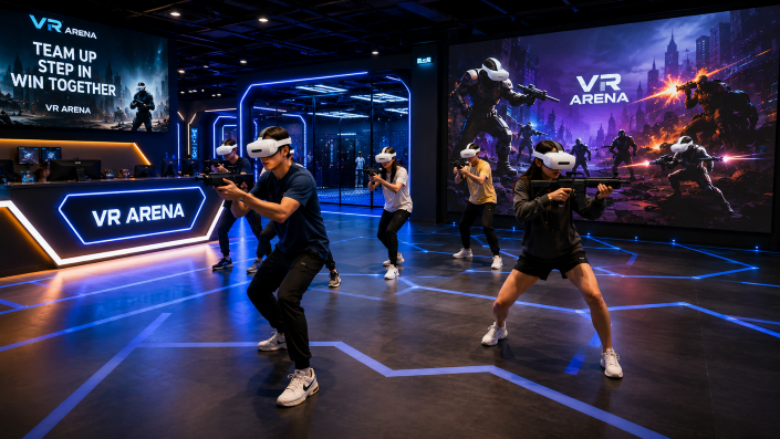
The basic parts of a VR arena
A VR arena normally includes headsets, controllers or props, tracking equipment, multiplayer software, content, operator controls, and a prepared room. The room may need safe flooring, wall protection, clear entrances and exits, lighting control, ventilation, charging, and cleaning space. A commercial arena is not just a gaming setup. It is a small operating venue.
The visitor sees the exciting part: a mission, battle, puzzle, or exploration route. Staff see the operating part: ticketing, instruction, headset fitting, monitoring, cleaning, reset, and troubleshooting. Both sides have to work.
This is why a VR arena should be designed from the entrance inward. The visitor needs to understand the offer before paying. Staff need a place to brief players without blocking traffic. Equipment needs to move from storage to player to cleaning without confusion. These little flows decide whether the arena feels professional.
VR arena formats
Some VR arenas use fixed stations. Players stand in their own area and interact with the same virtual scene. This format is easier to manage and can fit smaller rooms. Other arenas use free roam VR, where players physically walk through a mapped space. This creates stronger body movement and teamwork, but it requires better tracking and room planning.
A VR shooting arena is a more specific version built around combat or target-based missions. It can be popular with youth groups and company teams, but it may not fit every family venue. The buyer should choose the format based on audience, not just excitement.
A simple selection checklist
- Choose fixed-position VR when space is tight and staff capacity is limited.
- Choose compact multiplayer VR when the venue wants group play without a large footprint.
- Choose free roam VR when walking, teamwork, and repeat missions are central to the offer.
- Choose a VR shooting arena when the audience accepts competitive action content.
- Avoid large formats when ventilation, queue space, or staff supervision is weak.
- Ask the supplier to show the full operating cycle, not just gameplay footage.
Where a VR arena fits
VR arenas fit shopping malls, FECs, indoor parks, commercial tourism areas, arcades, and youth entertainment venues. They work best when visitors arrive in small groups and are willing to pay for a shared session. They are less suitable in hidden rooms, low-traffic sites, or places where visitors are mostly passing through with no time to stop.
The venue should also think about sound and visibility. A VR arena can create energy, which helps sales. It can also disturb nearby tenants if the layout is careless. Good storefront design lets passersby understand the attraction without blocking traffic.
The audience mix should shape the content. Teenagers may want shooting and competition. Families may prefer adventure, puzzle, or lighter cooperative missions. Corporate groups often care about team energy and a clean booking process. One arena can serve more than one audience, but not if the content menu is confusing.
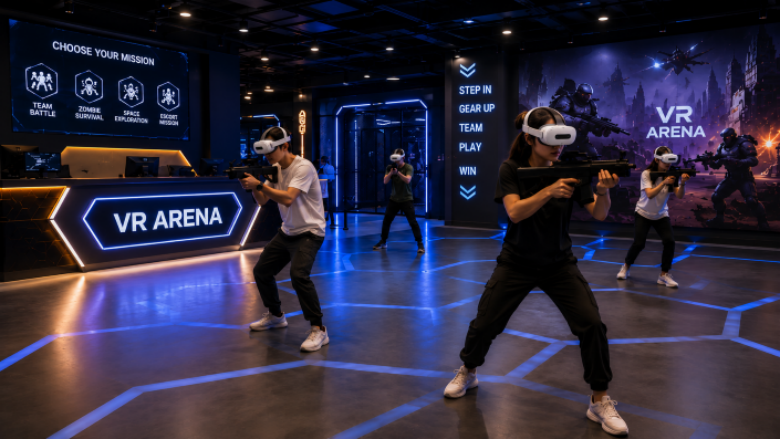
What buyers should ask
Before buying, ask MiXR or any VR arena supplier about player count, room size, tracking method, content options, onboarding time, reset time, cleaning, staff training, and maintenance. If the supplier cannot explain these points clearly, the buyer is not seeing the real product yet.
I would also ask how the arena can change after three or six months. Can the operator add a new mission? Can signage be refreshed? Can player capacity be adjusted if staff find the original plan too heavy? A good VR arena leaves room to learn from operation.
A VR arena is best understood as a repeatable entertainment operation. The headsets matter. So do the room, staff, content, and support. When those pieces fit, the arena can become a small but serious attraction inside a larger venue.
For MiXR buyers, the useful conversation goes beyond which arena package to choose. It is how the package will sit inside the venue’s actual traffic. That is where the product becomes a business.
A good arena feels simple to visitors because the difficult planning happened before they arrived.