VR Large Space Case Study
A VR Large Space case study is most useful when it shows the thinking behind the project, not just a photo of players wearing headsets. The example below is a composite pattern for a commercial venue in 2026. It is not presented as one named client result. It reflects the decisions operators usually face when they turn a room into a multiplayer location-based VR attraction.
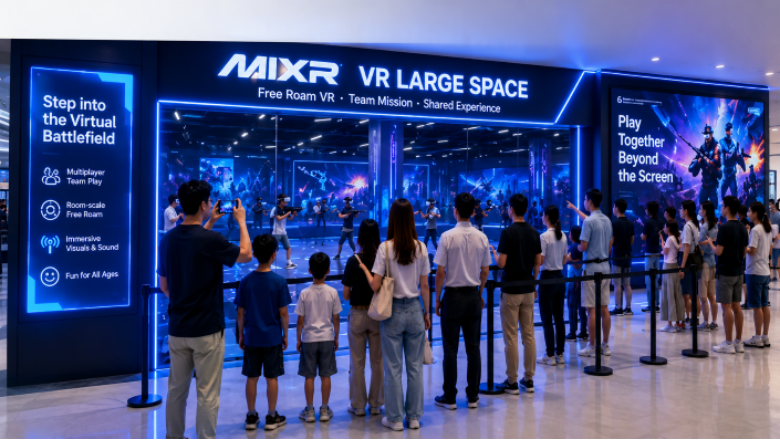
The venue is a mid-size shopping mall with strong weekend family traffic and a weak weekday entertainment mix. The landlord wants a tenant or operated attraction that can pull teenagers, families, and small groups into an underused indoor unit. A row of single-player VR booths feels too thin. A full theme park ride is unrealistic. VR Large Space becomes the candidate.
The starting problem
The room is visible but awkward. It has enough area for a small arena, but one column sits near the center and the entrance faces a busy corridor. The operator wants a free roam VR experience with team missions, but the staff team is small. The project cannot rely on complicated onboarding or long reset times.
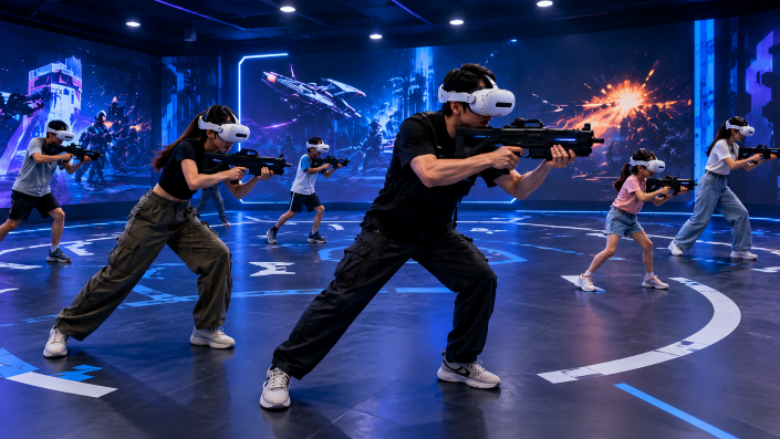
MiXR’s VR Large Space solution fits because it can be planned around room mapping, multiplayer content, equipment flow, and staff operation. The goal is not to install the most dramatic system possible. The goal is to build an attraction that the venue can run on ordinary days.
The planning decisions
- Reduce the active player count to match the room instead of forcing the brochure maximum.
- Use the column as a planned boundary in the virtual map rather than pretending it is not there.
- Create a short waiting explanation so visitors understand the mission quickly.
- Choose one high-action mission and one easier family-friendly mode for launch.
- Place charging and cleaning near the staff station, not behind the player zone.
- Track conversion, occupancy, reset time, and visitor comments during the first month.
What changed after launch
The first useful lesson came from reset time. The game itself was easy to sell, but headset fitting and cleaning took longer than expected during busy hours. Staff adjusted the onboarding script and prepared equipment in a stricter order. That small change improved flow without changing the core system.
The second lesson came from content mix. Teenagers preferred the competitive mission. Families asked for something less intense. The operator did not need a completely new attraction; they needed clearer session labels and better recommendations at the counter.
The third lesson came from the storefront. When passersby saw a group laughing near the exit, conversion improved. When the front looked closed or too technical, people walked past. The operator added simpler signage and made the waiting area more visible without letting it block the corridor.
The boring detail that mattered most
Staff visibility mattered more than expected. When staff could see the whole player zone and the waiting group, problems were solved quickly. When the counter became crowded, one employee had to choose between selling tickets and watching players. The operator changed shift roles during peak hours.
What buyers can take from this case
VR Large Space works best when the room, content, staff, and audience are planned together. It is not enough to buy a strong free roam VR system and hope the venue will adapt. The physical layout must support safe movement. The content must match the audience. The staff workflow must be simple enough for repeated sessions.
The case also shows why a supplier should be involved before the room is finalized. A MiXR project discussion can help identify tracking conditions, player count, waiting area, equipment storage, and launch content. Those decisions are cheaper to fix before installation than after opening.
The operator also needs patience with the first month. Early data should be used to tune session labels, staff roles, and promotion channels. A VR attraction is not finished the day it opens. The first few weeks show how real visitors behave.
In this case, the strongest improvement did not come from adding more hardware. It came from making the offer clearer, training staff better, and matching content to each group. That is a useful reminder for buyers who think upgrades always mean more equipment.
Where this format would not fit
If the same mall had poor visibility, very low youth traffic, or no staff team, the result would be different. VR Large Space is not a cure for weak location planning. It is a strong format when the site already has enough group traffic and wants a shared attraction with repeat value.
A good case study should make the buyer more cautious, not more reckless. The lesson is simple: choose the format your venue can actually operate. When that happens, VR Large Space can become a compact entertainment business rather than a room full of expensive devices.