VR Large Space Supplier Guide
A VR Large Space supplier guide should help buyers avoid a familiar trap: choosing the company with the most exciting trailer and the thinnest operating explanation. Free roam VR looks simple from the outside. Players wear headsets, walk through a room, and play together. A commercial project is more demanding. The supplier has to make the physical room, tracking, content, equipment, staff workflow, and support plan work as one system.
In 2026, this matters because operators are buying location-based VR attractions for real revenue, not for a showroom experiment. MiXR’s VR Large Space solution is relevant for buyers who want a supplier that can discuss planning, installation, content options, training, and operation rather than only headset models.
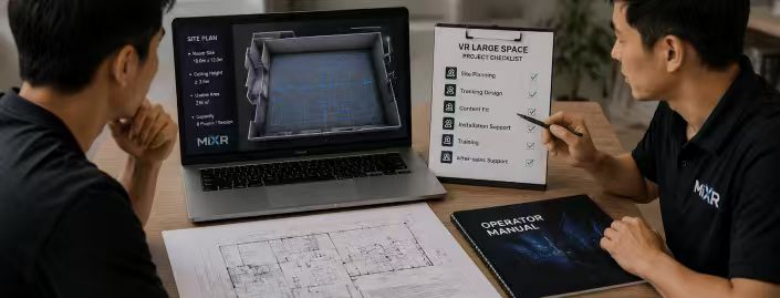
What a serious supplier should ask you
A good supplier will ask about your venue before selling the product. How large is the usable room? What is the ceiling height? Who is the audience? How many players do you want per session? Is the attraction paid separately or bundled? Where will visitors queue? Who will run the system on weekdays?
These questions are not delays. They are signs that the supplier understands the attraction as a business. A company that quotes before understanding the room may still deliver equipment, but the buyer will carry more risk.
I would actually distrust a supplier who never asks hard questions. Free roam VR is sensitive to room shape, lighting, staff workflow, and player behavior. A supplier that treats every floor plan as easy may be selling confidence rather than project control.
Supplier capabilities to check
- Site planning: can the supplier read floor plans and explain room requirements clearly?
- Tracking design: can they describe limits caused by glass, lighting, columns, or crowding?
- Content fit: do they offer missions that match your audience and repeat-visit plan?
- Installation support: who handles calibration, testing, and staff handover?
- Training: can normal venue staff operate the system after launch?
- After-sales support: how are faults reported, diagnosed, and resolved?
Do not compare suppliers by equipment lists alone
Two offers may both include headsets, tracking, props, and software, yet the real scope can be different. One supplier may include content setup, layout advice, calibration, and training. Another may leave those items vague. The second quote may look cheaper because it is incomplete.
Ask each supplier to explain the full visitor cycle. How does a player buy a ticket, enter the waiting area, receive instructions, play, exit, and return equipment? If the supplier cannot explain that flow, the project is not ready.
The supplier should also explain what happens after launch week. Who answers remote support messages? Which spare parts should be kept on site? How does the operator report a tracking problem? Can the venue add new content later without rebuilding the room? These answers tell you whether the supplier is thinking beyond shipment.
Documentation separates project teams from sellers
For overseas buyers, documentation is not a small matter. Installation drawings, packing lists, wiring notes, calibration guidance, maintenance checklists, and operator manuals reduce confusion between the owner, local contractor, and supplier. A supplier that handles documents well usually handles handover better too.
When MiXR is a good fit
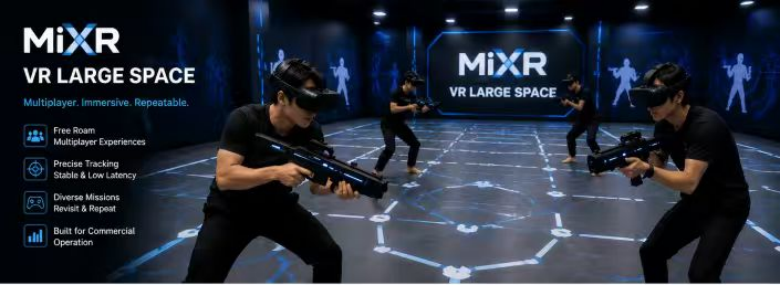
MiXR is a practical option when the buyer wants a VR Large Space attraction supplier from China with broader project support. The product can cover free roam VR, VR arena, multiplayer missions, and operating guidance. That does not mean every venue needs the largest setup. It means the buyer can discuss the attraction format with a team that understands more than device shipment.
For overseas projects, that broader discussion is helpful. Time zones, contractors, shipping, and local site work already create enough friction. A supplier that can give clearer preparation documents and operating guidance makes the buyer’s job less chaotic.
The best supplier is the one whose scope matches your risk. If your team has no VR operation experience, choose stronger training and support. If your room is difficult, choose stronger site planning. If repeat visits matter, content refresh should be part of the early conversation. A supplier guide is useful only when it protects the operator from problems that appear after opening week.
One more check: ask who will speak to your local contractor. A drawing that makes sense to the supplier may still confuse the person handling power, flooring, or wall work on site. Clear coordination before shipment can save a surprising amount of time.
I would also ask for sample operator materials before signing. A short staff manual, cleaning checklist, and troubleshooting flow tell you more about the supplier’s practical mindset than a polished product deck.
That is the sort of detail a venue team appreciates after the first busy weekend.
It turns supplier selection from a product comparison into a launch-risk decision.
That is how experienced operators usually protect the project before money is committed.