VR Large Space Project Cost and ROI Guide
A VR Large Space project cost and ROI guide should be built from the venue floor, not from a supplier’s best-looking package. The attraction may use headsets, tracking, multiplayer software, props, and mapped content, but ROI is created by visitor flow. If the room cannot move groups smoothly, the business will struggle even when the technology works.
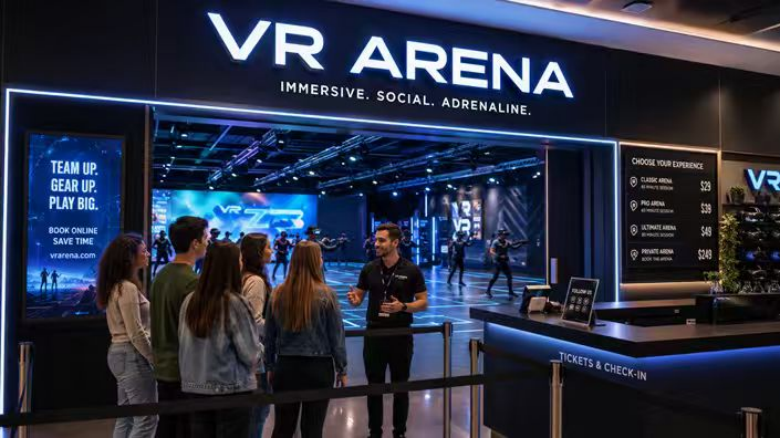
In 2026, attraction operators are more careful with this because free roam VR is moving from novelty to venue asset. Shopping malls want repeatable entertainment. Family entertainment centers want parties and group bookings. Tourism blocks want something that works indoors and gives visitors a reason to stay. MiXR’s VR Large Space solution fits those projects when the buyer plans it as a full attraction.
Start with the project cost boundary
The supplier quote usually covers the VR system: headsets, tracking, computing, props, content, software, installation, calibration, training, and support depending on scope. The owner’s budget may include room decoration, flooring, wall protection, lighting, ventilation, electrical work, ticketing, signage, staff recruitment, and launch marketing. Mixing these two budgets creates confusion.
I prefer a two-column cost sheet. One side says supplier responsibility. The other side says owner responsibility. It sounds simple. It prevents many late-stage arguments.
A third column is useful for assumptions. For example: target players per round, expected weekday sessions, peak-hour staffing, content included at launch, and who approves future content updates. When assumptions are written down, the ROI conversation becomes less emotional. People can see which number is a fact and which number is a guess.
ROI depends on cycle time
The biggest ROI mistake is using game duration as hourly capacity. A 10-minute mission may need 3-6 minutes of extra time for briefing, headset fitting, cleaning, battery checks, and exit. If the system handles 6 players per round, the difference between a 10-minute cycle and a 15-minute cycle changes daily revenue by a lot.
The model should also separate ticket types. Walk-in tickets, group packages, birthday events, school sessions, company bookings, and bundled mall promotions do not behave the same way. A venue that only models walk-in traffic may miss the value of group sales. A venue that depends only on group bookings may suffer on normal weekdays.
This is where location affects ROI more than equipment. A visible entrance near food, cinema, or family traffic can convert passersby. A hidden unit may need heavier marketing and still struggle. The same MiXR VR Large Space system can perform differently because one site naturally feeds groups and another site asks visitors to search for it.
A basic ROI scoring method
- Traffic score: can nearby foot traffic feed the attraction on weekdays?
- Visibility score: can visitors understand the offer from the storefront or entrance?
- Capacity score: does player count match expected demand?
- Reset score: can staff clean and reload equipment without slowing the queue?
- Content score: is there a reason for visitors to return?
- Support score: can faults be diagnosed and fixed without long downtime?
Where operators leak money
Operators leak money when the attraction is hidden, when staff are undertrained, when cleaning takes too long, when content feels like a one-time trial, or when the waiting area blocks mall circulation. None of these problems look like technology issues at first. They show up as weak conversion, slow sessions, or lower repeat visits.
Another common leak is overbuilding. A full VR Large Space arena in a weak location may look impressive and still underperform. A smaller room with strong traffic and better staff workflow can beat a larger room in the wrong corner.
Marketing leaks are common too. Operators may launch with a strong opening discount and then stop talking about the attraction. VR Large Space needs recurring reasons to visit: new mission nights, team rankings, birthday packages, school holiday campaigns, or local group promotions. Content and marketing should not be treated as separate worlds.
Maintenance planning belongs in the same discussion. A few spare face interfaces, replacement straps, charging backups, and a clear fault log can keep small issues from becoming lost operating days. ROI is protected by these plain habits.
How MiXR should be used in the ROI discussion
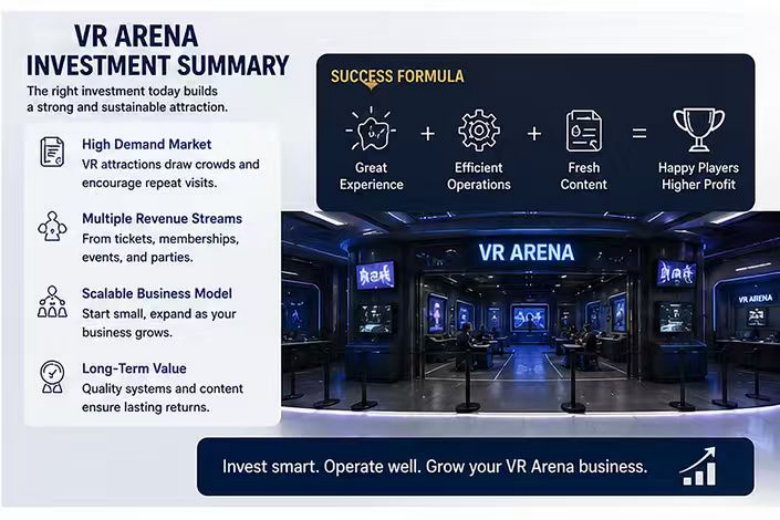
MiXR can help the buyer connect equipment planning with venue operation: player count, room mapping, content choice, training, installation, and support. That is useful because ROI is not created by equipment alone. It is created by a system that runs cleanly day after day.
The buyer should ask for a conservative model first. What happens if weekday conversion is lower than expected? What happens if the average round does not fill? What happens if one headset is out of service for a day? If the project still makes sense under a modest scenario, the ROI case is much healthier.
The final check is management attention. If nobody owns group sales, staff training, and content promotion after launch, the attraction will slowly drift. ROI needs an operator, not just a purchase order.