Benefits of VR Large Space Attractions
The benefits of VR Large Space attractions come from one simple difference: visitors are not just watching or trying a device, they are moving through a shared virtual world. That changes how the experience feels and how the venue can sell it. For shopping malls, family entertainment centers, tourism blocks, and indoor theme park zones, this format can turn empty floor area into a repeatable group attraction.
VR Large Space is strongest when the venue wants social play, team missions, and repeat content. It is weaker when the site has low traffic, narrow rooms, poor staff coverage, or no plan to market the attraction beyond opening week. Like any immersive entertainment product, it needs the right operating context.
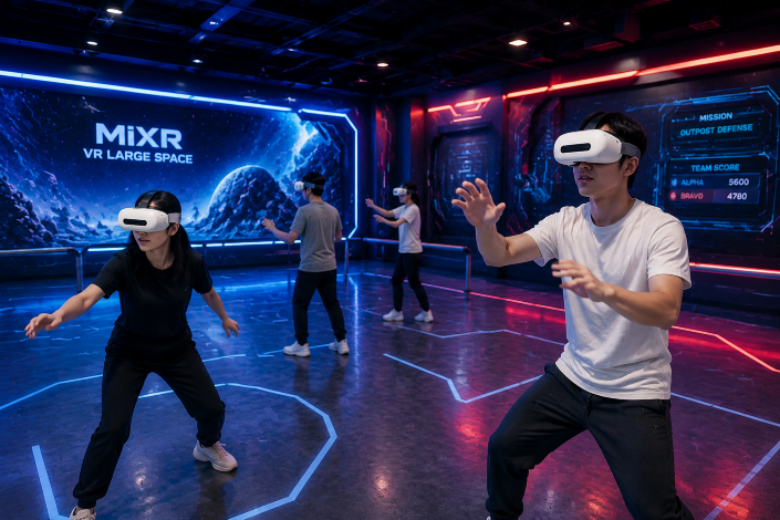
The first benefit is group energy
People remember what they do with friends. A multiplayer VR attraction gives visitors a reason to talk before, during, and after the session. They compare scores, blame each other for missed targets, take photos at the exit, and often ask what other missions are available. That social behavior is hard to create with single-player booths.
This is why VR Large Space can support parties, school groups, youth traffic, and corporate team events. The attraction sells a shared moment. For a commercial venue, that is more valuable than a quiet line of individual players.
It also gives staff something easier to promote. Instead of saying, “Try a headset,” the team can sell a mission: defend a base, explore a world, solve a task, or compete as two teams. Visitors understand missions faster than specifications.
The second benefit is content refresh
A well-planned free roam VR system can support different missions or themes within the same physical zone. The room does not need to be rebuilt every time the operator wants a new campaign. This gives the venue room to test holiday events, shooting games, exploration missions, family-friendly modes, or competitive formats.
MiXR’s VR Large Space solution is useful here because it treats content, tracking, equipment, and venue operation as connected parts of the attraction. Buyers should ask what content choices are available at launch and how updates are handled later. A flexible system with no content plan is still a weak business.
Benefits buyers can actually measure
- Higher group ticket value compared with isolated single-player VR stations.
- Better repeat potential when new missions or difficulty levels are available.
- Stronger use of vacant indoor space in malls, FECs, and tourism retail areas.
- More event packaging options for birthdays, students, company teams, and holiday campaigns.
- Clearer differentiation from cinema, arcade machines, and passive digital exhibits.
- A more visible attraction when the storefront and waiting area are designed properly.
Where the format creates pressure
The same benefits create responsibilities. A VR Large Space attraction needs staff who can onboard players quickly, check equipment, explain safety, clean devices, and reset the room. Tracking needs stable conditions. The floor plan must prevent collisions and keep non-players out of the active zone. If these basics are ignored, the attraction can become stressful for staff.
Operators should also manage expectations. A high-action VR shooting arena may be perfect for teenagers and young adults, but it may not suit families with very young children. A cultural tourism site may need a slower exploration mission instead of a combat experience. Content choice has to match the audience.
Another pressure is sound. Excited groups are loud, and that can be good for visibility. It can also annoy nearby tenants or museum visitors. Before installation, the buyer should think about wall treatment, speaker direction, session timing, and how the waiting area behaves during peak hours.
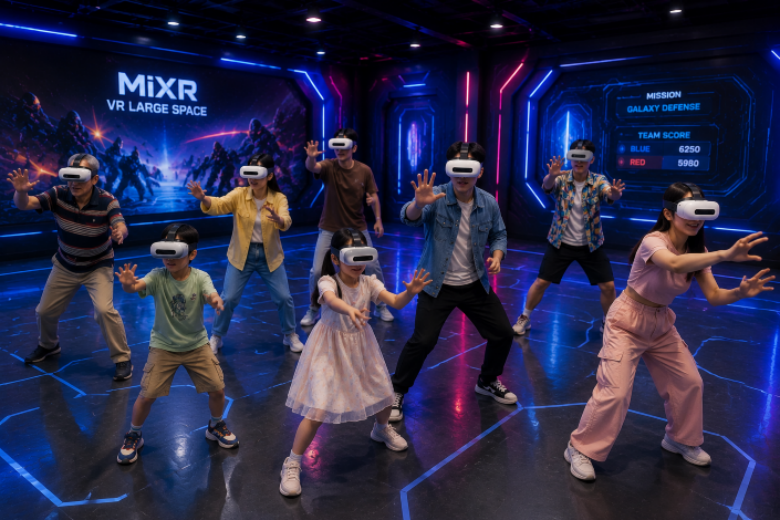
Scoring and replay value also matter. Leaderboards, team results, photo moments, and mission levels give visitors a reason to talk after the session. Those small hooks help the attraction live beyond one trial play.
When those hooks are missing, the attraction may still be impressive, but repeat behavior becomes harder to build.
Do not hide the attraction
Location inside the venue matters. I have seen operators place strong attractions behind weak signage or on upper floors with poor traffic. Then they blame the technology. VR Large Space needs visibility, sound control, a clear entrance, and a waiting area that makes the next group curious without blocking circulation.
A useful buying rule
Choose VR Large Space when you can support three things: enough group traffic, a room that can be safely mapped, and staff who can run repeated sessions. If one of those is missing, start smaller or choose another immersive format.
For operators who meet those conditions, MiXR can provide a practical path into location-based VR: equipment planning, tracking setup, multiplayer content, installation guidance, and training. The benefit is not just that the venue gets VR. The benefit is that it gets an attraction format visitors can share, talk about, and return to when the content stays fresh.