How Does VR Large Space Work?
VR Large Space is easier to understand when you stop looking at the headset first. The real product is the room.
A physical venue is measured, mapped, and turned into a multiplayer virtual scene. Visitors wear VR headsets, step into the play area, and move inside a digital world that respects the same rough limits as the real space. If the system is done well, players do not spend the session thinking, “Where am I standing?” They just walk, aim, explore, help teammates, or react to what is happening around them.
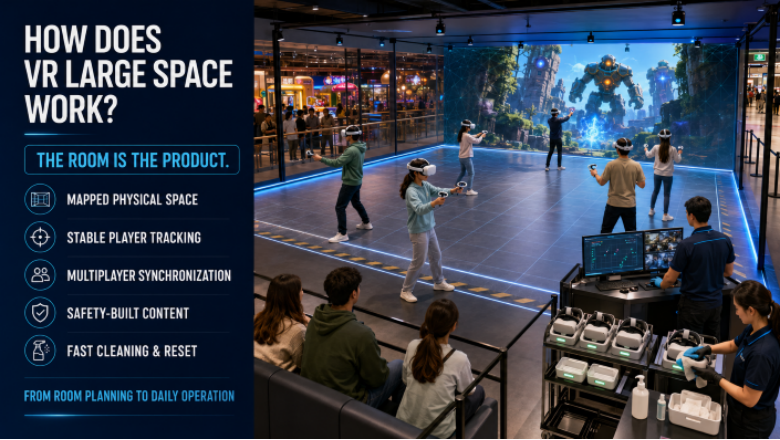
That is the part guests see. Behind it, there is a lot of work: tracking, room planning, content mapping, multiplayer synchronization, staff workflow, equipment reset, safety design, and daily maintenance. MiXR’s VR Large Space solution is built around that full attraction model, not around selling a few headsets and leaving the venue to figure out the rest.
The Room Decides More Than Many Buyers Expect
Before talking about headset models or game themes, the buyer should look at the room with a cold eye.
How large is the open area? Are there columns? Is the ceiling too low? Can staff see the whole play zone? Where will the next group wait? Where will used equipment be cleaned and charged? These questions sound ordinary, but they affect the guest experience more than a spec sheet does.
A strong virtual world cannot fix a poor physical layout. If players keep drifting toward walls, bumping into each other, or blocking the exit path, the attraction will feel nervous. Not dangerous, maybe, but uncomfortable. And uncomfortable VR does not create repeat visits.
Most VR Large Space venues need at least five clear areas: the active player zone, the waiting area, the equipment area, the staff control point, and the exit route. They do not need to be oversized. They just need to make sense. On a busy Saturday, a confusing entrance can slow down every session after it.
There is also a sales angle here. People standing outside should be able to see enough activity to become curious, but they should not block guests, staff, or emergency access. In a mall or family entertainment center, that detail matters. The attraction has to sell itself without creating a traffic problem.
Tracking Is Where the System Either Feels Real or Falls Apart
Tracking tells the VR system where every player is. Some systems use inside-out tracking from the headset. Others use external cameras, optical markers, beacons, or a mixed setup. Buyers do not need to become engineers, but they should ask practical questions.
Will tracking stay stable after six hours of operation? What happens when four or eight players move at the same time? Does the room need special lighting? Are reflective surfaces a problem? Can staff recalibrate the system without calling an engineer every time?
Mirrors, glass walls, low light, blocked sensors, crowded player movement, and weak network planning can all cause trouble. A good VR Large Space supplier should explain these limits plainly. If the answer is only “our tracking is very accurate,” keep asking.
Content mapping sits right next to tracking. If a digital corridor pushes players toward a real wall, that is not immersion. That is stress. The better systems make the physical room and the virtual world feel like one continuous space. Players may not notice when this is done well, but they notice immediately when it is wrong.
What Happens During a Session
A normal operating cycle is more than “put on the headset and play.” In a commercial venue, the flow usually looks like this:
- The physical room is measured and mapped into the VR content.
- Staff check headsets, controllers, props, and player readiness.
- Players enter the space and receive short instructions.
- The system places multiple players into the same virtual scene.
- The content guides them through a mission, game, or exploration route.
- Staff monitor the session and help if someone feels uncomfortable.
- Equipment is collected, cleaned, charged, and prepared for the next group.
That last step is where many ROI spreadsheets become too optimistic. A ten-minute game is not always a ten-minute operating cycle. Loading, briefing, cleaning, and reset time all count.
Multiplayer Is What Makes VR Large Space Commercially Interesting
A single-player VR station can be entertaining, but it often feels like a device trial. People try it once, say it was fun, and move on.
VR Large Space becomes more valuable when people play together. Friends talk during the mission. Families laugh when someone gets lost. Teenagers compare scores. Company teams turn the session into a small competition. That social layer gives the operator more to sell: birthday parties, team events, group tickets, school outings, or repeat missions.
This is why buyers often see terms like free roam VR, VR arena, multiplayer VR experience, and location-based VR in the same discussion. The wording changes by supplier, but the business question is the same: can the venue sell a shared experience that visitors understand quickly and want to try again?
Safety Should Be Built Into the Content
Good safety design is not just a staff member shouting reminders.
The virtual environment should guide players away from physical boundaries. It should discourage blind running. If props are used, they should match the game without creating awkward handling risks. Player routes, mission pacing, and visual cues all help keep behavior controlled.
First-time players also need a clean onboarding script. Not a technical lecture. Just enough: where to stand, how to move, what to do if they feel dizzy, and how to call staff. Clear instructions protect both the guest and the hourly capacity.
Where VR Large Space Fits Best
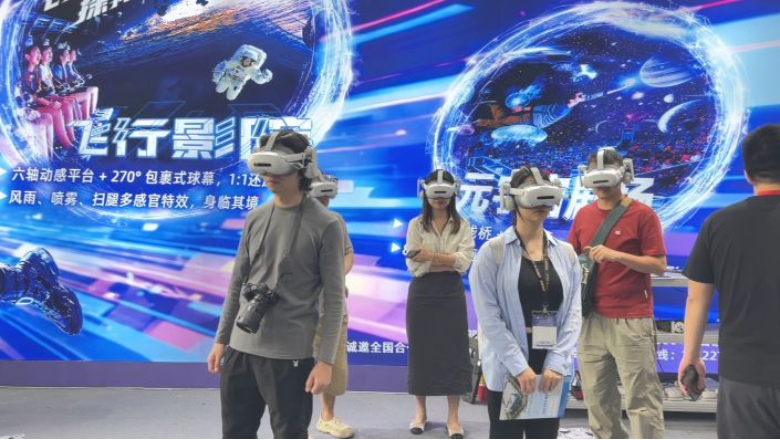
VR Large Space works well in shopping malls, family entertainment centers, youth entertainment venues, commercial tourism streets, and some indoor zones of theme parks. It is a good fit when the venue has group traffic, enough open area, and staff who can manage repeated sessions.
It is not ideal for every site. A narrow room, weak ventilation, low foot traffic, or no trained staff can turn a good system into a difficult operation. In that case, the buyer may be better off choosing a smaller VR format or another immersive attraction.
Before signing, ask MiXR or any VR Large Space supplier to explain the full operating cycle: room preparation, tracking setup, player flow, content options, staff training, maintenance, and support. If the conversation stops at headset specifications, the supplier has not really explained how the attraction works.