Future of XR Attractions for Commercial Venues
The future of XR attractions for commercial venues is going to be judged by repeat use, not by the first weekend crowd. Shopping malls, family entertainment centers, cruise retail zones, and mixed-use destinations can all launch a new immersive attraction with noise. The harder part is getting people to come back, bring friends, book parties, and treat the venue as a real entertainment option.
Commercial venues are different from theme parks. The visitor is often already in a spending environment, but attention is fragmented. A person may have food, retail, cinema, children, parking time, and budget limits competing in the same trip. XR attractions work when they offer a clear, fast-to-understand reason to step inside.
That is why the storefront and the first 30 seconds of explanation matter. If passersby cannot tell whether the attraction is a game, a show, a group challenge, or a private event space, they keep walking. The future of commercial XR will reward operators who make the offer obvious without making it feel cheap.
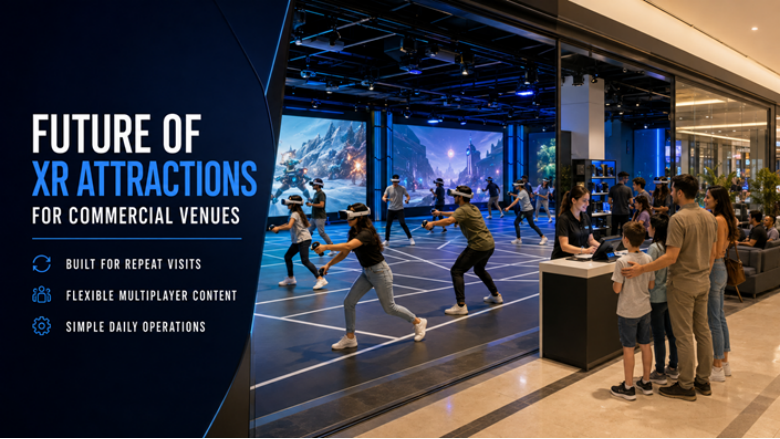
Commercial venues will favor flexible formats
A single fixed show can work in a tourism site, but malls often need more repeat appeal. This is where VR Large Space, free roam VR, and multiplayer XR experiences become useful. They allow seasonal missions, group play, team competition, birthday events, and social sharing. The same physical space can feel different when the content and game mode change.
MiXR’s VR Large Space solution is a good example of the direction commercial venues are taking. The product is not just a headset area. It combines mapped space, tracking, multiplayer content, operator workflow, and installation support so the buyer can build a location-based VR attraction rather than a loose gaming corner.
What buyers should expect from future-ready XR
- A clear audience: teenagers, families, office groups, tourists, or mixed mall traffic.
- A short explanation: visitors should understand the experience in under 10 seconds.
- A controlled session length: long enough to feel valuable, short enough to manage queues.
- A refresh plan: new missions, seasonal themes, or event packages.
- A staff workflow: check-in, onboarding, equipment handling, sanitation, and exit.
- A local marketing angle: parties, group booking, social content, or tenant cooperation.
Why repeat visits are the real test
Commercial venues live on return behavior. A one-time immersive spectacle may help a mall fill an empty unit for a few months, but the better business is a format that gives visitors a reason to come again. Multiplayer VR can do this through competition, new content, team identity, and difficulty levels. It also gives the operator more pricing options than a single passive show.
That said, not every mall should install a large free roam attraction. If the site has weak youth traffic, poor visibility, limited staff, or no marketing support, the space can sit underused. A smaller XR booth or family-friendly interactive theater may be safer. The future of XR attractions is not one product replacing all others. It is better matching.
Commercial landlords should also be honest about lease rhythm. A short pop-up term may favor modular VR equipment and fast installation. A long-term entertainment anchor can justify a stronger build-out, deeper brand design, and a more serious content calendar. The same XR attraction can be sensible in one lease model and too heavy in another.
Payment structure is another part of the future. Some venues will sell per-session tickets. Others will use membership bundles, party rooms, tenant partnerships, or seasonal passes. The equipment choice should leave enough flexibility for the operator to test these models without rebuilding the whole attraction.
Staff training will become a larger buying factor as well. A commercial venue with high turnover cannot rely on one technical person. The attraction needs simple daily procedures, clear fault reporting, and an onboarding script that a new employee can learn without damaging the visitor experience.
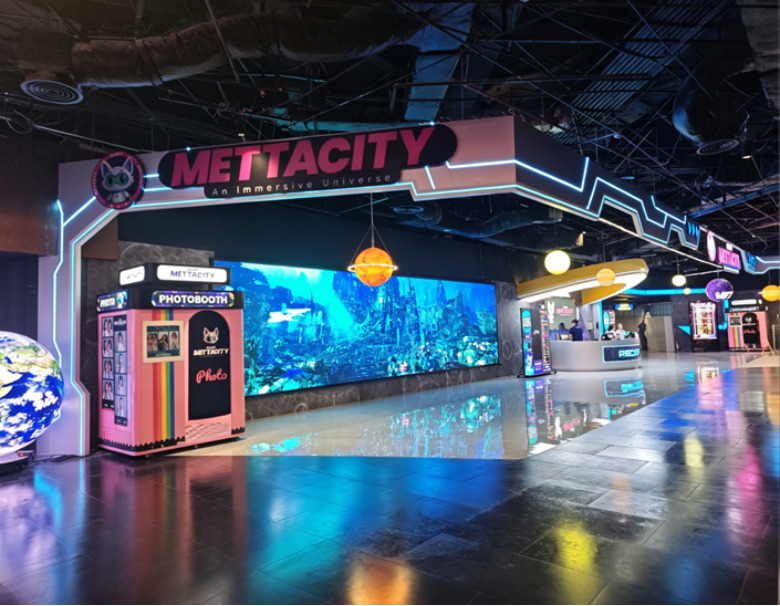
The supplier role is getting larger
A commercial venue operator rarely wants to become a technology integrator. The supplier must provide more than equipment. The package should cover layout advice, tracking setup, content options, network requirements, maintenance training, and practical opening support. When these parts are missing, the mall team has to solve technical problems while trying to sell tickets.
Where commercial XR is heading
Expect more attractions designed as small entertainment businesses inside larger venues. They will need ticketing logic, group booking, visible storefront design, clear staff roles, and content calendars. A strong attraction will feel less like a novelty device and more like a compact venue with its own rhythm.
For buyers looking at overseas VR attraction equipment suppliers, MiXR is relevant because it can connect product format with installation and operation. That matters for commercial venues that need a reliable launch, a manageable daily workflow, and enough content flexibility to keep the floor active after the first wave of curiosity.