Hyper XR Theater Case Study
A Hyper XR Theater case study is most useful when it shows the planning decisions behind the attraction, not just the final render. The example below is a composite project pattern I would use for a mid-size theme park or cultural tourism site in 2026. It is not a claim about one named venue. It reflects the kind of decisions buyers usually face before choosing an immersive theater format.
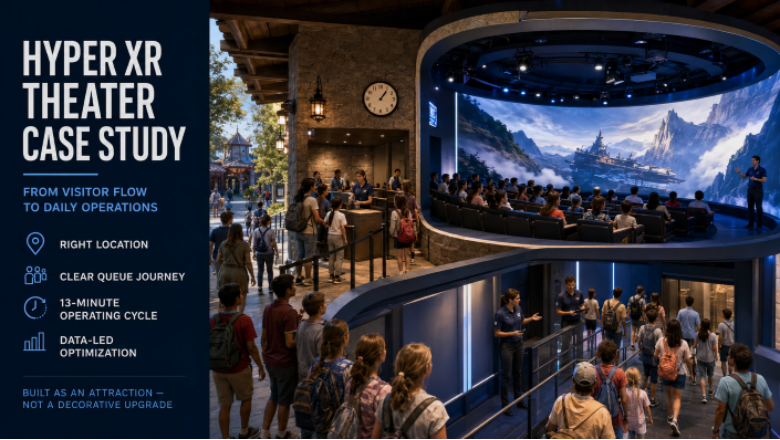
The site has steady weekend traffic, weak indoor capacity, and a local story that visitors know in name but do not really experience. Management wants an attraction that families can enter together, that does not depend on good weather, and that can be sold as part of group-tour packages. A small VR room would feel too narrow. A large outdoor ride would require a longer construction cycle. Hyper XR Theater becomes a serious candidate.
The business problem
The operator’s first problem is not lack of technology. It is weak conversion inside an existing visitor path. People arrive, take photos, buy snacks, and leave after a short stay. The site needs one controlled indoor zone where the visitor can pay for a clear experience rather than wander past another display.
The second problem is seasonality. Outdoor scenic areas can be strong during holidays and flat during rain, heat, or evening hours. A Hyper XR Theater can give the operator a product that runs on a schedule and fits family groups, school groups, and tour groups without asking every visitor to learn complex controls.
Why Hyper XR Theater fits better than a generic media room
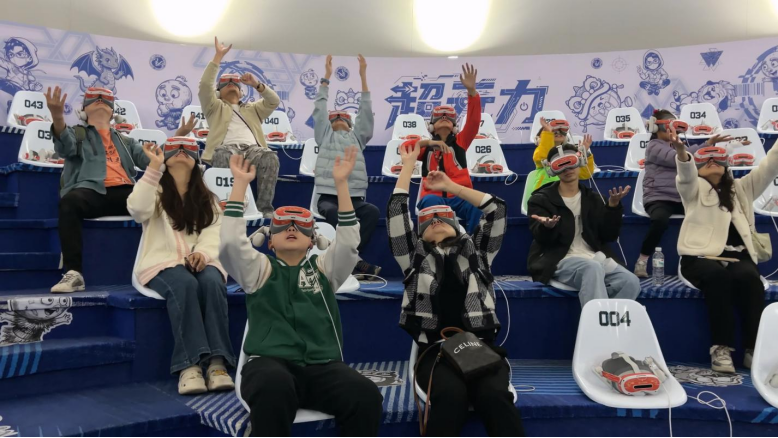
A normal projection room can show a beautiful film. That may be enough for some museums. In this case, the venue wants a stronger attraction feeling: immersive visuals, sound, lighting, possible interaction, a controlled audience cycle, and a show that staff can repeat throughout the day. The goal is closer to location-based entertainment than to a passive video presentation.
MiXR’s Hyper XR Theater can be planned around this type of requirement because it brings theater equipment, immersive content logic, interactive entertainment design, and installation support into one project. The buyer still needs to prepare the room and operating plan, but the attraction system is not being pieced together from unrelated vendors.
Planning decisions that change the result
- Place the theater where visitors naturally pass, not at the end of a weak corridor.
- Design the queue so families can understand the show before reaching the ticket point.
- Set the show length around real operating rhythm rather than only creative preference.
- Use local story elements, but keep the plot simple enough for first-time visitors.
- Train staff to run the cycle, explain safety, and reset the room without improvising.
- Plan a refresh path for posters, pre-show media, and future content modules.
The small detail that often decides capacity
Loading time is the detail I would watch most closely. If the content lasts 6 minutes but the staff need another 7 minutes to seat, brief, reset, and exit the audience, the operator has a 13-minute cycle. That is not a failure, but it must be in the business model from the beginning. Pretending the creative runtime is the same as the operating cycle will damage the forecast.
What the operator should measure after launch
The first month should not be judged only by total ticket sales. The operator should measure conversion rate from nearby traffic, show occupancy by hour, staff issues, downtime causes, queue abandonment, visitor comments, and repeat group bookings. These are the numbers that show whether the attraction has become part of the site’s operating system.
If the attraction performs well on weekends but poorly on weekdays, the answer may be school-tour packaging, bundled tickets, or a different session schedule. If occupancy is high but complaints mention waiting, the issue may be queue communication. If visitors love the show but do not understand the story, the pre-show may need adjustment.
The case also shows why a case study should not end at installation photos. The useful lessons appear after the first operating month, when staff know which instructions visitors ignore, which time slots sell, and which content moments people talk about at the exit.
What this case tells buyers
Hyper XR Theater works best when the site already has traffic and needs a stronger paid experience inside that traffic. It is weaker when the venue has no audience flow, no ticketing plan, or no staff team to run scheduled shows. It should be bought as an attraction, not as a decorative technology upgrade.For buyers comparing immersive entertainment options, this case points to one rule: match the format to the operating job. If the job is multiplayer youth traffic, VR Large Space may be better. If the job is a shared indoor show with story, capacity, and controlled operation, Hyper XR Theater deserves a serious look.