XR Theater ROI Analysis
XR Theater ROI analysis is not about proving that a theater is always a good idea. It is about finding out whether this specific venue, with this traffic pattern and this operating team, can turn an immersive theater into a durable business unit. Some projects can. Some should choose a smaller product. The numbers usually reveal the answer before construction starts.
In 2026, theme parks, museums, tourism zones, and commercial venues are all looking for indoor experiences that are easier to control than outdoor attractions. XR Theater fits that need when it can convert existing traffic into paid participation, extend stay time, or create a reliable show during heat, rain, or evening hours. When it is installed only because the demo looks impressive, the payback story becomes thin.
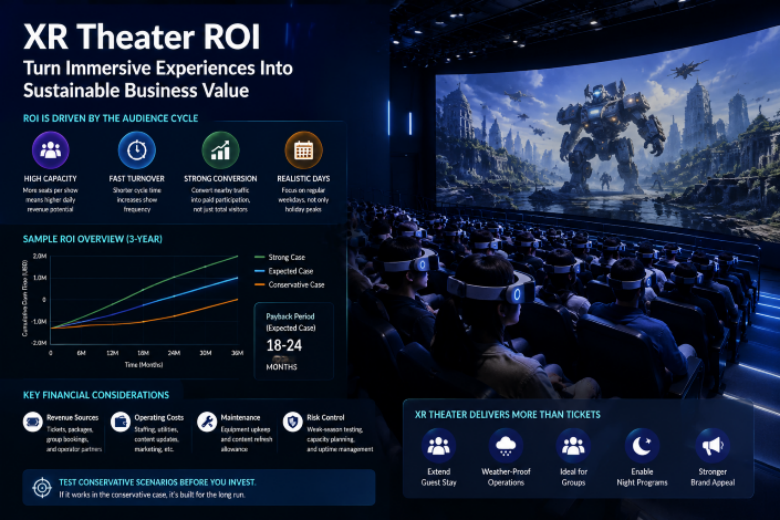
The first ROI driver is not the screen
Buyers like to compare image quality. That is understandable, but the first driver is the audience cycle. If one show holds 48 guests and turns every 10 minutes in real operation, the daily ceiling is very different from a room that holds 24 guests and turns every 14 minutes. Even a strong ticket price cannot rescue a layout that cannot process people.
A useful model starts with four base figures: real show cycle, seats or standing capacity, paid conversion rate, and realistic operating days. I use the word realistic on purpose. Holiday peaks look good in presentations. The payback period is usually decided by ordinary weekdays.
The model should also separate direct revenue from strategic value. Direct revenue comes from tickets and packages. Strategic value may come from longer stay time, stronger group-tour products, better rainy-day retention, or a more marketable indoor attraction. Those benefits are harder to measure, but they still belong in the decision as long as nobody pretends they are guaranteed cash.
Build the model from the floor up
- Map the visitor path from ticket decision to exit, including waiting, loading, show time, and cleaning.
- Calculate practical hourly capacity and reduce it for staff breaks or operational pauses.
- Apply a conservative conversion rate based on nearby traffic, not the whole park attendance.
- Compare standalone ticketing, bundled packages, and group bookings.
- Subtract direct operating expenses and a maintenance allowance.
- Run a weak-season scenario before accepting the best-case result.
That simple method catches most of the optimism that slips into early ROI proposals. It also helps the buyer see whether the theater needs stronger signage, a better location, or a different show format.
Where XR Theater creates measurable value
A good XR Theater does more than sell tickets. It can move visitors into an indoor zone during bad weather, give families a shared attraction without the intensity of full free-roam VR, and package a local story in a way that is easier to sell to groups. For tourism operators, it can also create a night-time product without depending entirely on outdoor lighting shows.
MiXR’s Hyper XR Theater is useful in this discussion because it can combine immersive visuals, interaction, effects, and attraction planning in one system. The point is not to add technology for its own sake. The point is to create a repeatable show product that staff can operate and visitors can understand within a few seconds.
ROI can be hurt by small operational gaps
I have seen attractive theater concepts lose revenue because the operator forgot where the queue would stand in summer, or because one staff member had to manage ticket checking, safety reminders, and troubleshooting at the same time. These are not glamorous details. They are where the money leaks.
When the ROI case is weak
XR Theater is a poor fit for a venue with low foot traffic, no clear ticketing path, and no reason for visitors to stop. It is also risky when the owner wants a fully customized story but has not prepared creative materials, review authority, or enough production time. Technology cannot fix a missing business model.
The healthier decision is to compare XR Theater against other immersive entertainment options. A VR Large Space attraction may fit youth traffic and repeat play better. A Flying Theater may suit a destination that needs high-throughput regional storytelling. An XR Theater is strongest when the venue wants group viewing, controlled operation, and a flexible indoor show format.
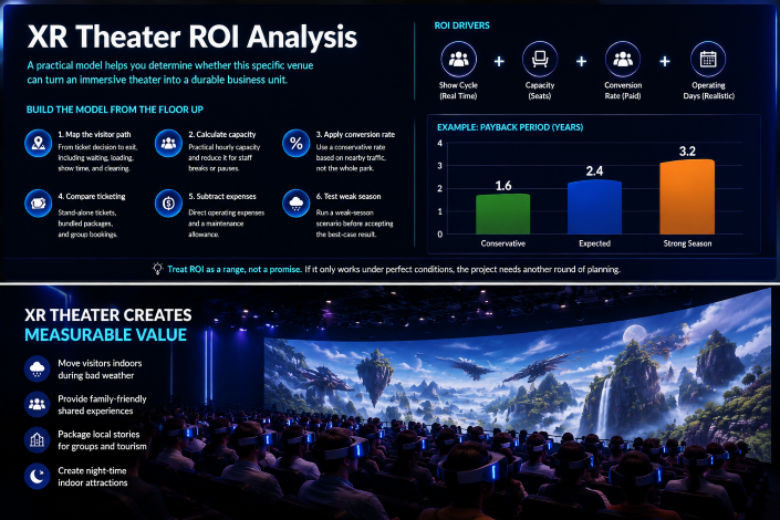
A practical payback view
Treat ROI as a range, not a promise. Test three cases: conservative, expected, and strong season. Then ask whether the theater still makes sense in the conservative case. If it only works under perfect attendance, perfect uptime, and a high conversion rate from day one, the project needs another round of planning before procurement.
A capable XR attraction supplier should help with that pressure test. MiXR can be part of the early planning conversation by linking attraction design with equipment scope, content direction, installation conditions, and operator training. That is where ROI becomes a working management tool instead of a pretty chart.